The international community finds itself navigating a complex landscape of shifting leadership, precarious diplomatic impasses, and evolving security paradigms. This week, attention is sharply focused on the United Nations as it embarks on the critical process of selecting its next Secretary-General, while simultaneously, the delicate balance of US-Iran relations faces renewed strain, and Japan signals a momentous departure from its post-war pacifist defense posture. Concurrently, the United Kingdom grapples with a concerning surge in antisemitic incidents, prompting a robust counter-terrorism response.
The Race for United Nations Secretary-General: A Pivotal Moment for Global Governance
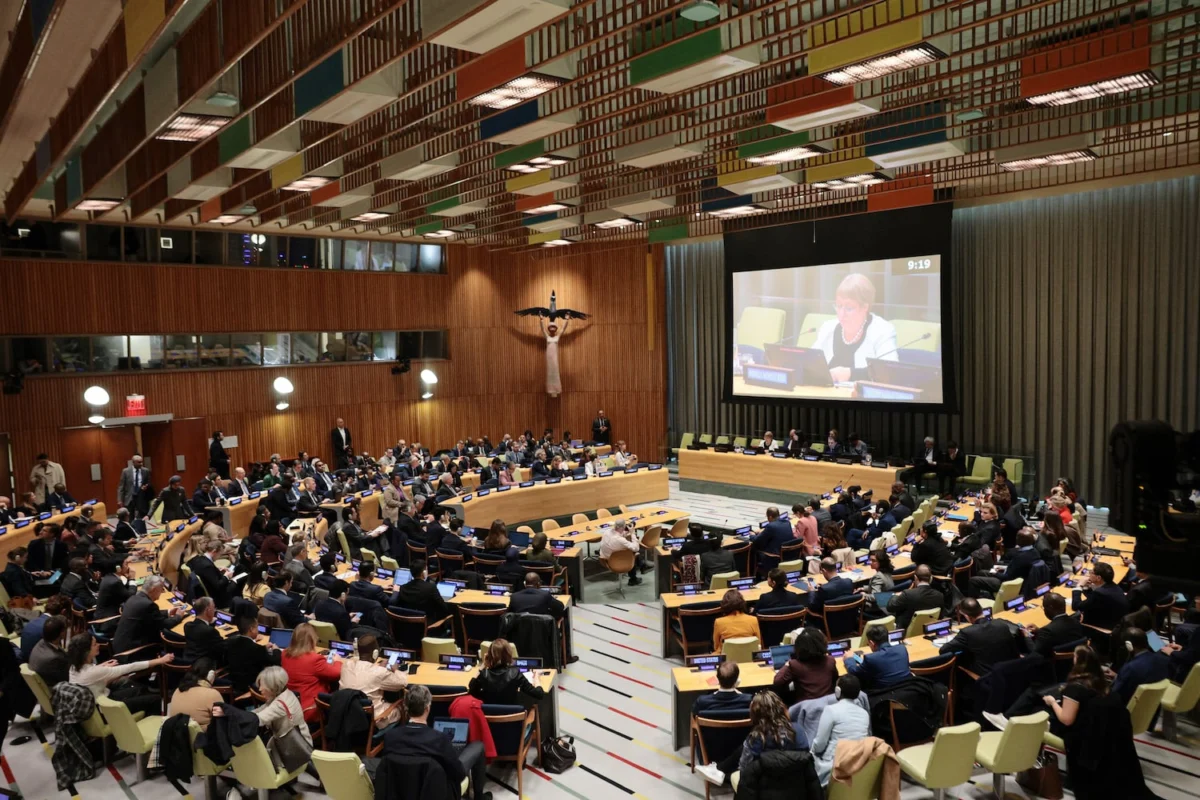
The search for the successor to U.N. Secretary-General António Guterres has entered a crucial phase, as four leading candidates are currently undergoing intensive public questioning regarding their visions for the future of the world body. These "grillings," held on Tuesday and Wednesday, are designed to scrutinize their perspectives on an array of pressing global challenges, ranging from persistent armed conflicts and the escalating climate crisis to the fundamental imperative of reshaping the United Nations’ mandate for the 21st century.
Annalena Baerbock, the President of the U.N. General Assembly, underscored the gravity of the position, stating, "In a nutshell, this is one of the toughest jobs in the world. But it is also one of the most important, as the next secretary-general will not only shape the future of this institution but, in her or his role as the strongest defender of the U.N. Charter, also that of the international rules-based order." Her remarks highlight the immense responsibility awaiting the individual tasked with leading an organization often at the forefront of global crises, yet frequently criticized for its perceived inefficiencies or lack of decisive action.
The Contenders and Their Platforms
Among the four candidates, Rafael Grossi, the current director-general of the International Atomic Energy Agency (IAEA), has emerged as a prominent front-runner. The former Argentine diplomat has cultivated a reputation as a "man of action," known for his hands-on approach to complex international security issues. His tenure at the IAEA has been marked by significant shuttle diplomacy, particularly concerning the Russia-Ukraine and Iran nuclear issues. Notably, Grossi successfully established an IAEA team at the Russian-occupied Zaporizhzhia nuclear power plant in September 2022, a critical step in mitigating the risks of a nuclear catastrophe amidst ongoing conflict. He has also been deeply involved in recent nuclear talks with Tehran, though some critics contend that his approach has been overly lenient regarding Iran’s uranium enrichment activities, potentially undermining non-proliferation efforts. Grossi faced his public questioning on Tuesday, detailing his strategic vision for enhancing the UN’s relevance and efficacy.
Joining Grossi on Tuesday was Michelle Bachelet, a formidable candidate whose selection would mark a historic first for the United Nations: the appointment of a woman to the top leadership role. Bachelet boasts an exceptionally extensive curriculum vitae, having served two terms as the President of Chile, held the esteemed position of U.N. High Commissioner for Human Rights, and acted as the Executive Director of U.N. Women. Her background in both national leadership and international human rights advocacy positions her as a strong voice for progressive policies and social justice. However, her candidacy has not been without controversy. In March, the far-right government of Chilean President José Antonio Kast controversially withdrew its support for Bachelet, though she continues to receive backing from key Latin American nations such as Brazil and Mexico. That same month, a cohort of 28 U.S. Republican lawmakers urged Secretary of State Marco Rubio to veto Bachelet, characterizing her as a "pro-abortion zealot intent on using political authority to override state sovereignty in favor of extreme agendas." Furthermore, Bachelet has faced criticism for her handling of human rights issues during her tenure as High Commissioner, particularly regarding accusations of downplaying China’s severe treatment of Uyghur Muslims, which many experts and human rights organizations have classified as genocide.
The pool of female candidates also includes Rebeca Grynspan, a former Vice President of Costa Rica and the current head of the U.N. Conference on Trade and Development (UNCTAD). As a seasoned economist, Grynspan has consistently championed gender equality, human rights, peace, and sustainable development throughout her distinguished career. Her policy focus is expected to revolve around strengthening economic cooperation, addressing global inequalities, and fostering inclusive growth. She is scheduled to undergo her public grilling on Wednesday, presenting her vision for a more equitable and prosperous global future.
Completing the quartet of candidates is Macky Sall, the former President of Senegal. If chosen, Sall would become the U.N.’s third African secretary-general, following in the footsteps of Boutros Boutros-Ghali and Kofi Annan. During his presidency in Senegal, Sall oversaw the successful completion of numerous major infrastructure projects, advocated vigorously for African development, and was a vocal proponent for granting developing countries permanent seats on the U.N. Security Council – a long-standing demand for greater representativeness within the UN’s most powerful body. However, his legacy is also complicated by accusations of orchestrating a "constitutional coup" in 2024, following his decision to postpone elections and extend his presidential term, a move that sparked significant domestic and international concern over democratic principles.
Context and Implications for the United Nations
This year’s selection process features a notably smaller pool of only four candidates, a stark contrast to the 13 individuals who vied for the top spot in 2016 (though three of those candidates eventually withdrew). Analysts suggest this reduction may reflect increasing global fragmentation, a perceived diminishment of the U.N.’s overall status, or the daunting nature of the challenges facing the organization. The next Secretary-General will inherit an institution grappling with budgetary constraints, the persistent challenge of Security Council paralysis due to veto power, and a world increasingly divided by geopolitical rivalries, climate change impacts, and widening socio-economic disparities.
In the coming weeks, the U.N. Security Council will deliberate and ultimately present its recommendation for the next Secretary-General to the General Assembly. This recommendation will then be subject to a vote by the broader membership. There has been significant advocacy from many foreign leaders, including the incumbent Guterres, for a woman to be chosen for the role, reflecting a broader push for gender equality in international leadership. However, concerns linger that the Trump administration might exercise its Security Council veto power to prevent the appointment of either Bachelet or Grynspan, potentially politicizing the selection process further. The next U.N. chief is slated to commence their demanding five-year term on January 1, 2027, at a time when the world’s need for effective multilateralism is perhaps greater than ever.
The podcast World’s Toughest Job, a collaborative effort between Foreign Policy and the U.N. Foundation, offers a timely exploration into the qualities of leadership required for the world body at this precarious juncture and sheds light on the intricacies of the selection process itself.
US-Iran Standoff: Peace Hopes Dwindle Amid Escalating Tensions
The already fraught relationship between the United States and Iran has taken another unpredictable turn this week, as a tentative two-week ceasefire, previously agreed upon, was extended indefinitely by U.S. President Donald Trump on Tuesday. This announcement, made just hours before the initial ceasefire was set to expire on Wednesday, represents an apparent reversal of Trump’s earlier, more bellicose rhetoric. Only recently, the President had publicly stated on CNBC that the U.S. military was "raring to go" should a proposed second round of peace talks in Islamabad fail. This oscillation between de-escalation and confrontation has become a hallmark of US policy towards Tehran, contributing to regional instability and uncertainty.
However, despite the extended ceasefire, the prospect of peace talks materializing remains highly uncertain. U.S. Vice President J.D. Vance, who was designated to lead the U.S. delegation to Islamabad, reportedly had his departure from Washington put on hold on Tuesday afternoon, according to a report by the New York Times. This delay signals significant internal deliberations or external pressures influencing the U.S. approach. Concurrently, Tehran has conspicuously refrained from publicly confirming its participation in any talks. Lead negotiator Mohammad Bagher Ghalibaf emphatically stated on X (formerly Twitter) on Monday that Iran would not engage in negotiations "under the shadow of threats," underscoring the deep mistrust and preconditions that continue to plague any diplomatic efforts.
These "threats" alluded to by Ghalibaf likely refer to a significant incident that occurred overnight on Tuesday: the U.S. military’s seizure of an oil tanker carrying Iranian crude in international waters. The vessel, identified as the Tifani, was reportedly boarded while transiting through the Bay of Bengal, suspected of smuggling Iranian crude oil destined for Southeast Asia. This act of interdiction, confirmed by the U.S. Defense Department, is a clear enforcement of U.S. sanctions against Iranian oil exports, which aim to curtail Tehran’s revenue streams. President Trump further cemented this stance on Tuesday, declaring that the U.S. blockade of Iranian ports would continue. The seizure of the Tifani not only exacerbates tensions but also complicates any immediate prospects for dialogue, as Iran views such actions as hostile and a violation of its sovereignty.
The broader implications of this ongoing standoff are profound. The failure to achieve meaningful diplomatic breakthroughs risks further destabilizing the Middle East, a region already reeling from numerous conflicts. The continued enforcement of oil sanctions, coupled with Iranian retaliation or escalation, could lead to disruptions in global energy markets. Moreover, the ambiguity surrounding the nuclear program, particularly given the IAEA’s recent concerns, raises proliferation fears. The US-Iran dynamic remains a critical flashpoint, requiring delicate navigation to prevent a descent into open conflict while addressing the core grievances and security concerns of all parties involved.
Japan’s Historic Defense Policy Overhaul: A Pivotal Shift in Post-War Pacifism
In a move of immense historical and geopolitical significance, Japan on Tuesday scrapped its long-standing ban on overseas lethal arms sales, marking the country’s most comprehensive overhaul of its defense export rules in decades. This dramatic policy shift is poised to fundamentally redefine Japan’s role in global security, paving the way for Tokyo to export sophisticated military hardware, including warships, fighter jets, and missiles, to allied nations. The decision underscores a decisive pivot away from Japan’s enshrined post-World War II pacifist policy, driven by Prime Minister Sanae Takaichi’s strategic imperative to counter burgeoning security threats across the Indo-Pacific region.
Japan’s post-war constitution, particularly its Article 9, famously renounces war and prohibits the maintenance of military forces with war potential, thereby limiting the country’s defense capabilities strictly to self-defense. This foundational principle has historically constrained Japan’s ability to engage in collective security and prohibited most arms exports, with exceptions only for equipment related to rescue, transport, alert, surveillance, and minesweeping. Over the past decade, however, there have been incremental adjustments to this policy, reflecting a growing awareness of regional security challenges. Yet, Tuesday’s decision represents an unprecedented expansion of these capabilities.
Prime Minister Takaichi has been a vocal proponent of bolstering Japan’s military strength and expanding its defense cooperation. In recent months, she has repeatedly characterized a potential future Chinese attack on Taiwan as a "survival-threatening" situation for Japan, a designation that, under existing interpretations of Article 9, could permit Japan to take military action in collective self-defense. This framing highlights the perceived urgency and gravity of the regional security environment, particularly in the context of China’s assertive military expansion and North Korea’s ballistic missile programs.
Takaichi articulated the rationale behind the overhaul on X, stating, "In an increasingly severe security environment, no single country can now protect its own peace and security alone, and partner countries that support each other in terms of defense equipment are necessary." This statement reflects a strategic recognition that contemporary security challenges necessitate closer collaboration with allies and partners, moving beyond a purely inward-looking defense posture.
The immediate scope of Tuesday’s export overhaul will be limited to 17 countries that have already established defense equipment and technology transfer agreements with Japan. Crucially, the policy maintains a principle that Tokyo will not export lethal weapons to nations currently engaged in active conflict. This caveat is designed to mitigate concerns about contributing to existing wars and to differentiate Japan’s approach from that of other major arms exporters.
The implications of this historic policy shift are far-reaching. Regionally, it could reshape the balance of power, potentially leading to an acceleration of an arms race as other nations in the Indo-Pacific react to Japan’s enhanced capabilities. For the United States, Japan’s closest ally, this move is likely to be welcomed as it strengthens the alliance and enhances interoperability in the face of shared security concerns. Domestically, the decision will undoubtedly reignite debates about the interpretation of Article 9 and Japan’s identity as a pacifist nation, though public opinion has generally shifted towards a more robust defense posture in recent years. Economically, the move could open up new markets for Japan’s advanced defense industry, generating revenue and fostering technological innovation. However, critics may raise concerns about the potential for Japan to become more entangled in international conflicts and the moral implications of contributing to the global arms trade.
UK Confronts Rising Antisemitism and Arson Attacks
In the United Kingdom, authorities are confronting a disturbing surge in antisemitic incidents, with police announcing on Tuesday the arrest of eight individuals suspected of involvement in a series of recent arson attacks in London. These arrests are part of a broader, intensified counter-terrorism operation investigating a concerning rise in antisemitism across the UK. Further highlighting the severity of the situation, a British teenager pleaded guilty on the same day to an arson attack specifically targeting Kenton United Synagogue, a Jewish place of worship in Harrow, London.
The arrests and subsequent charges underscore the urgent need to address the escalating threat faced by Jewish communities in the UK. Global incidents of antisemitism have witnessed a dramatic and alarming increase since the outbreak of the Israel-Hamas war in October 2023. This conflict has fueled a wave of anti-Jewish sentiment and hate crimes worldwide, with the UK being no exception. Last month, four ambulances belonging to a Jewish charity in London were deliberately set on fire in an incident that sent shockwaves through the community. Since then, several other arson attacks across the country have targeted sites associated with Jewish communities or linked to Israel, as well as one Persian media outlet known for its criticism of the Tehran regime.
Vicki Evans, the senior national coordinator of London’s police counter-terrorism force, provided insight into the ongoing investigation, stating, "One of our key lines of inquiry is whether criminal proxies – that is to say, people being paid money to carry out a crime – are being used." This line of inquiry suggests a potential for organized criminal activity or even foreign influence behind some of these attacks. Indeed, Harakat Ashab al-Yamin al-Islamia, an Iranian proxy group, has reportedly claimed responsibility for several of these assaults, raising serious questions about the extent of external actors’ involvement in inciting or orchestrating acts of domestic terrorism and hate crimes within the UK.
The broader implications of these events are significant for social cohesion, national security, and international relations. The rise in antisemitism not only threatens the safety and well-being of Jewish communities but also challenges the fundamental values of tolerance and diversity within British society. The investigation into "criminal proxies" and potential foreign involvement highlights the complex nature of modern terrorism and the need for robust counter-terrorism strategies that can identify and neutralize both domestic extremists and external threats. The UK government faces the challenge of reassuring its citizens, particularly vulnerable communities, that it can effectively combat hate crime while also addressing the geopolitical dimensions of alleged foreign interference.
Beyond Geopolitics: A Glimmer of Hope in the Animal Kingdom
Amidst the weighty geopolitical developments and pressing global challenges, a heartwarming story from the animal kingdom offers a poignant reminder of universal needs for comfort and connection. Japan’s Punch, a snow monkey who went viral earlier this year for his reliance on an emotional support plushie, is not alone in finding solace in a stuffed toy. In Mexico’s Guadalajara Zoo, a 6-week-old patas monkey named Yuji also wakes up each morning clinging to a beloved stuffed companion.
Like Punch, Yuji’s attachment to his plush dog emerged after his mother rejected him, highlighting the critical role of early companionship and emotional support in primate development, even if it comes from an inanimate object. Zookeepers are optimistic that Yuji’s stuffed dog will aid his socialization process, providing a sense of security that can foster healthy interactions as he grows. The progress of Punch, the Japanese snow monkey, offers a hopeful precedent; last Friday, Japan’s Ichikawa City Zoo revealed that Punch now rarely relies on his plushie and has even shown signs of forming a bond with another monkey, hinting at a potential "girlfriend." These stories, while seemingly lighthearted, underscore the intricate emotional lives of animals and the innovative approaches taken by animal caregivers to ensure their well-being, offering a small but significant counterpoint to the complexities of human affairs.