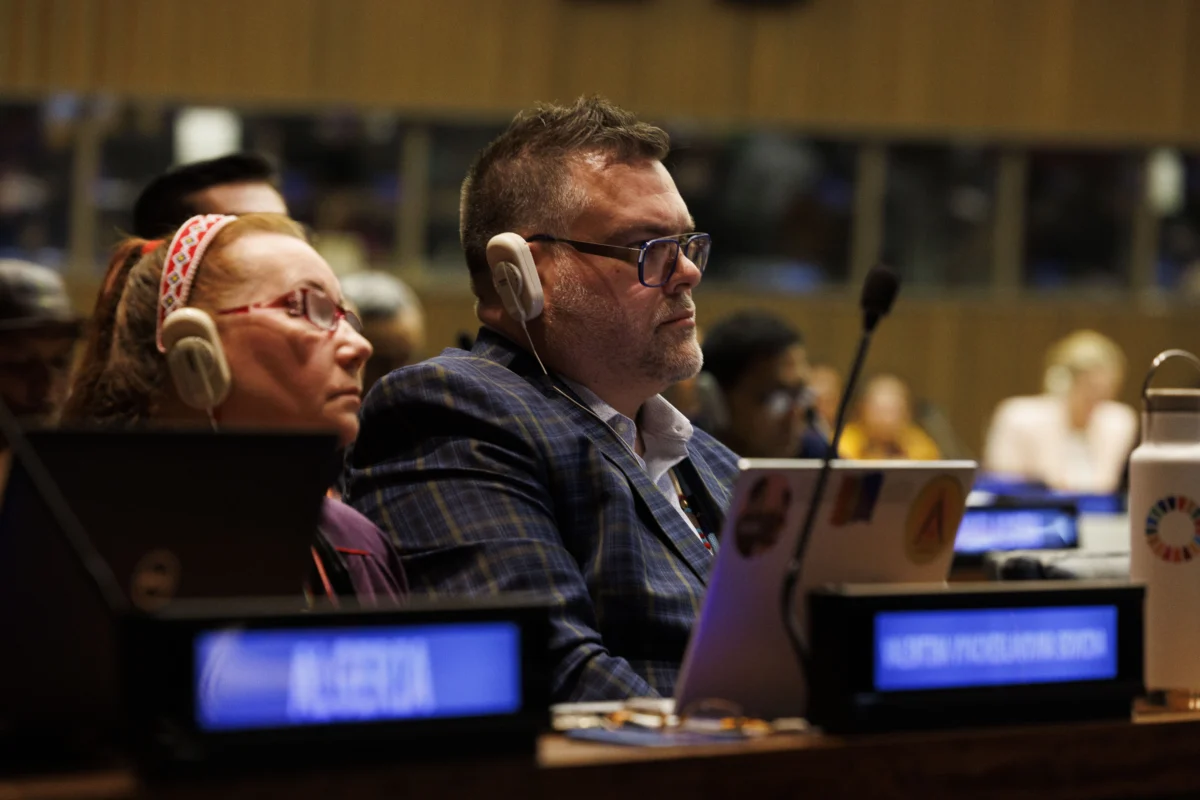
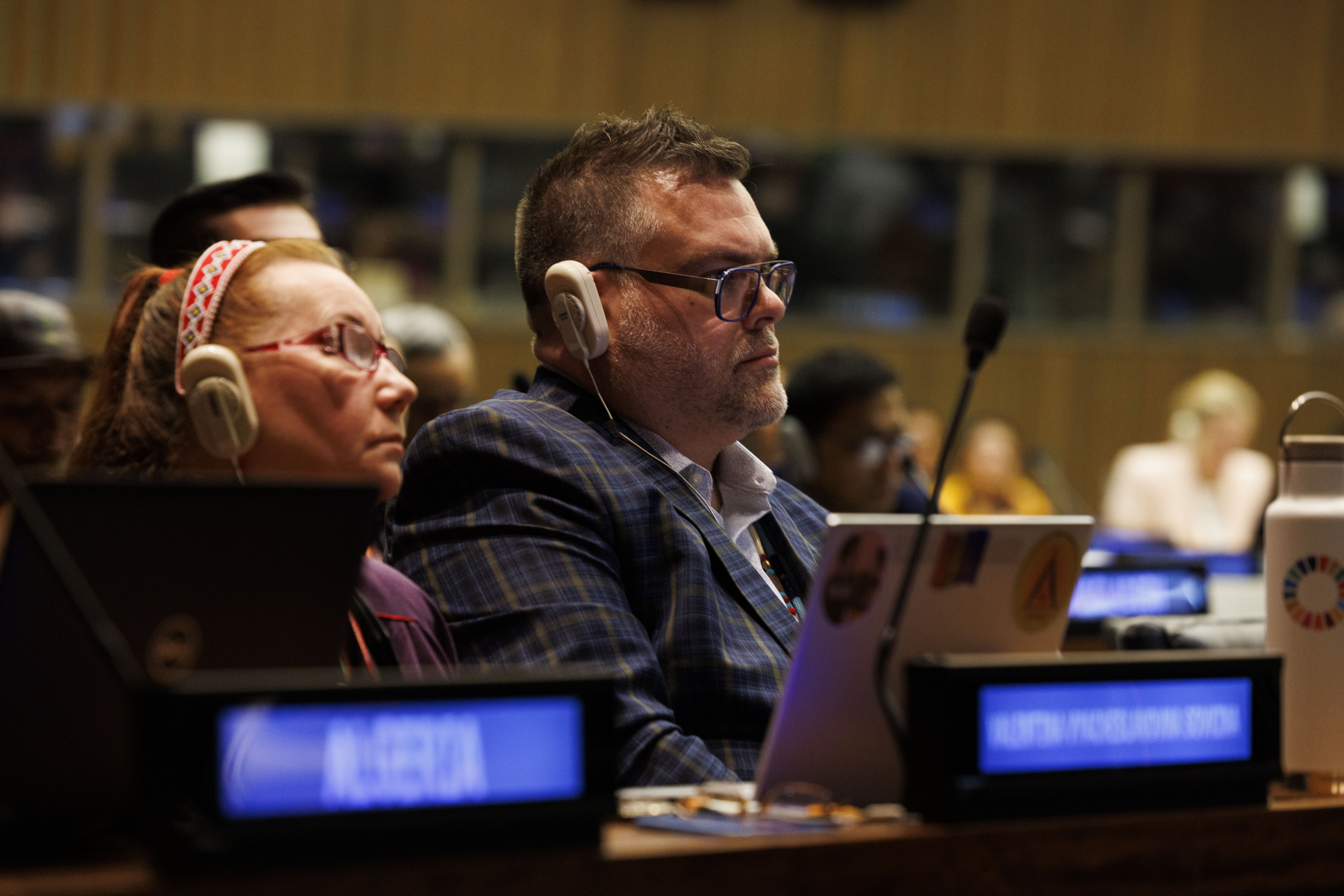
Hundreds of delegates are converging at the United Nations this week for the world’s most significant assembly of Indigenous peoples. However, their arrival is overshadowed by an increasingly hostile global landscape. This includes an escalating artificial intelligence boom that fuels new resource extraction on ancestral territories, a U.S. administration that has intensified visa acquisition challenges for delegates from the Global South, and the dual threats of climate change and green energy projects that frequently infringe upon Indigenous land rights. This year’s United Nations Permanent Forum on Indigenous Issues (UNPFII) is grappling with the critical theme of survival amidst conflict, under the overarching topic of "Ensuring Indigenous peoples’ health, including in the context of conflict." Experts underscore that Indigenous populations already contend with profound health inequities stemming from colonialism and climate change. These advers parpact are exacerbated by armed conflicts and militarization, which risk further ecological devastation and the displacement of Indigenous communities from their ancestral lands. The consensus among experts is that Indigenous health is inextricably linked to the environment, land, and self-determination, and cannot be confined to narrow clinical discussions about medicine or public health in isolation.
The Unseen Toll of Conflict and Extraction on Indigenous Well-being
The spectre of warfare is not the sole concern for Indigenous delegates. Advocates are increasingly witnessing the extraction of critical minerals, essential for the global green energy transition, leading to severe violations of Indigenous rights. This has amplified long-standing calls for direct access to climate financing for Indigenous communities, bypassing state or foreign intermediaries. The UNPFII, a vital platform established in 2000 by the Economic and Social Council (ECOSOC) of the UN, serves as an advisory body to the ECOSOC with a permanent mandate to discuss issues concerning the economic and social development of Indigenous peoples. It convenes annually for a period of ten working days, bringing together representatives from Indigenous communities worldwide, as well as governments, intergovernmental organizations, and civil society.
The official theme for the 2026 session, "Ensuring Indigenous peoples’ health, including in the context of conflict," directly addresses the multifaceted challenges impacting Indigenous communities. These challenges are amplified by global conflicts, which not only disrupt lives and livelihoods but also lead to severe environmental degradation. The destruction of ecosystems, pollution of water sources, and loss of biodiversity directly undermine the health and well-being of Indigenous peoples whose cultures and economies are deeply intertwined with their natural surroundings. Reports from organizations like the International Committee of the Red Cross (ICRC) have consistently highlighted how armed conflicts disproportionately affect civilian populations, with Indigenous communities often bearing the brunt due to their remote locations and reliance on natural resources. The UNPFII provides a critical space for these voices to be heard and for international mechanisms to be influenced.
Navigating Bureaucratic Hurdles and the "Digital Colonialism" of AI
Before meaningful diplomatic conversations can even commence, many delegates must confront the practical barrier of visa restrictions. The current U.S. administration’s policies, building on trends from previous administrations, have made it significantly more difficult for Global South delegates to secure visas. Mariana Kiimi Ortiz Flores, a Na’uu Savi from Mexico and an advocacy assistant at Cultural Survival, recounted her organization’s efforts to prepare Indigenous representatives from Africa for the forum last year. Despite meticulous preparation, their visa applications were denied. This year, one of their Indigenous staff members from South America also faced a visa denial.

"It’s becoming increasingly challenging to access the United States, not solely due to visa issues," Flores stated. "People from the Global South, particularly Indigenous peoples who might have a certain appearance – brown skin and particular characteristics – feel threatened due to the prevailing climate of insecurity and hate speech directed at Latinx and Indigenous peoples." This sentiment reflects a broader concern about the politicization of immigration policies and their impact on international dialogue and representation. The United States, as the host nation for the UN headquarters, plays a pivotal role in facilitating or impeding the participation of delegates from around the world.
Beyond the immediate challenges of travel, a new frontier of concern is emerging: the rapid advancement of artificial intelligence (AI) and its potential implications for Indigenous data sovereignty and cultural integrity. Hindou Oumarou Ibrahim, an Indigenous Mbororo from Chad and former Chairperson of the UNPFII, highlighted this dual-edged nature of AI in a recent report. While she advocates for governments to support Indigenous communities in developing AI tools for language revitalization and territorial monitoring, she also warns of an impending era of "digital extractivism." This involves generative AI systems and tech companies systematically scraping and utilizing Indigenous cultural content, including invaluable medicinal knowledge, traditional narratives, and even genetic data, often without consent or compensation.
Lydia Jennings, a citizen of the Pascua Yaqui Tribe (Yoeme) and Huichol (Wixáritari), and an Assistant Professor of Environmental Studies at Dartmouth College, has become a leading voice in the advocacy for Indigenous data sovereignty – the principle that Indigenous communities must retain the right to own, control, and manage their own data. Her advocacy was galvanized by a disturbing discovery: a mining company had appropriated information about Indigenous cultural practices from an environmental impact statement and was using it on its website to promote a mining project. "That was profoundly alarming to me," Jennings stated. "How much information do we share in our efforts to protect our sacred homelands? And what mechanisms can we establish to govern who uses that data and how?"
Jennings, echoing Ibrahim’s concerns, acknowledges the potential of AI as a tool for Indigenous communities, noting that some tribes may be interested in hosting data centers or leveraging AI for language preservation or synthesizing complex information. However, she remains deeply wary of the extent to which AI systems may be co-opting Indigenous data without explicit consent. Furthermore, she points to the significant environmental risks posed by massive data centers, including their substantial demands on tribal lands and precious water resources. "Who holds the power, and how do we redistribute that power?" Jennings questioned. "It can be a tool for empowerment or a tool for harm, but the critical question is how we choose to wield it."
The Climate Crisis and the Erosion of Traditional Mobility
The climate crisis remains a central and urgent focus of the Permanent Forum. A February report specifically addressing nomadic peoples sounded an alarm: rigid state borders and exclusionary "fortress conservation" models are increasingly curtailing the traditional mobility of pastoralists, hunter-gatherers, and seafarers. This is happening even as these communities grapple with the escalating impacts of climate change and a growing lack of access to their ancestral lands and waters.
The report’s authors contend that mobility is not merely a passive response to environmental shifts but a deliberate, knowledge-based climate adaptation strategy that state policymakers are actively dismantling. They cite the example of the Tuareg people in the Sahara Desert, where militarized frontiers increasingly restrict ancestral routes, undermining pastoral systems and access to essential services. "While the desert knows no borders, contemporary militarized frontiers increasingly restrict ancestral routes and undermine pastoral systems and access to services, rendering these lived realities of Indigenous peoples invisible in official data and policy frameworks," the authors observe.
This sentiment is echoed by Samante Anne, an Indigenous Maasai from Kenya. Speaking recently at a virtual panel on pastoralists’ legal rights on behalf of the Mainyoito Pastoralists Integrated Development Organization, Anne highlighted that despite 60 percent of land in Kenya being designated as communal, it is increasingly being subdivided for development and claimed for carbon offset projects. These actions severely limit pastoralists’ access to land and their freedom of movement. "Mobility is fundamental to our ability to adapt to climate change," Anne emphasized. "Mobility is directly linked to ensuring our livelihoods are secure and our food security is robust."
The Problematic "IPLC" Acronym and the Diminishing of Indigenous Rights
Adding to the complexities of addressing Indigenous health, AI, and territorial rights is a persistent trend within the UN system: the conflation of Indigenous peoples with "local communities." In official policies and initiatives, these distinct groups are frequently merged under the acronym "IPLCs" – Indigenous Peoples and Local Communities. However, while local communities represent a broad spectrum of stakeholders, Indigenous peoples possess distinct, legally recognized rights under international law.
Geoffrey Roth, a Standing Rock Sioux descendant, former Vice Chair of the Permanent Forum, and Board Chair of the Indigenous Determinants of Health Alliance, a prominent international Indigenous health advocacy nonprofit, has confronted this issue directly. He recounts his experience at the World Health Organization (WHO) when an Indigenous health initiative was categorized merely as an "equity" issue. "This is not an equity issue," Roth stated he informed the agency. "We are not simply another one of your minority populations. We are rights holders, and this must be approached from a rights-based perspective."
Roth further elaborated on the detrimental impact of this grouping: "Conflating us with other populations fundamentally diminishes our rights and weakens our capacity to maintain health within our communities." He also pointed out that this categorization actively hinders meaningful participation, citing the example of the Indigenous Peoples and Local Communities (IPLC) working group within the UN Convention on Biological Diversity. "I have attempted to participate in that group several times, and as an Indigenous person, I have not felt welcome, nor have I been able to participate effectively," he shared. "These [IPLC] institutions often serve to lessen or dilute the voice of Indigenous peoples within global mechanisms, and that, in my view, is unacceptable."
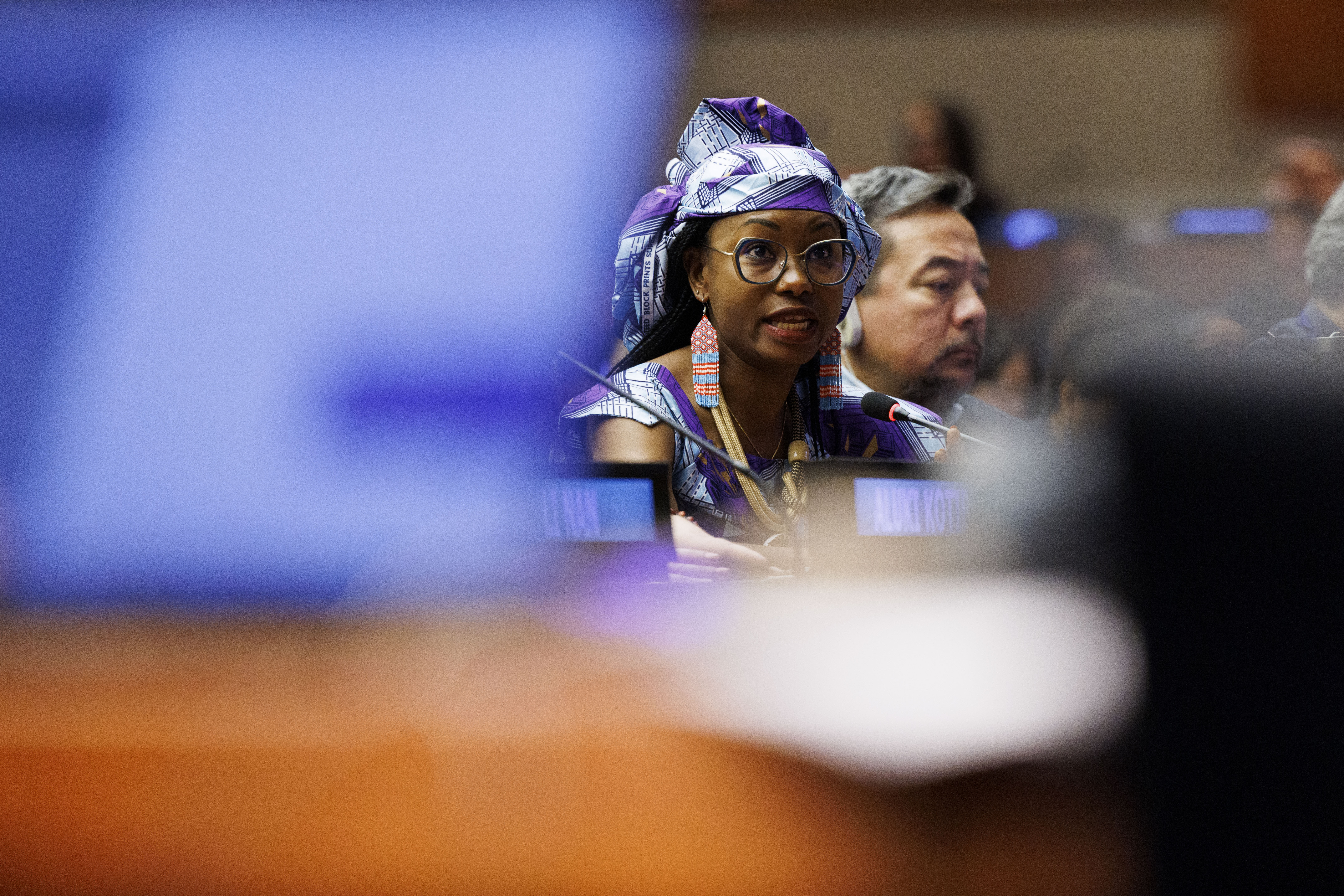
The concerns voiced by Roth are far from isolated. In 2023, the UN’s three primary Indigenous rights bodies – the Permanent Forum, the Special Rapporteur on the Rights of Indigenous Peoples, and the Expert Mechanism on the Rights of Indigenous Peoples – issued a joint statement demanding that UN environmental treaties cease the use of the IPLC acronym entirely. Their statement asserted: "Indigenous Peoples should not be grouped with an undefined set of communities that may have very different rights and interests."
A Persistent Struggle for Recognition and Voice
For advocates on the ground, this ongoing debate over nomenclature is symptomatic of a broader and growing disillusionment with the UN system itself. Mariana Kiimi Ortiz Flores of Cultural Survival observed that the institution has been undermined by a willingness among member states to disregard its established laws and principles. "The United Nations, as an international institution, has been losing its influence and its power," Flores stated.
Despite these formidable bureaucratic hurdles, the persistent challenge of visa denials, and the overarching geopolitical hostility, Flores affirmed that she, like many other Indigenous people, remains determined to participate. "If we, as Indigenous peoples, do not show up," Flores concluded, "no one else will speak for us and defend us." The resilience and unwavering commitment of Indigenous delegates to advocate for their rights, cultures, and environments underscore the enduring significance of the UN Permanent Forum, even as it faces unprecedented global challenges and internal structural impediments. The forum serves as a critical, albeit often challenging, platform where Indigenous voices can converge, articulate their distinct rights and needs, and collectively push for a more just and equitable world. The path forward necessitates a fundamental shift in how international bodies recognize and engage with Indigenous peoples, moving beyond generalized categories and embracing a rights-based approach that honors their unique legal standing and ancestral stewardship.