
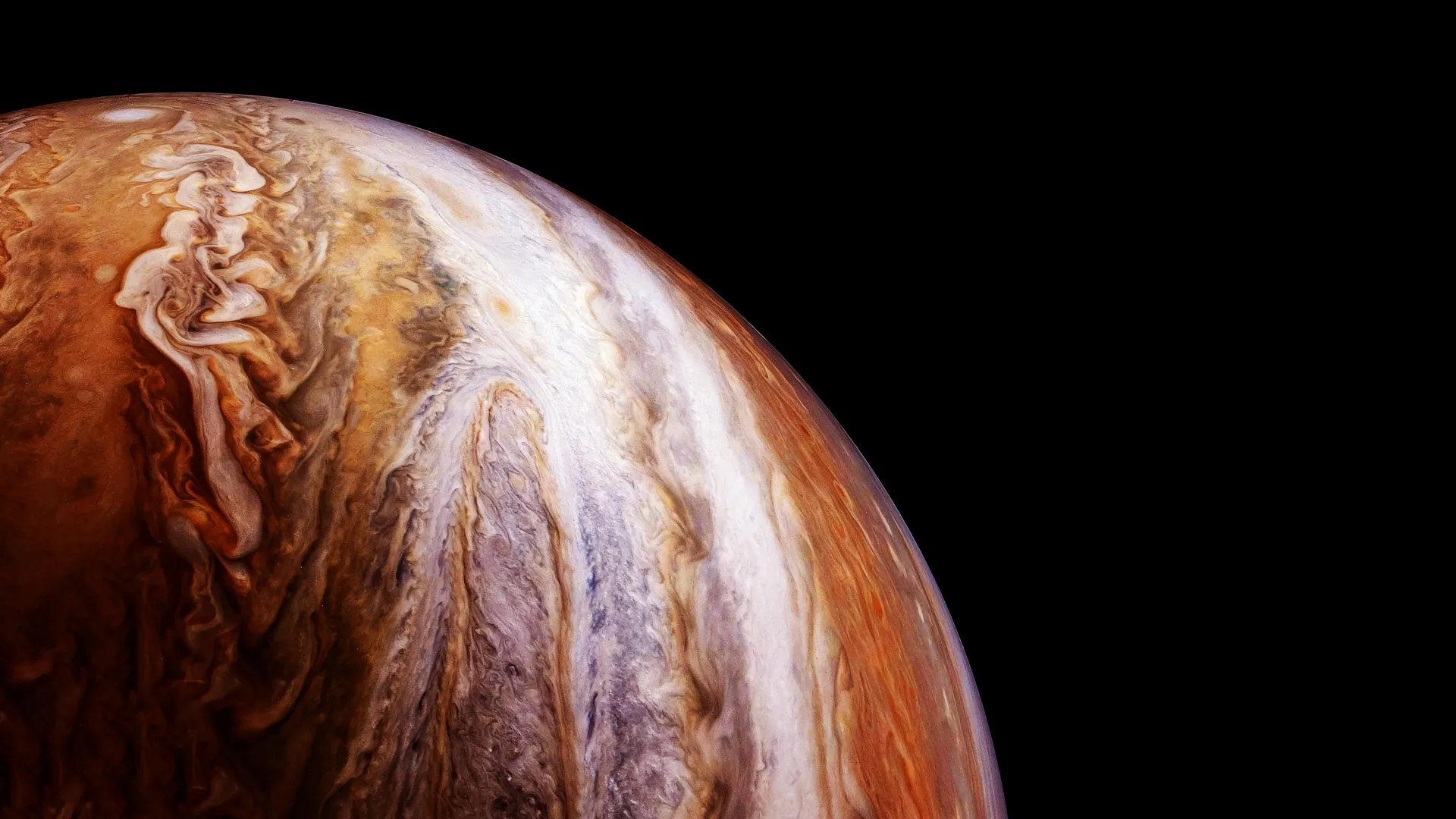
The recent identification of water ice clouds in the atmosphere of a distant gas giant, Epsilon Indi Ab, represents a significant and surprising development in the field of exoplanet research. This groundbreaking discovery, led by Elisabeth Matthews at the Max Planck Institute for Astronomy (MPIA), not only challenges prevailing models of exoplanet atmospheric behavior but also marks a crucial step forward in the long-term quest to find and meticulously study Earth-like planets. The planet, though a gas giant akin to Jupiter, exhibits an atmospheric complexity that has left scientists re-evaluating their understanding of planetary formation and evolution.
The Evolving Landscape of Exoplanet Exploration
The scientific pursuit of planets beyond our solar system has undergone a dramatic evolution over the past three decades. Initially, the focus was primarily on the sheer act of discovery. From the mid-1990s through the early 2020s, astronomers largely relied on indirect detection methods, such as the radial velocity and transit photometry techniques. These methods allowed for the inference of a planet’s mass and size, providing fundamental characteristics but offering limited insight into its atmospheric composition or structure. The discovery of thousands of exoplanets during this era laid the groundwork for more sophisticated investigations.
The deployment of the James Webb Space Telescope (JWST) in 2022 heralded a paradigm shift, ushering in an era of direct atmospheric characterization. JWST’s unparalleled sensitivity and advanced instrumentation have enabled astronomers to probe the chemical makeup and physical conditions of exoplanet atmospheres with unprecedented detail. This capability moves the field closer to the ultimate goal of detecting biosignatures – indicators of life – though this remains a future objective likely requiring even more powerful observatories.
A Closer Look at a Jovian Analogue
The latest research, while not directly targeting Earth-like worlds, pushes the boundaries of current observational capabilities. Elisabeth Matthews, the lead author of the study, articulated the significance of JWST in a statement: "JWST is finally allowing us to study solar-system analogue planets in detail. If we were aliens, several light years away, and looking back at the Sun, JWST is the first telescope that would allow us to study Jupiter in detail. For studying Earth in detail, we would need much more advanced telescopes, though." This analogy underscores the telescope’s power in providing a detailed look at gas giants that are analogous to our own solar system’s largest planet, offering a crucial benchmark for understanding planetary diversity.
The Challenge of Studying Jovian Exoplanets
Despite JWST’s impressive capabilities, the detailed study of Jupiter-like exoplanets has presented unique challenges. Many gas giants previously observed in detail tend to be significantly hotter than Jupiter. This is largely due to the limitations of the transit method, where a planet passes in front of its host star. Planets with orbits closer to their stars are more likely to exhibit this alignment from our perspective, but their proximity also results in higher temperatures, which can complicate atmospheric analysis.
To circumvent this observational bias, Matthews and her team employed a distinct methodology, providing one of the most intimate examinations to date of a true Jupiter analogue. Their findings revealed an unexpected atmospheric feature that deviates from established expectations.
Direct Imaging Reveals an Unforeseen Atmospheric Composition
Utilizing JWST’s Mid-Infrared Instrument (MIRI), the team successfully performed direct imaging of Epsilon Indi Ab. This exoplanet is located in the constellation Indus, orbiting the star Epsilon Indi A. Bhavesh Rajpoot, a PhD student at MPIA and a contributor to the research, provided key details: "This planet has a considerably greater mass than Jupiter — the new study fixes its mass at 7.6 Jupiter masses — but the diameter is about the same as for its solar-system cousin." This confirms Epsilon Indi Ab as a "super-Jupiter," a class of planets more massive than Jupiter but with a similar radius, suggesting a denser composition or different internal structure.
Epsilon Indi Ab follows an orbit approximately four times farther from its star than Jupiter does from our Sun. Its host star, Epsilon Indi A, is a K-type main-sequence star, slightly smaller and cooler than our Sun. This greater orbital distance and the star’s lower luminosity contribute to the planet’s relatively temperate conditions. Current estimates place its surface temperature in the range of 200 to 300 Kelvin (approximately -70 to +20 degrees Celsius). While warmer than Jupiter’s frigid 140 K, this temperature range is significantly cooler than many other observed gas giants, making it a more apt analogue for comparative studies. Scientists theorize that this elevated temperature, compared to what its orbital distance might suggest, is residual heat from the planet’s formation process, a phenomenon that will gradually dissipate over billions of years as Epsilon Indi Ab continues to cool.
The direct imaging was facilitated by a coronagraph integrated into MIRI. This instrument effectively blocks the overwhelming light from the host star, allowing the faint infrared emission from the exoplanet itself to be detected. The team focused their observations using a filter centered at 11.3 micrometers. This wavelength was strategically chosen to fall just outside the spectral signature associated with ammonia (NH3) molecules, a key component in the atmospheres of gas giants like Jupiter. By comparing these new observations with earlier data acquired in 2024 using a filter at 10.6 micrometers, the researchers were able to quantify the abundance of ammonia. Notably, the coronagraphic mechanisms and the MIRI filter wheels themselves were constructed at MPIA, representing a significant German contribution to the JWST project.
The Unexpected Presence of Water Ice Clouds
In Jupiter’s atmosphere, ammonia gas and ammonia ice clouds are dominant features in its visible upper layers. Based on Epsilon Indi Ab’s properties and its expected atmospheric composition, scientists anticipated a significant presence of ammonia gas, but not necessarily ammonia clouds. However, the JWST observations revealed a surprising deficit of ammonia compared to theoretical predictions.
The most plausible explanation for this discrepancy, according to the researchers, is the presence of thick, albeit uneven, clouds composed of water ice. These clouds are theorized to be analogous to cirrus clouds found high in Earth’s atmosphere. This discovery represents an unexpected complication in our understanding of gas giant atmospheres, suggesting that cloud formation processes might be more varied and complex than previously modeled.
Implications for Exoplanet Modeling and Future Research
The interpretation of exoplanet atmospheric data typically involves comparing observational spectra with sophisticated computer models. However, many existing models for gas giants have historically omitted detailed cloud physics due to the computational complexity involved in simulating their formation and behavior. The discovery of water ice clouds on Epsilon Indi Ab underscores a critical need to enhance these models.
James Mang of the University of Texas at Austin, a co-author of the study, highlighted the significance of this challenge: "It’s a great problem to have, and it speaks to the immense progress we’re making thanks to JWST. What once seemed impossible to detect is now within reach, allowing us to probe the structure of these atmospheres, including the presence of clouds. This reveals new layers of complexity that our models are now beginning to capture, and opens the door to even more detailed characterization of these cold, distant worlds." This sentiment emphasizes that while the discovery presents a challenge to current theoretical frameworks, it is a positive indicator of scientific advancement and the growing power of observational tools.
Paving the Way for Earth-Like Planet Characterization
Looking ahead, future observational campaigns promise to provide even more detailed insights into the nature of these water ice clouds. NASA’s Nancy Grace Roman Space Telescope, a collaborative project involving MPIA, is slated for launch between 2026 and 2027. This observatory is expected to be particularly adept at directly detecting reflective water ice clouds, potentially offering complementary data to JWST’s findings.
In the interim, Matthews and her research team are actively seeking additional observation time with JWST. Their goal is to expand their study to include a broader sample of cold Jupiter-like planets, aiming to ascertain whether the presence of water ice clouds is a common phenomenon or specific to Epsilon Indi Ab. As astronomers continue to refine their observational techniques and analytical methodologies, they are steadily building the foundational knowledge and technological capabilities necessary for the eventual detailed study of Earth-like exoplanets and, ultimately, the search for extraterrestrial life.
Publication and Research Team
The scientific findings detailed in this article have been formally published in the peer-reviewed journal Astrophysical Journal Letters. The paper, titled "A second visit to Eps Ind Ab with JWST: new photometry confirms ammonia and suggests thick clouds in the exoplanet atmosphere of the closest super-Jupiter," outlines the comprehensive methodology and results of the study.
The core research team comprises several distinguished scientists. Leading the effort is Elisabeth Matthews from the Max Planck Institute for Astronomy (MPIA). She is joined by fellow MPIA researcher Bhavesh Rajpoot. The study also benefits from the expertise of James Mang and Caroline Morley from the University of Texas at Austin, and Aarynn Carter and Mathilde Mâlin from the Space Telescope Science Institute, among other international collaborators. This multidisciplinary approach underscores the collaborative nature of modern astronomical research.