
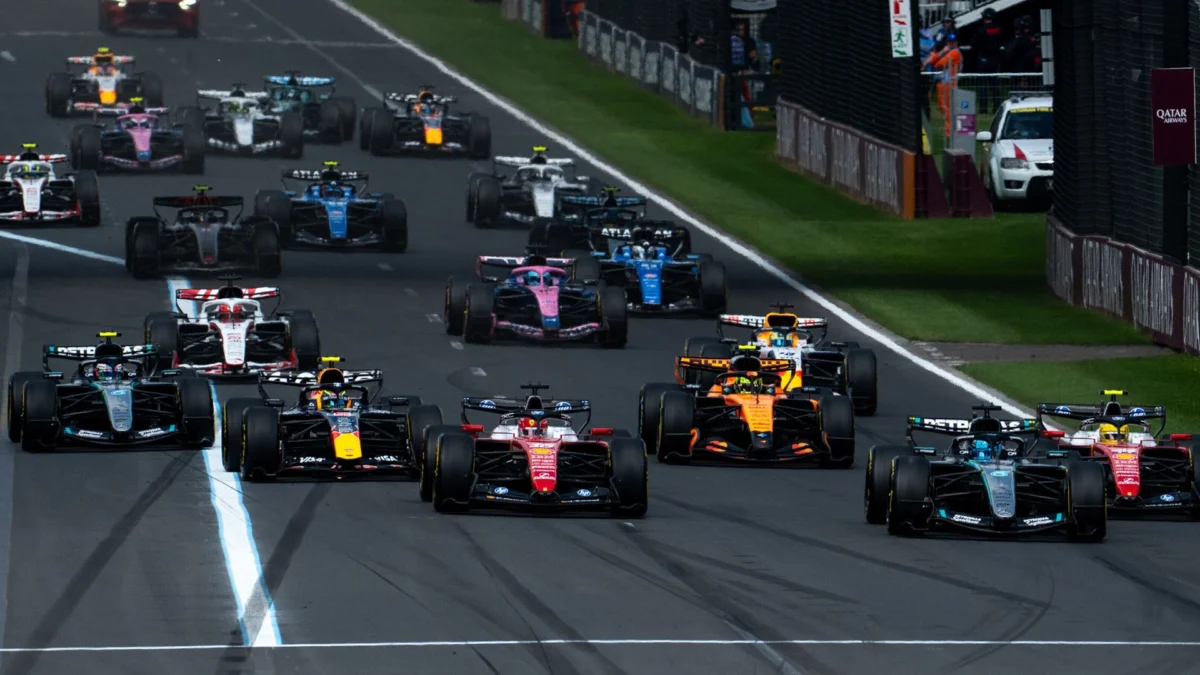
The 2026 Formula 1 season is already shaping up to be defined by a new acronym that will resonate throughout the paddock: ADUO. Sky Sports F1 delves into the intricacies of the sport’s revised engine development rules, which are rapidly becoming a focal point of discussion and strategic maneuvering. These regulations, part of a monumental shift in Formula 1’s technical landscape, are designed to foster closer competition while grappling with the inherent performance disparities that new engine formulas inevitably create.
The Foundation of the 2026 Power Unit Revolution
The introduction of new power units and chassis for the 2026 season represents what many consider the most significant regulatory overhaul in Formula 1 history. A cornerstone of this change is the rebalancing of power delivery, with electrical power now mandated to constitute a 50-50 split with internal combustion engines (ICE). This ambitious move aims to not only enhance performance and efficiency but also to align the sport with evolving automotive technologies and sustainability goals.
However, any radical departure in technical regulations is bound to create performance differentials between the manufacturers. Recognizing this, the rulemakers incorporated provisions for performance-balancing measures. Among these, the Additional Development and Upgrade Opportunities (ADUO) system stands out as a critical mechanism designed to address potential imbalances in power unit performance.
ADUO: A Safety Net or a Competitive Catalyst?
ADUO is a specific provision within the 2026 Formula 1 rules that pertains exclusively to the power units. It grants the five participating manufacturers the potential to enhance their engine models should they fall significantly behind a designated benchmark performer. This provision is not merely theoretical; its immediate relevance is underscored by the struggles of Aston Martin, a team anticipated to be competitive, which is currently languishing at the rear of the field due to considerable challenges with their Honda power unit.
Without the ADUO mechanism, Aston Martin could have found themselves confined to backmarker status for the entire season. However, the opportunity to upgrade their engine offers a crucial lifeline, providing a tangible hope for progress and a more competitive showing throughout the campaign.
The Emerging Controversy: Who Gets to Close the Gap?
While the principle of allowing a struggling manufacturer like Honda to improve its power unit is widely accepted, a burgeoning dispute is surfacing regarding the extent to which other manufacturers should be permitted to use ADUO. The debate centers on whether Ferrari, Red Bull, and Audi should be allowed to significantly close the performance gap to the Mercedes power unit, which has established itself as the early benchmark in the 2026 season.
Ferrari boss Fred Vasseur has openly articulated his view that ADUO presents an essential opportunity to "close the gap" to Mercedes. Conversely, Mercedes’ chief, Toto Wolff, has voiced concerns, urging the FIA to ensure that engine upgrades do not unduly disrupt the existing competitive order. His statements highlight a central tension: balancing the need for fair competition with the desire to maintain a clear performance hierarchy.
How ADUO Operates: A Technical Breakdown
The ADUO system’s focus is specifically on the internal combustion engine (ICE) component of the power unit, the non-electrical half. The FIA is employing a sophisticated, yet undisclosed to the media, performance index system to measure power unit performance at each race weekend. This data-driven approach forms the basis for determining eligibility for ADUO.
Manufacturers will be granted ADUO if their ICE performance trails the leading ICE by a margin of two percent or more. The number of upgrade opportunities is tiered: those trailing by between two and four percent will receive one development opportunity per season, while those falling behind by four percent or more will be afforded two such opportunities.
The results of the opening three rounds of the 2026 season, all of which have seen victories for the Mercedes works team, strongly suggest that the Silver Arrows’ proprietary engine will indeed be the benchmark. This early dominance has intensified the discussions surrounding ADUO, as teams strategize how best to utilize or counter this performance-balancing tool.
There is speculation within the paddock that while Red Bull’s overall car performance might be lagging, their ICE component might be exceptionally strong. This could mean that Red Bull’s ICE performance is either within the two percent threshold of Mercedes or not significantly behind at all, potentially limiting their immediate need for ADUO upgrades in that specific area.
The ADUO Timeline: A Moving Target
The FIA initially announced a structured timeline for ICE performance reviews, with three key checkpoints during the 24-round 2026 season: after the sixth, twelfth, and eighteenth races. Manufacturers granted ADUO were slated to have the opportunity to implement their upgrades immediately for the seventh round, which was originally scheduled to be the Canadian Grand Prix.
However, unforeseen geopolitical events have necessitated a review of this timeline. The cancellation of rounds four and five in Bahrain and Saudi Arabia due to conflict in the Middle East has created a ripple effect, prompting the FIA to re-evaluate the scheduled review dates. The sport’s governing body is expected to announce any timeline adjustments before the Miami Grand Prix. Furthermore, the FIA retains the prerogative to modify the percentage thresholds set for ADUO eligibility prior to the season’s commencement.
Originally, teams granted ADUO were to be free to implement upgrades after the first review. However, a crucial stipulation exists for manufacturers supplying multiple teams. These entities must ensure that they can provide the same upgraded ICE specification to all their customer teams as they intend to use themselves. This requirement introduces a significant logistical and developmental challenge, particularly for manufacturers like Ferrari, which supplies engines to Haas and Cadillac. They would need to ensure an equitable distribution of their upgraded technology. This contrasts with a manufacturer like Audi, who is developing its own engines solely for its factory team, simplifying their upgrade implementation process.
Pre-Season Development: A Head Start for Innovation
The notion that manufacturers would wait for the first review to begin development is highly improbable. The three-week gap between the Miami Grand Prix and the Canadian Grand Prix, even if it were the original schedule, would be insufficient for a team to design, manufacture, and integrate significant engine upgrades. Consequently, it is almost certain that all manufacturers have been working on improving their power units since submitting their initial specifications at the start of the season.
Fred Vasseur’s comments strongly suggest that the four rival manufacturers to Mercedes are anticipating being granted ADUO. This foresight implies they have likely been targeting the Canadian Grand Prix as the opportune moment to introduce new engine elements. Even Mercedes, the current benchmark, will undoubtedly be engaged in continuous development of their power unit, as all manufacturers are permitted to introduce upgrades for the 2027 season, irrespective of their performance standing in the current year.
It is also important to note a provision that allows manufacturers to implement upgrades to all components of their power units, including both ICE and electrical elements. This is permissible if they can demonstrate to the FIA that these changes are exclusively for reasons of reliability, safety, cost reduction, or to address supply chain issues. This loophole could provide avenues for development beyond the strict confines of the ADUO performance metrics.
The Specter of Gamesmanship and Competitive Integrity
The core of the controversy surrounding ADUO lies in the differing interpretations of its purpose and the potential for its misuse. Toto Wolff’s reservations about manufacturers "leapfrogging" competitors and his emphasis on the need for "absolute precision and clarity and transparency" in FIA decisions point to a concern about "gamesmanship."
Wolff could be alluding to the possibility that teams might strategically underperform in their ICE development early in the season, deliberately appearing further behind the benchmark than they actually are, in order to secure more favorable ADUO allocations. This tactic, if employed, could artificially inflate their upgrade opportunities and potentially distort the competitive balance.
"The principle of ADUO was to allow teams that were on the back foot in terms of the power unit to catch up, but not to leapfrog," Wolff stated on April 20th. "And it needs to be very clear that whatever decisions are being made, whichever team is granted ADUO, that any such decision may have a big impact on the performance picture and on the championship, if not done with absolute precision and clarity and transparency. It needs to be clear that gamesmanship hasn’t got any place here, but it needs to be with the right spirit here that the FIA acts upon an ADUO."
He further elaborated, "The teams will have their performance pictures and, as it seems for me, there’s one engine manufacturer that has a problem and we need to help. And then all the others are pretty much in the same ballpark. I would be very surprised, actually, and disappointed if ADUO decisions that were done would come up with any interferences into the competitive pecking order as it stands at the moment."
This divergence in perspective between Vasseur, who sees ADUO as a tool for convergence, and Wolff, who emphasizes maintaining the established order, encapsulates the tension that will likely define the strategic discussions around engine development throughout the 2026 season. As the season progresses, ADUO is poised to remain a prominent and frequently debated topic, shaping the narrative of performance and competition in Formula 1.
The 2026 Formula 1 season promises a fascinating dynamic as teams navigate these complex new regulations. The interplay between the push for innovation, the necessity of performance balancing, and the potential for strategic maneuvering will undoubtedly create compelling storylines and ensure that ADUO becomes a term synonymous with the evolving landscape of Formula 1 power unit development.
Formula 1 returns on May 1-3 with the Miami Grand Prix, the season’s second Sprint weekend, live on Sky Sports F1. Stream Sky Sports with NOW – no contract, cancel anytime.