
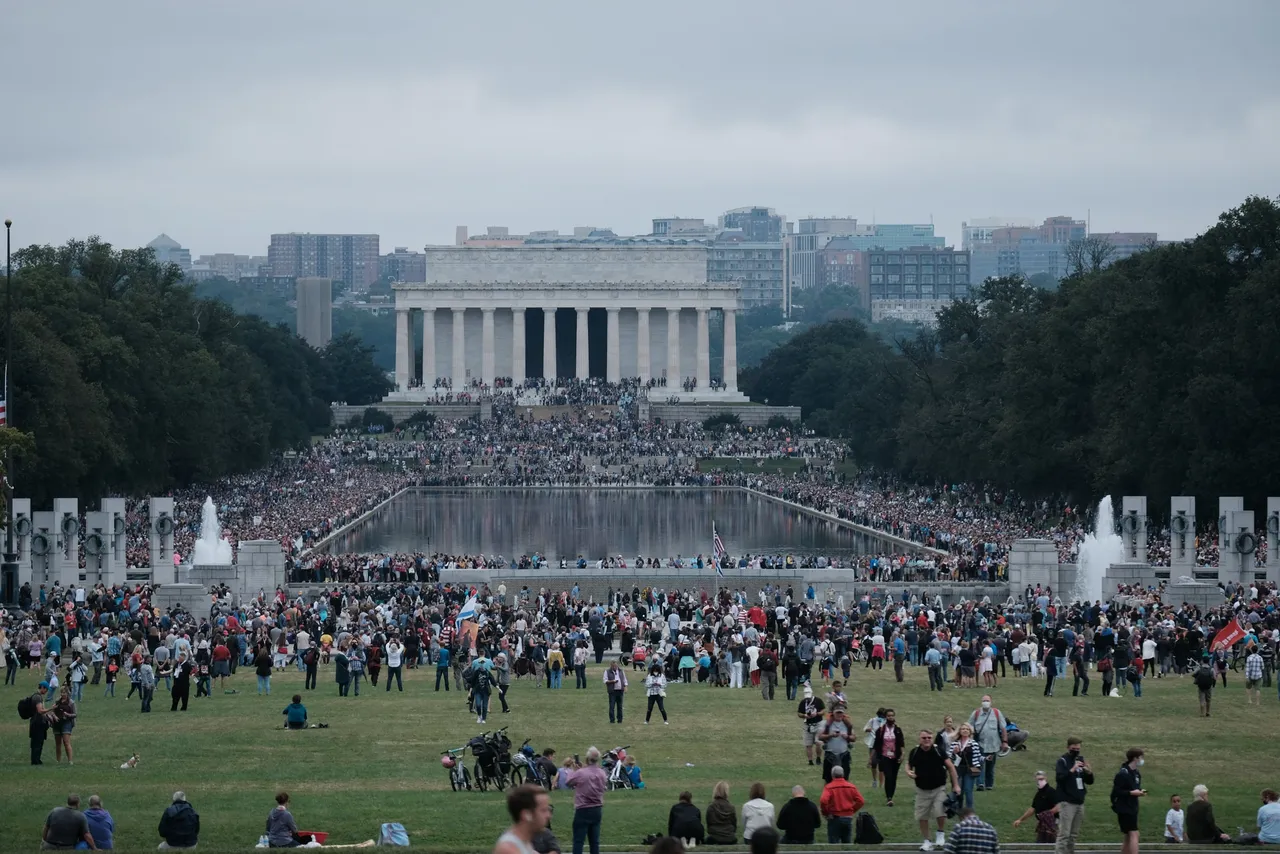
As the United States approaches the historic milestone of its 250th anniversary, a massive assembly of political leaders, religious figures, and media personalities is scheduled to gather at the National Mall for an event titled Rededicate 250. The gathering, scheduled for the morning of Sunday, May 17, 2026, serves as a cornerstone of the nation’s semiquincentennial celebrations, focusing on a national jubilee of prayer, worship, and thanksgiving. According to statements released by the organizing body, Freedom 250, the event is designed to reflect on the country’s foundational values while looking toward the next two and a half centuries of American history.
The proceedings are slated to begin with a fellowship gathering on the lawn of the U.S. Capitol, transitioning throughout the day into a series of testimonies and musical performances on the Capitol’s 12th Street. The event represents a collaborative effort between the federal government and various private faith organizations to commemorate the 1776 signing of the Declaration of Independence through a lens of spiritual rededication.
A Roster of Political and Civic Leadership
The speaker list for Rededicate 250 includes high-ranking officials from the legislative and executive branches, signaling the event’s significance within the current administration’s cultural and commemorative agenda. Speaker of the House Mike Johnson (R-LA) is among the primary speakers. Johnson, who has frequently spoken about the intersection of faith and governance, is expected to address the historical role of religious liberty in the American experiment.
Joining the Speaker is Secretary of War Pete Hegseth, whose presence underscores the event’s focus on the sacrifice of the armed forces and the concept of "providential protection" in military history. The inclusion of Ambassador and Chief of Protocol Monica Crowley, along with Dr. Ben Carson—the former Secretary of Housing and Urban Development currently serving as vice chair of the Trump Religious Liberty Commission—further highlights the high-level political backing for the jubilee.
Military heroism will be represented by Major General Patrick Brady, a Medal of Honor recipient recognized for his actions during the Vietnam War. Organizers have noted that the inclusion of military veterans and active-duty chaplains is intended to bridge the gap between secular service and spiritual conviction.
Diverse Faith Representation and Global Messaging
Rededicate 250 aims to showcase a broad spectrum of American religious life. The roster includes prominent figures from the Catholic, Protestant, and Jewish traditions. Bishop Robert Barron, the founder of Word on Fire Catholic Ministries and a well-known figure in modern evangelization, is scheduled to speak in person. Meanwhile, Cardinal Timothy Dolan, the former Archbishop of New York, will provide a recorded video message, ensuring a strong presence from the nation’s Catholic leadership.
The Protestant evangelical community is represented by a long list of influential pastors and organizational heads. These include Pastor Jack Graham of Prestonwood Baptist Church, Pastor Jentezen Franklin of Free Chapel, and Pastor Jonathan Falwell, Chancellor of Liberty University. The inclusion of Pastor Lorenzo Sewell of Detroit and the Rev. Samuel Rodriguez of the National Hispanic Christian Leadership Conference reflects an effort to represent the urban and minority faith communities that have shaped American religious discourse in the 21st century.
Rabbi Meir Soloveichik of Congregation Shearith Israel—the oldest Jewish congregation in the United States—will provide a perspective on the Jewish contribution to the American founding. This interfaith approach is a deliberate attempt by organizers to present a unified front of "faith as a unifier," as described by Vince Haley, Director of the Domestic Policy Council.
The Three Pillars of the Celebration
The event is structured around three conceptual pillars, which organizers say will guide the day’s programming from the morning fellowship to the evening conclusion:

- The Miracles that Made Us: This segment will focus on the historical narrative of the United States, specifically the role of "Divine Providence" during the American Revolution and the drafting of the Constitution. It will highlight the personal faith of the Founding Fathers and the religious movements that preceded the nation’s birth.
- The Miracles Still in Our Midst: This pillar shifts the focus to the present day, featuring personal testimonies from citizens across the country. These narratives will focus on themes of healing, community restoration, and the ongoing impact of faith-based initiatives in modern American society.
- A New Birth of Faith and Freedom: The final segment is a forward-looking rededication. It is intended to be a collective expression of gratitude and a petition for "blessing, guidance, and grace" as the nation enters its second 250 years.
Logistical Scale and Musical Ceremonies
The National Mall, which has historically hosted the nation’s most significant demonstrations and celebrations, will be the site of extensive ceremonial displays. Musical contributions will be led by "The President’s Own" United States Marine Band and the United States Navy Band. These premier military ensembles will be joined by the Fanfare Trumpets of the United States Armed Forces and bagpipes from the United States Air Force Band.
In addition to military music, the event will feature collegiate and ministry-led worship groups, including the Liberty Worship Collective, the Grand Canyon University Canyon Choir, and the Hillsdale College Choir. The diversity of musical styles—ranging from traditional hymns and military marches to contemporary worship music—is intended to appeal to a multi-generational audience.
The logistics of the event are being managed in coordination with the White House and the National Park Service. Given the expected attendance, which organizers anticipate could reach into the hundreds of thousands, security and transportation plans for the District of Columbia are being bolstered. This event occurs amidst a broader season of semiquincentennial celebrations that include historical reenactments in Philadelphia and various local festivals across the original thirteen colonies.
Context and Historical Significance
The 250th anniversary, or semiquincentennial, is a landmark moment in American history. Unlike the Bicentennial of 1976, which occurred during a period of post-Vietnam and post-Watergate reflection, the 2026 celebrations are taking place in a highly polarized social and political environment. Rededicate 250 appears to be an attempt by the current administration and its supporters to use the anniversary as a moment of national synthesis.
Vince Haley, Director of the Domestic Policy Council, stated that the event "honors the fact that, for 250 years, faith has been the greatest unifier of this country." Haley’s statement reflects a specific interpretation of American history that emphasizes the religious roots of American exceptionalism. By framing the celebration as a "National Jubilee," organizers are drawing on biblical traditions of the jubilee—a year of release, restoration, and celebration.
Broader Implications and Public Response
The announcement of Rededicate 250 comes at a time when the role of religion in the public square is a subject of intense debate. Supporters of the event argue that a national prayer gathering is a fitting tribute to a country whose motto is "In God We Trust." They point to the historical precedent of National Days of Prayer and the frequent use of the National Mall for religious gatherings, such as the 1997 Promise Keepers "Stand in the Gap" assembly and various Billy Graham crusades.
Critics, however, may view the high-level involvement of political figures and the specific "Freedom 250" branding as an entanglement of church and state. The presence of the "Secretary of War"—a title revived in this administrative era—and other key Trump administration figures suggests that the 2026 celebrations will be closely tied to the executive branch’s ideological framework.
Regardless of the political undertones, the economic impact on Washington D.C. is expected to be substantial. The hospitality and tourism sectors are bracing for a surge in visitors throughout May 2026. The semiquincentennial is projected to be one of the most significant tourism drivers in decades, with Rededicate 250 serving as one of the primary "anchor events" for the spring season.
Chronology of the Semiquincentennial Efforts
The path to the 2026 celebration has been years in the making. The U.S. Semiquincentennial Commission was originally established by Congress in 2016 to plan the 250th anniversary. Over the last decade, the focus has shifted through various administrations, eventually culminating in the "Freedom 250" initiative.
- December 2025: President Donald J. Trump officially announced the Freedom 250 framework, emphasizing a year-long celebration of American history and values.
- January-March 2026: Local and state-level "250" commissions began launching regional events, focusing on local history and the "Miracles of the Founding."
- April 22, 2026: The full speaker list and schedule for the National Mall jubilee were released to the public, confirming the involvement of major political and religious figures.
- May 17, 2026: The scheduled date for Rededicate 250, serving as the spiritual peak of the spring commemorative calendar.
As the nation prepares for this significant milestone, the Rededicate 250 event stands as a testament to the enduring influence of faith in American public life. Whether viewed as a spiritual revival, a political statement, or a historical commemoration, the gathering on the National Mall will likely be remembered as one of the defining moments of the United States’ 250th year. With a lineup that spans the corridors of power in Washington to the pulpits of the nation’s largest churches, the event aims to provide a comprehensive, if specific, vision of the American past and its potential future.