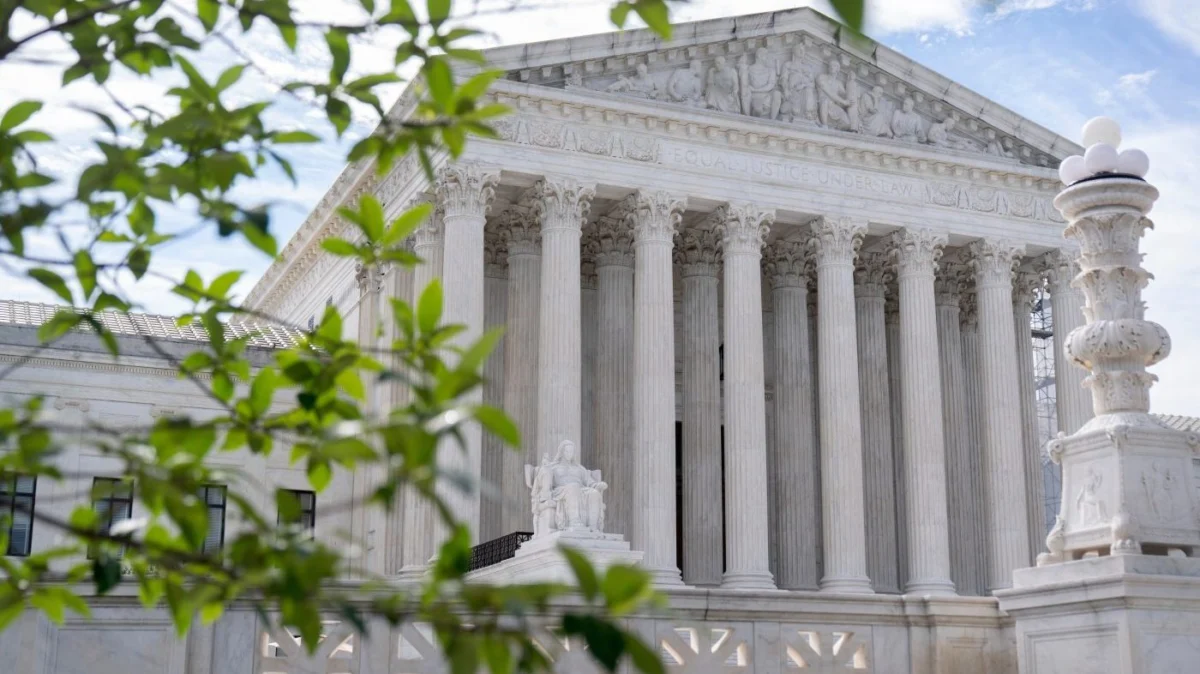
A significant breach of confidentiality within the Supreme Court has cast an unwelcome spotlight on its traditionally opaque operations, simultaneously shattering the fragile trust essential to its functioning. Internal memoranda exchanged between justices in 2016, recently unveiled by The New York Times, have ignited a firestorm, challenging the institution’s long-held commitment to the absolute confidentiality of its deliberations. This latest incident, coming four years after the seismic leak of the draft opinion that overturned abortion protections, underscores a growing crisis of secrecy and confidence at the nation’s highest court.
The leaked documents offer an unprecedented glimpse into the Court’s internal processes, specifically detailing the deliberations that led to its decision to block then-President Obama’s landmark Clean Power Plan. More critically, they reveal how the Court began to fundamentally redefine the role and scope of its emergency docket, a practice now widely known as the "shadow docket." This expedited process, characterized by minimal briefing and a complete absence of oral arguments, has since become a potent tool, notably yielding numerous victories for President Trump since his return to the White House. Critics, including some justices, have decried its furtive nature and significant policy impact without full judicial review.
The Shadow Docket Unveiled: A Deep Dive into Judicial Secrecy
The term "shadow docket," coined by University of Chicago law professor William Baude, refers to the Supreme Court’s use of its emergency powers to issue orders and summary decisions, often without full merits briefing or oral argument. Traditionally reserved for urgent matters like stays of execution or temporary injunctions, its application has expanded dramatically in recent years, particularly since 2017. The 2016 memos related to the Clean Power Plan are crucial because they predate the most pronounced expansion, offering a foundational insight into how the Court began to conceive of and utilize this expedited pathway for major policy decisions.
Before these leaks, public understanding of the shadow docket was largely derived from the outcomes of its decisions and the sparse dissenting opinions. The newly published memos provide a rare window into the internal discussions and strategic considerations that shaped its evolution. They reveal justices grappling with the implications of using emergency orders to halt significant federal regulations, foreshadowing its later deployment in high-stakes cases ranging from immigration policy to vaccine mandates.
The criticisms against the shadow docket are manifold. Legal scholars and civil liberties advocates argue that its opaque nature undermines judicial transparency and due process. Decisions made quickly, with limited input from affected parties, raise concerns about fairness and the thoroughness of legal analysis. The sheer volume of impactful decisions rendered through this mechanism, especially during the Trump presidency, has led to accusations of partisan weaponization, transforming an emergency procedure into a de facto fast-track for ideologically preferred outcomes.
Professor Baude, while critical of the shadow docket’s evolution, has emphasized that the leak itself represents a more profound institutional crisis. "Supreme Court leaks like these — including copies of confidential work product — are becoming more common. In my view, this is a bad thing. It will damage the institutional culture of the Court and do little good," he wrote, highlighting the severe repercussions for the Court’s internal dynamics and its ability to function cohesively.
A Pattern of Leaks: Eroding Trust and Demanding Accountability
The current leak echoes the unprecedented disclosure of the draft Dobbs v. Jackson Women’s Health Organization opinion in May 2022, which ultimately led to the overturning of Roe v. Wade. That incident triggered a months-long internal investigation led by Supreme Court Marshal Gail Curley and former Homeland Security Secretary Michael Chertoff. Ninety-seven court personnel were interviewed, and employees’ electronic devices were searched. Despite these extensive efforts, the investigation concluded without identifying a culprit, noting that nearly 100 people had access to the draft opinion and no individual could be identified by a "preponderance of the evidence."
The failure to identify the source of the Dobbs leak left a profound scar on the Court, as articulated by Justice Clarence Thomas at the time: "Look where we are, where that trust or that belief is gone forever. And when you lose that trust, especially in the institution that I’m in, it changes the institution fundamentally. You begin to look over your shoulder." This sentiment is now reignited by the 2016 memo leak, exacerbating concerns about the Court’s institutional integrity and the confidentiality of its internal communications.
Reactions from Capitol Hill have been swift and partisan. At a recent Senate Judiciary Committee hearing, Senator Josh Hawley (R-Mo.), a former clerk for Chief Justice John Roberts, denounced the leaks as a "coordinated attack" by the left. "The point of it is to destroy the independence of the Supreme Court, to browbeat that court into doing what the left in this country wants," Hawley asserted. Other Republicans, including Senator Mike Lee (R-Utah), have called for a new investigation into the recent disclosures. The Supreme Court has yet to comment on the matter, and it remains uncertain whether an official investigation will be launched.
Legal scholars, like Jonathan Adler, a William & Mary law professor, warn of the broader implications. He suggested that such leaks could lead justices to be less willing to commit their thoughts to paper, potentially hindering the deliberative process. "If I am right, this could have the inevitable (and perhaps undesirable) effect of more decisions in which the justices divide along predictable ideological lines," Adler wrote, adding a cautionary note that "insofar as the source(s) of these leaks do not like the Court’s orientation, their leaks might help produce a Court even less to their liking." The long-term impact on the Court’s collegiality and its capacity for nuanced legal development remains a significant concern.
Justice Alito Retirement Speculation Amidst Court Turmoil
Amidst the swirling controversy over leaks, speculation regarding potential Supreme Court retirements continues to draw attention, particularly concerning Justice Samuel Alito. Recent reports from Fox News and CBS News, citing sources close to Alito, indicate he has no immediate plans to step down this year, cooling intense speculation.
Alito, at 77, is the Court’s oldest member, a factor that often fuels retirement rumors, especially when considering the Court’s current ideological balance. However, he is younger than several of his predecessors who served into their eighties or even nineties, such as Justice Stephen Breyer (nearly 84), Justice Anthony Kennedy (82), and Justice John Paul Stevens (90). To find a justice who voluntarily retired at a younger age, one would have to go back to Justice David Souter, who left at 69 for a quieter life in New Hampshire, shunning public attention even in death. Sandra Day O’Connor also retired at 75 to care for her ailing husband, an opening that ultimately led to Alito’s nomination.
The heightened focus on Alito intensified following his hospitalization in March and comments from President Trump, who mused about the possibility of appointing "two, could be three, could be one" Supreme Court justices. Furthermore, Alito’s upcoming book launch in October, coinciding with the start of the Court’s next term, sparked conjecture about whether promotional events would conflict with his judicial duties. While some pundits suggested he might be crisscrossing the country, others countered that Alito’s known introverted nature might mean he would forgo an extensive book tour. Despite the chatter, Alito has given no outward indication of an impending retirement, and many court watchers continue to dismiss the notion of him stepping down so soon.
Bar Associations Assert Accountability for Trump Orbit Lawyers
While federal pardons often offer a clean slate to political allies, lawyers associated with efforts to subvert the 2020 election results under former President Trump are facing a distinct and potent form of accountability: disciplinary actions from state bar associations. These professional organizations, tasked with regulating the legal profession, are pressing forward with ethics probes and disciplinary measures, asserting that the conduct of certain Trump lawyers has called into question their fitness to practice law. Many of these lawyers vehemently deny wrongdoing, condemning the proceedings as politically motivated weaponization of the legal system.
The professional consequences stand in stark contrast to the executive clemency often extended to others in Trump’s orbit. For instance, the Justice Department recently moved to wipe out seditious conspiracy convictions for leaders of the Proud Boys and Oath Keepers, a core component of the government’s prosecution of the January 6th Capitol attack. This followed Trump’s blanket pardon for over 1,500 individuals charged in connection with the riot, issued on his first day back in the White House. However, presidential pardons apply only to federal offenses and do not extend to state-level bar discipline, leaving Trump’s legal team vulnerable to professional sanctions.
The architects of the "fake electors" scheme, an attempt to overturn the 2020 election outcome, have been particularly targeted. John Eastman, the lawyer who spearheaded this plan, was formally disbarred in California last week after a three-year disciplinary process. His license in Washington, D.C., has also been suspended. Similarly, longtime Trump ally Rudy Giuliani was disbarred in New York and D.C., and lawyer Kenneth Chesebro faced disbarment in New York. Jenna Ellis saw her law license suspended in Colorado for three years. Former DOJ official Jeffrey Clark is currently fighting potential disbarment in D.C. for his role in attempts to pressure Georgia officials to overturn election results.
These lawyers, including Clark, largely maintain that their actions were legitimate. Clark testified before the Senate, stating, "I expressed internal views within the Department of Justice about the 2020 election through proper channels, in privileged settings, as part of my official duties as a lawyer and consistent with my Rule 2.1 obligations in D.C."
In response to these state-level actions, the Trump Justice Department has sought to exert greater control over ethics probes targeting its lawyers. Last month, the DOJ proposed a new regulation that would allow it to intervene in state bar disciplinary investigations, including the authority to review allegations against DOJ lawyers first and request that state bars halt their probes until the administration completes its own. The DOJ’s notice asserted that "political activists" are using bar complaints to target federal lawyers, calling the bars’ willingness to investigate "troubling." This move has drawn criticism as a potential attempt to shield federal officials from independent oversight.
The latest DOJ official to face professional scrutiny is Ed Martin, currently serving as pardon attorney, who previously led the U.S. attorney’s office for D.C. Martin faces potential disciplinary action over a letter to Georgetown University threatening legal action if it did not end its diversity, equity, and inclusion (DEI) policies. As a government official, Martin is attempting to remove the matter to federal court in Washington, a move objected to by the D.C. Bar’s disciplinary counsel, who argue that professional disciplinary proceedings are neither civil actions nor criminal prosecutions and therefore not subject to federal removal statutes. This ongoing legal skirmish highlights the complex interplay between federal authority and state professional regulation.
Defamation Lawsuits: The #MeToo Movement’s Legal Combat Zone
Allegations of sexual misconduct against former Democratic congressman Eric Swalwell have immediately prompted speculation about his potential legal recourse, most notably a defamation lawsuit. This scenario is increasingly common in high-profile sexual misconduct cases, where both alleged perpetrators and alleged victims utilize defamation claims to seek legal redress when the criminal justice system may not provide satisfactory outcomes. This legal strategy has become a defining feature of the post-#MeToo era, creating a complex and often contentious legal landscape.
Defamation, which involves making a false statement of fact that harms another’s reputation, carries a high burden of proof, particularly for public figures who must demonstrate "actual malice"—that the statement was made with knowledge of its falsity or with reckless disregard for the truth. Despite these challenges, the threat or initiation of such lawsuits can have a significant chilling effect. Ashley Grace, an actress who pursued a sexual assault case against a fashion photographer, observed, "Threatening defamation against a survivor is not just a legal strategy; it’s a second attack."
Swalwell’s lawyer, Sara Azari, has stated that the California Democrat would pursue "every available legal remedy" against those she alleges orchestrated a "campaign of lies" against him. While the specifics of potential legal action against his accusers remain unconfirmed, the precedent for such moves is well-established.
Former New York Governor Andrew Cuomo, for instance, signaled his intent to sue former aide Charlotte Bennett for defamation after she accused him of sexual harassment, repeatedly filing legal summonses. Bennett revealed that years later, the threat of a defamation suit still prevents her from speaking freely about the allegations. "A retaliatory defamation suit is not a matter of credibility; it’s a question of resources, and it’s about the tools available to the Cuomos and the Swalwells of the world," she lamented, highlighting the power imbalance inherent in such legal battles.
The dynamic played out dramatically in the highly publicized 2022 trial between actor Johnny Depp and his former spouse, actress Amber Heard. Depp sued Heard over an op-ed she penned alluding to his alleged sexual violence, and Heard countersued, accusing Depp of falsely branding her a liar. The jury found that both defamed each other, awarding $15 million to Depp and $2 million to Heard, illustrating the complex, often dual nature of these claims.
Former President Trump has also been deeply embroiled in such litigation. Writer E. Jean Carroll successfully convinced a jury that Trump sexually abused her in the mid-1990s and defamed her when she came forward, resulting in a $5 million award. She later secured an additional $83.3 million for further defamation claims. Trump, in turn, countersued Carroll, arguing that her continued use of the word "rape" (despite the jury finding that she hadn’t proven rape under the specific legal definition) constituted defamation. His claims ultimately failed. However, Trump did successfully sue ABC for defamation after one of its anchors described the incident as rape, resulting in a $15 million settlement from the network.
Trump’s legal battle with Carroll has now reached the Supreme Court, which is currently deliberating whether to hear his appeal of the initial verdict, an announcement that could come as soon as Monday. These cases collectively underscore the strategic use of defamation in sexual misconduct allegations, revealing it as a potent, albeit double-edged, sword in the ongoing societal reckoning with issues of consent, credibility, and public reputation.
Supreme Court Docket: Religious Rights, Sentencing, and Parental Authority
The Supreme Court’s recent "Order List" has once again highlighted the deeply contentious legal and social issues shaping contemporary American jurisprudence, particularly in the realms of religious freedom, LGBTQ+ rights, and parental authority.
IN: Religious vs. LGBTQ+ Rights
The Court began its April session with a significant announcement, agreeing to hear St. Mary Catholic Parish v. Roy next term. This case will determine if states can compel religious preschools to admit children of same-sex couples to receive public funds. The decision to take up this case signals a renewed examination of the 1990 precedent set in Employment Division v. Smith, which held that neutral and generally applicable laws are presumptively constitutional, even if they burden religious exercise.
Three conservative justices—Clarence Thomas, Samuel Alito, and Neil Gorsuch—have openly called for Smith to be completely overturned, arguing it bypasses constitutional religious protections. While the Court declined the broader question of fully overturning Smith, it did agree to consider narrowing its application as it hears the challenge from Catholic parishes against Colorado’s mandate to enroll LGBTQ+ families. The parishes are notably backed by the Trump administration, underscoring the case’s political and ideological weight. This case will delve into the complex balance between religious organizations’ free exercise rights and state anti-discrimination laws.
In a second significant move, the justices took up Beaird v. United States, a case they had been considering for some time. This case will address the level of deference owed to the commentary accompanying the federal Sentencing Guidelines. This decision could have far-reaching implications for how federal sentences are determined and how judges interpret the advisory guidelines established by the U.S. Sentencing Commission.
OUT: Parental vs. LGBTQ+ Rights
Conversely, the Supreme Court notably turned away a petition from parents who contended that a Massachusetts school district violated their parental rights by encouraging their child’s pronoun and name change in the classroom without their knowledge or consent. While most petitions are rejected quickly, the justices had sat on this request for several weeks, indicating significant internal deliberation before declining to hear it.
This decision, while not a ruling on the merits, leaves the broader issue of whether schools violate parents’ constitutional right to direct their children’s upbringing by allowing social gender transitions in the classroom unresolved at the highest court. This contentious area of law has been moving closer to the Supreme Court, with various state and federal courts grappling with the balance between parental rights, student privacy, and school authority. Last month, the justices issued an emergency ruling that California was "likely acting unconstitutionally" in a related case concerning parental notification policies. This suggests that while this specific petition was rejected, the broader issue of parental authority versus student autonomy in gender identity remains a live and developing legal battleground that is likely to return to the Court in future cases.