
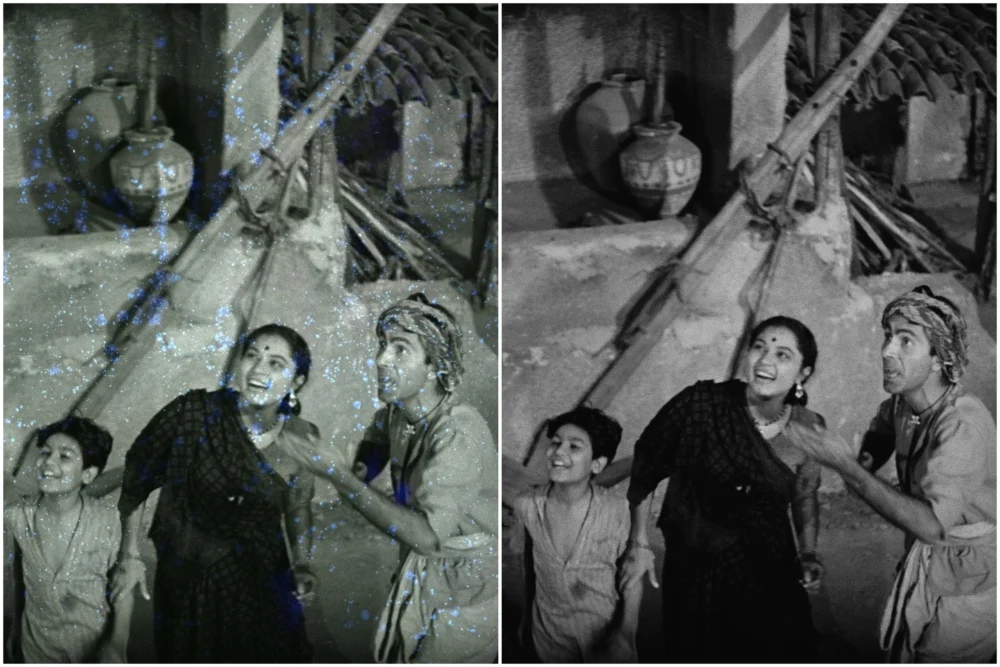
The history of Indian cinema, the world’s most prolific film industry, is currently engaged in a race against time and chemical decay. Statistics provided by film historians and archivists present a sobering reality: approximately 70 percent of Indian films produced before 1950 have been lost to the ravages of time, neglect, and the inherent instability of early film stock. In a nation where cinema is a central pillar of cultural identity, the disappearance of these moving images represents a significant fracture in the country’s historical record. For Shivendra Singh Dungarpur, a filmmaker and the founder of the Film Heritage Foundation (FHF), this crisis is not merely a professional concern but a personal crusade to salvage what remains of India’s celluloid soul.
The magnitude of this undertaking was recently underscored by a poignant encounter at Mumbai’s historic Regal Cinema. During a Thursday evening screening—part of a weekly series organized by the FHF—a food-delivery worker paused between his shifts to watch a restored classic. Before returning to his deliveries, the man approached Dungarpur’s wife and handed her 1,000 rupees (approximately $10.65). He explained that the high ticket prices at modern multiplexes made such films inaccessible to him, but the 6:30 PM screening at the 1,400-capacity Regal fit his schedule and his budget. He insisted on contributing to the cause of preservation. This moment, Dungarpur suggests, validates the decade-long struggle to convince a nation that its cinematic past is a treasure worth the arduous labor of restoration.
The Genesis of a Preservation Movement
The Film Heritage Foundation was established in 2014, but its roots trace back to a transformative experience Dungarpur had at the Il Cinema Ritrovato festival in Bologna, Italy. At the time, Dungarpur was a successful director of television commercials, with over 1,500 credits to his name. His trajectory shifted after reading an interview with legendary filmmaker Martin Scorsese, who spoke passionately about the importance of film preservation and the work of the Cineteca di Bologna.
Witnessing the meticulous care with which European and American archives treated their film history, Dungarpur was struck by the contrast in his home country. While India produced thousands of films annually, the infrastructure for preserving them was precariously thin. The National Film Archive of India (NFAI), founded by P.K. Nair, had made significant strides, but the sheer volume of material and the lack of public awareness necessitated a dedicated non-governmental intervention. This realization led Dungarpur to direct "Celluloid Man," a documentary portrait of P.K. Nair, and eventually to the founding of the FHF as India’s only non-governmental body dedicated to the preservation, restoration, and exhibition of the country’s film heritage.

A Chronology of Critical Restoration
The work of the FHF is as much a detective story as it is a technical feat. Restoration often begins with a global search for usable elements, as original camera negatives in India have frequently been destroyed by heat, humidity, or "vinegar syndrome"—a chemical reaction that causes acetate film to decompose.
One of the foundation’s most significant triumphs involved the 1975 classic "Sholay." When the FHF undertook the "Final Cut" restoration of Ramesh Sippy’s magnum opus, they discovered that no original camera negative existed in India. Through the International Federation of Film Archives (FIAF) network, Dungarpur’s team eventually located materials in London. These elements contained the original censored climax and two deleted scenes that had not been seen by the public since the film’s initial release.
Similarly, the foundation played a crucial role in the restoration of Uday Shankar’s 1948 masterpiece "Kalpana." In collaboration with Martin Scorsese’s The Film Foundation and the World Cinema Project, the FHF helped locate the elements that allowed the film to have its world premiere at the Cannes Film Festival in 2012. This success set the stage for a string of high-profile restorations that have since graced the screens of the world’s most prestigious festivals, including Venice, Berlin, and Toronto.
Beyond Bollywood: The Regional Imperative
A core tenet of Dungarpur’s philosophy is that India’s cinematic heritage is not a monolith centered in Mumbai. He has consistently advocated for the preservation of regional cinema, which he argues often represents the true diversity of the Indian experience. The FHF has successfully restored titles from Manipur, Karnataka, Odisha, and Kerala, alongside Hindi and Bengali productions.
"Our regional cinema is the cinema which represents our country the best," Dungarpur notes. This commitment to diversity is reflected in his role as the director of the Mumbai Film Festival (MAMI), where he introduced the "MAMI Independent" strand. This initiative focuses on films from the fringes of the industry—Sikkim, Meghalaya, and other regions where the work is deeply rooted in local time and place.

The global impact of this regional focus was recently highlighted at the Las Palmas de Gran Canaria Film Festival. The FHF presented a showcase of six restorations spanning Hindi, Malayalam, Bengali, and Sinhala languages. Among these was Sumitra Peries’ "The Girls" (Gehenu Lamai, 1978), which became the first Sri Lankan film to receive a theatrical release in France following its restoration.
The Technical and Educational Infrastructure
The Film Heritage Foundation does not merely restore individual films; it is building the human and physical infrastructure necessary for long-term preservation. Since its inception, the foundation has conducted workshops that have trained nearly 500 archivists. This educational outreach has expanded beyond India’s borders, reaching professionals in Sri Lanka, Nepal, and Afghanistan, thereby creating a regional network of film guardians.
The foundation’s current major project is the Moving Image Centre in Mumbai. Construction began in 2024, and the facility’s conservation spaces are already operational. Once complete, the center will include a comprehensive library and a public hub where students, researchers, and the general public can engage with the history of Indian cinema. The goal is to create a permanent, accessible home for the country’s visual memory.
Supporting Data: The Fragility of the Medium
The urgency of the FHF’s mission is supported by data regarding the vulnerability of film stock in tropical climates.
- Pre-1950 Loss: The 70% loss rate is attributed primarily to the use of highly flammable nitrate film, which is prone to spontaneous combustion and rapid chemical decay if not stored in climate-controlled environments.
- The Transition to Acetate: Even the "safety film" (acetate) that replaced nitrate is subject to vinegar syndrome. Without intervention, an entire library of films from the 1950s through the 1980s could be lost within decades.
- The Digital Fallacy: Dungarpur and other archivists frequently warn that digital "backups" are not a substitute for physical film preservation. Digital formats become obsolete quickly, whereas a properly stored film print can last for over a century.
Analysis of Global Implications and Cultural Diplomacy
The work of the Film Heritage Foundation has elevated Indian cinema from a commercial product to a subject of global academic and cultural prestige. The 2025 Cannes Film Festival provided a landmark moment for this movement when filmmaker Wes Anderson presented the restored version of Satyajit Ray’s "Days and Nights in the Forest" (Aranyer Din Ratri, 1970). Anderson’s endorsement—calling the film a "masterpiece" that must be "cherished and preserved"—underscores how restoration allows Indian classics to be re-evaluated by international audiences and new generations of filmmakers.

The foundation’s success at festivals in Cairo, Brazil, Poland, and Taiwan demonstrates the power of "film diplomacy." By sharing restored versions of films like Shyam Benegal’s "The Churning" (Manthan, 1976) and Bimal Roy’s "Two Acres of Land" (Do Bigha Zamin, 1953), the FHF is providing the world with a nuanced, historical perspective on Indian society that goes far beyond the "Bollywood" stereotype.
Conclusion: A Vision for the Future
As the Film Heritage Foundation enters its second decade, the focus remains on both the past and the future. Current projects include the restoration of Kamal Amrohi’s "Pakeezah," Shyam Benegal’s "Bhumika," and Dev Benegal’s "English, August." Each project presents unique challenges; for "Bhumika," only a single surviving print remains, making the restoration a high-stakes rescue mission.
For Shivendra Singh Dungarpur, the ultimate goal is to foster a culture of "looking up" at the screen—a return to the awe-inspired viewing experience of his childhood. By making classic cinema free and accessible at venues like the Regal Cinema and through the forthcoming Moving Image Centre, the foundation is ensuring that the "common man" remains the primary stakeholder in India’s cinematic legacy. The journey from 2014, when the concept of film preservation was largely misunderstood in India, to today’s global recognition, marks a significant turning point in the preservation of global cultural heritage. Through the FHF’s efforts, the shadows of the past are finally being brought back into the light.