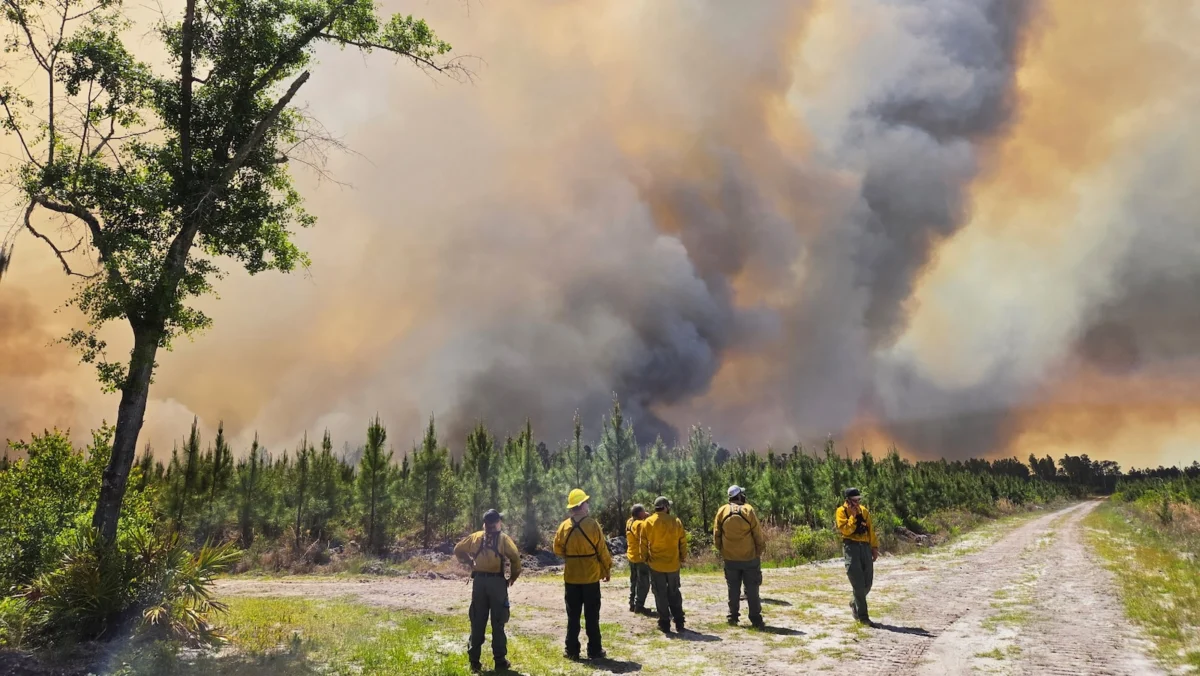
South Georgia is currently battling a severe wildfire crisis, with over 27,000 acres consumed by flames across the region. Governor Brian Kemp has responded by declaring a state of emergency for 91 counties, mobilizing state resources to combat the escalating blazes. The Georgia Forestry Association confirmed the vast scale of the fires, which are exacerbated by prolonged and intense drought conditions gripping the state.
Escalating Blaze and Devastating Impact
One of the most significant and rapidly expanding fires, the Brantley Highway 82 fire, ignited Monday night in Brantley County. Initially reported on Tuesday morning as a few hundred acres and approximately 75 percent contained, the fire dramatically intensified overnight. By Wednesday morning, it had surged to encompass 5,000 acres with containment dropping to a precarious 10 percent, according to data from the Western Fire Chiefs Association, which monitors fire activity nationwide. The ferocity of this blaze has already led to mandatory evacuation orders for residents in its path. Local officials have confirmed the devastating loss of 54 homes, underscoring the immediate and profound impact on communities.
Brantley County Manager Joey Cason expressed profound relief and astonishment at the lack of reported fatalities during a press conference on Wednesday afternoon. "I will be very honest with you and say it’s a miracle that there have not been any lives lost," Cason stated, highlighting the critical danger posed by the uncontrolled inferno.
The Pinelands Road fire in Clinch County, situated near the Florida border, is another major concern. This fire, which began over the weekend, has already spread across more than 16,000 acres and, like the Brantley fire, is only 10 percent contained. Both Brantley and Clinch counties are characterized by extensive forested landscapes and are located on the fringes of the expansive Okefenokee Swamp, a crucial ecological area now under threat.
A Regional Crisis with Widespread Drought
The wildfire situation is not confined to Georgia. Northern Florida is also experiencing similar severe drought conditions, leading to a surge in fire activity. As of Wednesday, officials in both states were monitoring over 100 fires collectively, although many of these were smaller and more manageable. The widespread nature of these fires points to a broader regional environmental challenge driven by a lack of sufficient rainfall.
Historical Context and Contributing Factors
While wildfires are a natural occurrence in Georgia’s forests, typically sparked by lightning, human carelessness such as discarded cigarettes, or embers from backyard fires, they historically have not reached such destructive scales. This is largely due to effective forest management practices and periods of ample rainfall that keep vegetation moist and less combustible. However, the current season marks a stark departure from the norm.
Georgia is currently experiencing critically low rainfall and water levels across the state. A significant portion of South Georgia is classified as being in an "exceptional drought," the most severe category within the federal drought monitoring system. Much of the remainder of the state is under "extreme drought," the next level of severity. This prolonged dry spell creates an environment where fires can ignite more easily and spread with unprecedented speed and intensity.
Adding to the fuel load, many Georgia forests still bear the impact of Hurricane Helene, with downed trees providing an abundance of dry, combustible material. Erin Lincoln, director of the Center for Forest Business at the University of Georgia, noted this as a significant contributing factor to the current fire crisis.
The Climate Change Connection
State Forester Johnny Sabo elaborated on the impact of drought conditions, explaining, "Under drought conditions, we have that much less water available either in the water table or in our swamps, ditches, drains, lakes. So the wildfires can spread more rapidly." This statement directly links the current fire emergency to the escalating effects of climate change, which are predicted to intensify the frequency and severity of droughts in many regions. The increased duration and intensity of dry periods create a higher baseline risk for large-scale wildfires.
Official Response and Public Appeal
In response to the escalating crisis, Governor Brian Kemp’s declaration of a state of emergency is a critical step in mobilizing all available state resources, including the National Guard if deemed necessary, to support firefighting efforts. Tim Lowrimore, president and CEO of the Georgia Forestry Association, issued a somber warning and a call to action. "This is a serious and evolving situation," Lowrimore stated on the association’s Facebook page. "We urge all Georgians to remain vigilant. Preventing additional fires right now is critical as responders work to manage this emergency."
Local communities are demonstrating resilience and solidarity. Brantley County and several area churches have established vital shelter sites for residents displaced by the fires. They are also actively collecting donations to support both the brave firefighters on the front lines and the individuals who have lost their homes and belongings.
Air Quality Deterioration
The widespread fires are also having a significant impact on air quality across the state. Hazy, smoky conditions have been reported as far north as Atlanta, causing air quality to degrade to "moderate" levels, posing potential health risks to sensitive individuals. In central Georgia, cities like Macon and Columbus have reported "unhealthy" air quality levels, further underscoring the broad impact of the wildfires.
Burn Ban and Human Factor
In an effort to prevent further ignitions, the state has implemented a burn ban for south and central Georgia, strongly advising against any outdoor fires. State Forester Sabo emphasized the human element in fire causation: "Our number one cause of wildfires in the state are humans, unfortunately — people being careless." He reiterated the critical importance of Georgians heeding these warnings to avoid exacerbating the already dire situation.
Broader Implications and Future Outlook
The current wildfire crisis in South Georgia serves as a stark reminder of the growing vulnerability of natural landscapes to climate change. The convergence of severe drought, abundant dry fuel from past storms, and human activity creates a potent recipe for disaster. The long-term implications include not only the immediate destruction of homes and natural habitats but also potential impacts on agriculture, water resources, and the overall health of the ecosystem.
As firefighting efforts continue around the clock, the focus remains on containment and the safety of residents. However, the underlying conditions that have fueled this emergency suggest that similar challenges may become more frequent in the future. This situation underscores the urgent need for continued investment in drought preparedness, forest management strategies that account for a changing climate, and public awareness campaigns regarding fire prevention. The resilience of communities and the dedication of first responders are paramount, but a broader, proactive approach to environmental challenges is essential for safeguarding Georgia’s future.