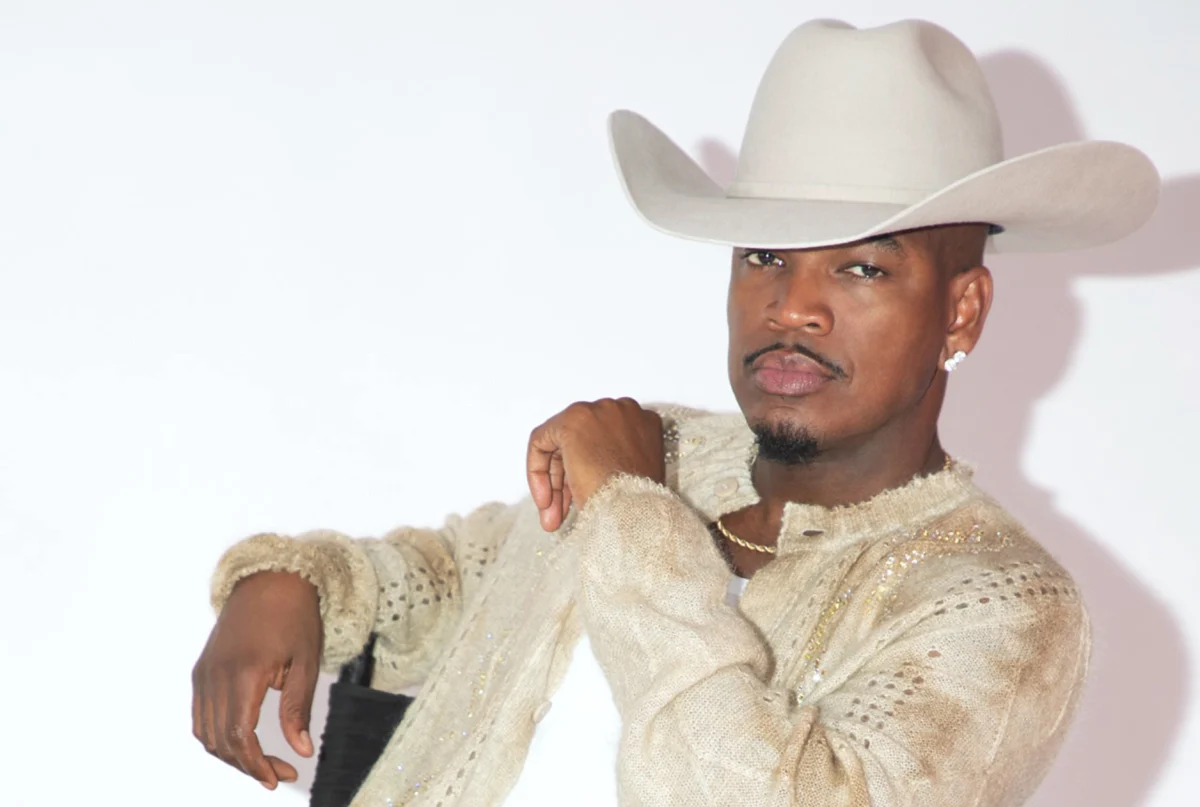
The landscape of American music is currently undergoing a significant transformation as the traditional boundaries between genres continue to dissolve, a phenomenon most recently exemplified by the Grammy-winning R&B artist Ne-Yo. Known globally for his smooth vocals and prolific songwriting, the artist—born Shaffer Chimere Smith—has officially begun his foray into the heart of the country music industry. While the move into Nashville’s competitive ecosystem often comes with institutional friction, Ne-Yo’s transition has been marked by a surprising degree of mutual respect and creative synergy. Appearing on Rolling Stone’s Nashville Now podcast, the singer-songwriter opened up about his experiences in Music City, his upcoming country-influenced project, and the disconnect between the warnings he received and the reality he encountered on the ground.
Ne-Yo’s venture into Nashville is not an impulsive pivot but rather the culmination of a long-standing appreciation for the storytelling at the core of country music. However, the artist admitted that before he set foot in Tennessee, he was met with a chorus of apprehension from industry peers and advisors. The prevailing narrative suggested that Nashville remained a "cliquey" environment, resistant to outsiders, particularly those hailing from the R&B and hip-hop spheres. Ne-Yo recounted being told that if he didn’t have the right connections or a history within the local circuit, his presence would be met with indifference or outright hostility. "It came with all these warnings and all this fear that people were trying to put on me," the singer noted, acknowledging that he arrived in Nashville expecting a struggle for acceptance.
Contrary to these expectations, Ne-Yo described his reception as overwhelmingly positive. Instead of gatekeeping, he found a community of songwriters and producers eager to explore the intersection of R&B’s rhythmic sophistication and country’s narrative depth. The artist highlighted that the very people he was told to fear have become his most enthusiastic collaborators. This reception underscores a broader shift in the Nashville establishment, which has become increasingly open to cross-genre experimentation as streaming data continues to show a massive overlap in audiences for R&B, pop, and country music.
A Legacy of Cross-Genre Collaboration
While Ne-Yo is currently making headlines for his dedicated country project, he is no stranger to the genre’s sensibilities. In 2012, he collaborated with country icon Tim McGraw on the track "She Is," a mid-tempo ballad that showcased how seamlessly his vocal delivery could adapt to a country arrangement. That collaboration served as an early proof of concept, demonstrating that the "Nashville Sound" and the "Atlanta R&B Sound" shared more DNA than critics often admitted. Both genres prioritize emotional vulnerability, relatable storytelling, and melodic hooks—elements that have defined Ne-Yo’s career since his debut.
Ne-Yo’s career trajectory has always been defined by his ability to write for diverse voices. Before he became a solo superstar with his 2006 debut album In My Own Words, he was a sought-after songwriter behind the scenes. He is the pen behind Beyoncé’s "Irreplaceable," a song that notably features an acoustic guitar-driven arrangement that leans heavily into folk and country structures. His ability to craft "Irreplaceable," which spent ten weeks at number one on the Billboard Hot 100, suggests that his move into Nashville is less a departure and more an homecoming to a style of writing he has mastered over two decades.

The Nashville Heavyweights and the Creative Process
To ensure the authenticity of his new project, Ne-Yo has aligned himself with some of the most influential figures in modern country music. His list of collaborators includes Rhett Akins, a songwriter responsible for dozens of number-one hits; Luke Laird, a producer known for his work with Kacey Musgraves and Carrie Underwood; and Charles Kelley, a founding member of the multi-platinum group Lady A. These partnerships represent a "who’s who" of the Nashville industry, signaling that the establishment is not just "accepting" Ne-Yo, but actively investing in his success.
The music resulting from these sessions has begun to trickle out to the public. Last year, Ne-Yo released "Simple Things," a track that balances soulful vocal runs with the thematic tropes of country music—gratitude, home, and the beauty of an uncomplicated life. More recently, he issued "Up Out & Gone," a buoyant track that further explores this sonic fusion. These releases are part of a deliberate strategy to introduce his fan base to his new direction while proving his mettle to the country music audience.
Industry analysts suggest that Ne-Yo’s entry into country music is perfectly timed. The "country-curious" movement in R&B and pop has gained massive momentum in 2024, spurred by high-profile projects like Beyoncé’s Cowboy Carter and Post Malone’s F-1 Trillion. These artists have paved a commercial highway for Ne-Yo to follow, proving that the modern listener is less concerned with genre labels than with the quality of the songwriting.
Navigating Social Dynamics and the Broadway Experience
One of the most poignant aspects of Ne-Yo’s interview was his commentary on the social climate of Nashville. The city, particularly the famous Lower Broadway strip lined with honky-tonks, has often been scrutinized for its lack of diversity and occasional instances of racial tension. Ne-Yo addressed this head-on, noting that despite the warnings, his personal experience in these spaces has been devoid of conflict.
"I’ve yet to meet the drunk racist guy. He hasn’t showed up yet," Ne-Yo remarked, using a touch of humor to address a serious underlying concern for Black artists entering the country space. He noted that he is still waiting for the "bane of his Nashville existence" to appear, but so far, the city has offered him nothing but open arms. This statement is significant, as it challenges the stereotypical image of Nashville as an exclusionary bastion of the South. While the industry still has progress to make regarding systemic representation, Ne-Yo’s experience suggests that the cultural temperature on the ground is shifting toward inclusivity.
The significance of Ne-Yo’s presence in Nashville is also reflected in the current pop culture zeitgeist. His enduring influence was recently highlighted at the Coachella Valley Music and Arts Festival, where Justin Bieber made a surprise appearance to perform Ne-Yo’s 2006 classic "So Sick." The moment went viral, reminding the public of Ne-Yo’s status as a foundational pillar of modern music. By moving into country now, he is leveraging that legacy to bridge two of America’s most storied musical traditions.

Data and the Economics of the Genre-Blurring Trend
The economic incentive for Ne-Yo’s transition is supported by recent market data. According to Luminate’s 2023 Year-End Music Report, country music consumption in the United States grew by 23.7% year-over-year, outpacing the overall growth of the music industry. Furthermore, the report noted a significant increase in "cross-genre discovery," where listeners of R&B and Hip-Hop are increasingly adding country tracks to their streaming queues.
For an artist like Ne-Yo, who has already achieved peak success in the R&B world, Nashville offers a new frontier for growth. The country music audience is famously loyal, often supporting artists for decades through touring and physical media sales long after their radio dominance has faded. By establishing a foothold in Nashville, Ne-Yo is not just experimenting artistically; he is diversifying his "brand" and securing a long-term future in a genre that prizes longevity.
Broader Impact and Future Implications
Ne-Yo’s journey serves as a case study for the future of the music industry. As the digital era continues to democratize access to all types of music, the rigid silos of the 20th-century radio format are becoming obsolete. The success of his collaborations with Luke Laird and Rhett Akins could encourage other R&B veterans to explore the narrative possibilities of country music, leading to a more integrated and diverse musical landscape.
However, the transition is not without its risks. Historically, "crossover" projects can sometimes be perceived as opportunistic or inauthentic if the artist does not show a genuine commitment to the craft of the new genre. Ne-Yo seems acutely aware of this pitfall. By spending significant time in Nashville, working with local legends, and immersing himself in the city’s songwriting culture, he is demonstrating a level of "dues-paying" that the country community respects.
As he continues to release music and prepare for a potential full-length country album, the industry will be watching closely. If Ne-Yo can successfully navigate the complexities of Music City, he will join a small, elite group of artists who have mastered multiple genres, further cementing his place as one of the most versatile and influential creators of his generation. For now, the R&B great remains focused on the work, waiting for a challenge that has yet to arrive and enjoying a Nashville experience that has defied every warning he was given.