
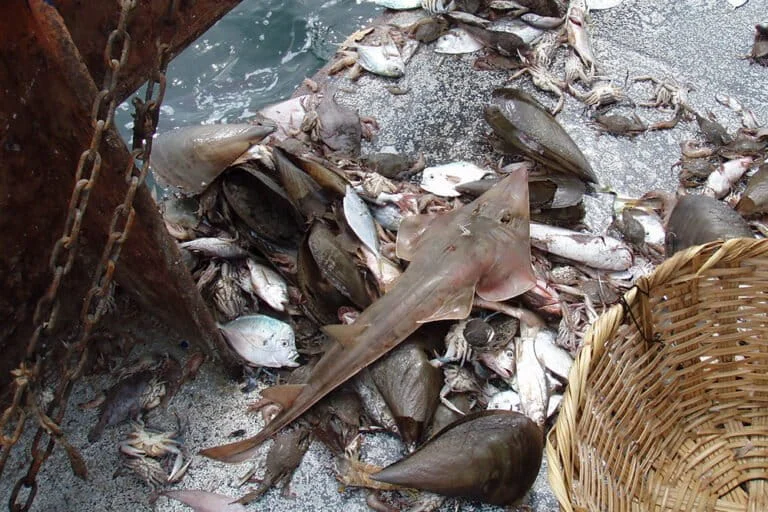
The sheer scale of marine life affected by bottom trawling, one of the world’s most prevalent and controversial fishing methods, has been brought into sharp focus by a groundbreaking new study. Researchers have compiled the first comprehensive list of marine fish species caught by this practice, revealing an astonishing diversity of nearly 3,000 distinct species. This extensive catalog, detailed in a recent publication, underscores a significant knowledge gap in fisheries management and highlights the potential for widespread, often unquantified, ecological impacts.
Bottom trawling involves dragging heavy, weighted nets along the seafloor, a technique employed globally to target commercially valuable species such as rockfish, cod, and various invertebrates like shrimp. While these targeted catches are well-documented, the indiscriminate nature of the nets means they ensnare a vast array of other marine organisms. The study, born from an initial inquiry into the impact of trawling on seahorses, revealed a surprising lack of foundational data on the full scope of species captured.
"I was surprised to realize there was no clear answer," stated Sarah Foster, a co-author of the study and the leader of the Project Seahorse initiative at the University of British Columbia, Canada, in an email to Mongabay. "One of the most basic questions in fisheries is what is actually being caught, and yet, for bottom trawling, that baseline understanding was missing." This fundamental oversight, Foster elaborated, means that a critical component of marine ecosystems remains largely unmeasured and, consequently, unmanaged.
The research team meticulously reviewed a vast repository of documents detailing bottom trawl catches. Their analysis identified close to 3,000 species of marine fish. However, Foster cautioned that this figure is likely an underestimate, with their projections suggesting the true number could be as high as double this recorded amount. This potential for a much larger impact amplifies concerns about the ecological footprint of bottom trawling.
The Hidden Cost: Undervalued Species and Data Deficiencies
A significant finding of the study is the inherent size bias in documented catches. Larger, more commercially desirable fish are consistently recorded, while smaller species are frequently relegated to generic categories such as "mixed fish" or "trash fish." This practice not only obscures the true biodiversity being impacted but also actively devalues these smaller species, many of which play crucial roles within marine food webs and contribute to local human livelihoods.
"First, it means we don’t actually know what fisheries are catching – and we cannot manage what we do not measure," Foster emphasized. "Second, this practice effectively undervalues those species. These are not just incidental organisms; many play vital roles in ocean ecosystems and also support human livelihoods." The implication is that the economic and ecological contributions of these often-overlooked species are not being factored into fisheries management decisions, potentially leading to their overexploitation and the degradation of the ecosystems they inhabit.
The study also delved into the conservation status of the species identified. While approximately 1,700 of the bottom-trawled species are classified as "least concern" on the IUCN Red List, a significant portion – around 237 species – are identified as threatened. This means that a substantial number of species facing varying degrees of risk are being caught in fishing operations without adequate conservation considerations.
Perhaps more alarming is the considerable amount of missing information. The research found that roughly 23% of the species are listed as "data deficient" or are not listed at all, meaning their conservation status has not been evaluated. This lack of data suggests that bottom trawl fisheries are operating "without a full understanding of the risks to marine life," a statement that raises serious questions about the sustainability of current fishing practices. This data gap could mask the true impact of trawling on vulnerable or poorly understood populations.

A Global Concern, Localized Impacts
The study’s findings have immediate implications for fisheries management and conservation policy. Foster and her colleagues advocate for a shift towards more selective fishing methods that can better distinguish between target species and bycatch. They also call for stricter regulations on where and when bottom trawling is permitted, suggesting that spatial and temporal closures could help mitigate impacts on vulnerable ecosystems and species.
The research indicates that the problem is not confined to a few hotspots. "Species of conservation concern turned up in bottom trawl catches in every region we examined except Antarctica," Foster reported. This widespread occurrence suggests that the biodiversity impact of bottom trawling is a global phenomenon, affecting marine life across diverse oceanic environments.
However, not all experts agree on the overall magnitude of the impact. Ray Hilborn, a fisheries expert at the University of Washington who was not involved in the study, acknowledged the impressive species count but raised concerns about the paper’s broad assertions regarding global impact. "Certainly in some places trawling is intense, but only a small fraction of the continental shelves have ever been trawled," he commented to Mongabay. Hilborn suggests that the study may overstate the ubiquity of intense trawling pressure without providing sufficient spatial context.
The counterpoint to Hilborn’s perspective lies in the study’s assertion that conservation concern species are found in catches across nearly all examined regions. This implies that even in areas where trawling intensity might be lower, the incidental capture of vulnerable species remains a persistent issue. The cumulative effect of these widespread, albeit sometimes less intense, interactions could still pose a significant threat to marine biodiversity.
Background and Chronology of the Research
The genesis of this extensive study can be traced back to a specific research question concerning seahorses. Seahorses, known for their unique morphology and often slow-moving nature, are particularly susceptible to the indiscriminate nature of bottom trawls. As researchers at Project Seahorse sought to understand the specific threats posed by this fishing method to seahorse populations, they encountered a fundamental lack of comprehensive data on the broader bycatch of bottom trawls. This realization prompted a more ambitious undertaking: to compile a global overview of the fish species impacted.
The process likely involved several key stages:
- Initial Inquiry (Circa [Inferred Recent Past]): Project Seahorse researchers begin investigating seahorse vulnerability to bottom trawling.
- Discovery of Data Gap: The realization emerges that a comprehensive understanding of what is caught by bottom trawls is missing.
- Research Design and Methodology: Development of a strategy to systematically review existing literature and databases. This would involve defining search parameters, identifying relevant scientific publications, and establishing criteria for inclusion of data.
- Data Compilation and Analysis: The painstaking process of extracting and organizing information on species caught from numerous sources. This phase would have likely spanned months, if not years, given the sheer volume of research and fishing records.
- Conservation Status Assessment: Cross-referencing the identified species with databases like the IUCN Red List to determine their conservation status.
- Statistical Modeling and Estimation: Utilizing statistical methods to project potential undercounting and to estimate the overall number of species affected.
- Publication of Findings: Dissemination of the research results through peer-reviewed scientific journals. The specific journal mentioned in the original text (Springer) indicates a formal academic publication.
Broader Implications for Marine Ecosystem Health and Management
The findings of this study carry profound implications for the future of marine conservation and fisheries management. The sheer number of species impacted by bottom trawling, coupled with the substantial proportion of threatened and data-deficient species, paints a stark picture of the potential ecological damage.
- Ecosystem Function: The incidental capture of a wide array of fish species, including those that play critical roles in maintaining ecosystem balance (e.g., as predators, prey, or habitat modifiers), can disrupt intricate food webs and lead to cascading ecological effects. The removal of key species, even as bycatch, can alter community structures and reduce ecosystem resilience.
- Fisheries Sustainability: The lack of precise knowledge about bycatch makes it difficult to accurately assess the sustainability of target fisheries. If a significant proportion of the catch is not commercially valuable and is discarded, it represents wasted resources and can contribute to overfishing of the bycatch species themselves.
- Economic Impacts: While the study highlights the undervaluation of many species, their incidental capture can still have economic consequences. For instance, the loss of juvenile commercial fish as bycatch can reduce future catches, impacting the long-term viability of fishing businesses.
- Conservation Policy: The study provides critical evidence for policymakers to re-evaluate current fishing regulations. The findings strongly support the need for stricter controls on bottom trawling, including the expansion of marine protected areas where this method is prohibited, and the mandatory implementation of more selective fishing gear.
- Research Priorities: The significant number of data-deficient species identified underscores the urgent need for further research into the life histories, population dynamics, and ecological roles of many marine organisms. This knowledge is essential for informed conservation decision-making.
The study serves as a critical call to action, emphasizing that effective management of the ocean’s resources requires a far more granular and comprehensive understanding of fishing impacts. The vast, unchartered territory of bottom trawl bycatch, now partially illuminated, demands immediate attention to ensure the long-term health and productivity of our marine ecosystems. The image of a critically endangered giant guitarfish, sometimes caught by bottom trawls, serves as a poignant reminder of the vulnerability of marine life to even the most routine fishing practices.