
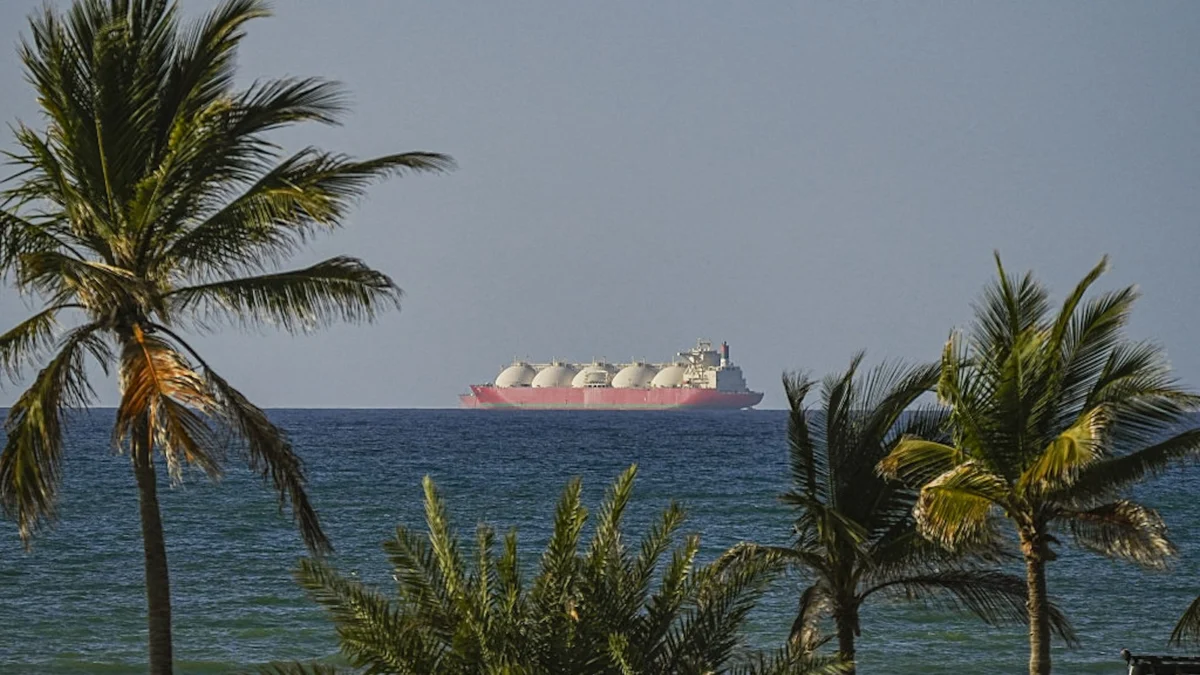
The global shipping industry, a linchpin of international trade, is currently navigating a treacherous confluence of escalating geopolitical crises and internal division over its future environmental policy. For the first time in recent history, both the Strait of Hormuz and the Red Sea, two of the Middle East’s most vital maritime arteries, have faced significant disruptions, effectively closing them to commercial traffic for extended periods. These critical chokepoints, responsible for the transit of a substantial portion of the world’s oil and goods, have become flashpoints in regional conflicts, leading to soaring energy prices and forcing vessels into costly, time-consuming detours. Against this backdrop of immediate peril, the International Maritime Organization (IMO), the United Nations agency charged with regulating global shipping, is convening this week to address a long-term, existential threat: the decarbonization of the industry.
The urgency of the IMO’s mission cannot be overstated. The shipping sector is a significant contributor to global greenhouse gas emissions, accounting for approximately 3% of the world’s total. For the past three years, the 176 member nations of the IMO have been engaged in a concerted effort to forge a "net-zero framework," a policy designed to incentivize emissions reductions through a carbon pricing mechanism. This proposed framework would require shippers to pay a fee for every ton of greenhouse gas emissions exceeding a predetermined threshold. The revenue generated from these fees was intended to fuel the development of alternative, cleaner marine fuels and provide crucial support to lower-income countries striving to meet their climate commitments. However, this progress has been significantly stalled, primarily due to opposition from the United States and a subsequent fracturing of international consensus.
Escalating Crises in Critical Waterways
The current maritime crisis began to intensify in early March. Reports indicate that Iran and Houthi rebels, citing their response to U.S.-Israel actions, began issuing threats against vessels attempting to transit the Strait of Hormuz and the Red Sea. This aggressive posture led to the effective closure of these vital waterways, significantly disrupting the flow of oil and other commodities. Crude oil prices have consequently seen a sharp increase, with maritime fuel costs rising so dramatically that some biofuels have, paradoxically, become more economically viable.
The impact on global logistics has been profound. Over 150 ships were reportedly marooned, unable to safely navigate the Strait of Hormuz, which alone handles an estimated 20% of the world’s oil supply. For those vessels able to proceed, lengthy detours around the southern tip of Africa have become the norm. These extended journeys not only add weeks to transit times but also significantly inflate shipping costs, a burden that ultimately falls on consumers worldwide. The situation took another turn over the weekend when, after a brief period of reopening, Iran reportedly seized control of the Strait of Hormuz once again, further restricting maritime movement. This volatile environment underscores the fragility of global supply chains and the immediate economic consequences of regional conflicts.
The IMO’s Net-Zero Ambitions Under Threat
It is within this context of acute geopolitical instability that the IMO is meeting. The primary agenda item for this week’s session is the advancement of the net-zero framework, a policy that has faced considerable headwinds since its inception. The framework’s core tenet is the implementation of a fee on greenhouse gas emissions, with the collected revenue earmarked for the development of sustainable shipping technologies and assistance to developing nations. This approach, proponents argue, is essential for driving the necessary innovation and investment to decarbonize a sector that has historically been slow to adopt environmental regulations.
However, the path to adopting this framework has been fraught with political challenges. Last summer, as member nations were reportedly nearing a vote to formally adopt the net-zero framework, the United States, under the Trump administration, intervened decisively. A joint statement from then-Secretary of State Marco Rubio and heads of other U.S. agencies warned that any country voting in favor of the framework would face punitive measures, including visa restrictions, additional tariffs, and port fees. This diplomatic pressure had an immediate and chilling effect on the consensus that had been building. At a subsequent meeting in October, where the framework’s adoption was widely anticipated, member states instead voted to postpone the decision by at least one year, effectively derailing the momentum.
Fractured Consensus and Alternative Proposals
In the months following the October postponement, while technical work on the framework has continued, the crucial political backing required for its adoption has significantly diminished. The once-promising consensus has fractured, replaced by a landscape of competing interests and diverging priorities.
Evelyne Williams, a research associate with the Center on Global Energy Policy at Columbia University, commented on the complex interplay of factors influencing the current negotiations. "The Iran war has certainly complicated things," she stated. "It’s tricky because if the U.S. does want to kill this thing, it has considerable leverage in its LNG market to threaten countries." This observation highlights the significant economic leverage that the United States can wield in its diplomatic efforts, particularly concerning energy markets.
Williams further noted that this week’s IMO meeting will serve as a critical barometer for national stances and priorities amidst the ongoing crisis. Several alternative proposals have emerged in recent months, each offering a different approach to decarbonizing the shipping sector. Japan, for instance, has put forward a proposal that seeks a middle ground by suggesting the elimination of the direct fee structure altogether. Instead, it advocates for a carbon trading system where shippers exceeding emission limits could offset their surplus by purchasing credits from companies that are in compliance.
A proposal jointly submitted by Liberia, Argentina, and Panama represents a more radical departure, also doing away with the fees entirely. Critics argue that this approach would strip the framework of its core incentive mechanism for compliance. Meanwhile, a coalition of petrostates is reportedly calling for the complete cancellation of the net-zero framework. In stark contrast, island nations, which are among the most vulnerable to the impacts of climate change, are vociferously advocating for the framework’s adoption as originally planned, or even for a more ambitious carbon levy. This divergence in proposals underscores the deep divisions among IMO member states regarding the pace and method of decarbonization.
The U.S. Stance: A Carbon Tax Opposition
The United States, for its part, has remained steadfast in its opposition to the net-zero framework, characterizing it as a de facto carbon tax. The U.S. government contends that such a tax would inevitably lead to increased costs for American consumers. In a separate proposal submitted to the IMO, the Trump administration has reiterated its call to abandon the current framework and instead pursue new proposals that do not penalize carbon-intensive fuel types or include any "economic element," such as a tax or levy.
"The United States submits that the most appropriate path forward is to end consideration of the IMO Net-Zero Framework entirely," the U.S. proposal states. "This would be a logical development given the plethora of existing alternative proposals and clear lack of consensus over the IMO Net-Zero Framework." This stance signals a clear intent to block any policy that involves a mandatory financial contribution based on emissions.
The Critical Role of Economic Incentives
Environmental advocacy groups express grave concern over the potential dismantling of the net-zero framework, particularly its fee structure. Em Fenton, a senior director at Opportunity Green, a U.K.-based climate group closely monitoring IMO negotiations, described the prospect of eliminating the fee structure as "catastrophic." Fenton emphasized that the fees, estimated by independent analyses to reach around $12 billion by 2030, are crucial for funding the development of clean technologies and driving innovation within the shipping industry. Without these financial incentives, Fenton argues, the framework would lose its "regulatory teeth" and jeopardize the prospect of a just and equitable transition to a sustainable maritime sector.
"Nothing can replace an economic element in terms of the value it brings for leveraging investment, for creating certainty," Fenton asserted. "Nothing can replace that." This perspective underscores the belief that market-based mechanisms are indispensable for galvanizing the substantial investment required to transform a global industry.
Industry Support and the Risk of Regulatory Fragmentation
Despite the added costs and the current geopolitical turmoil, the shipping industry itself has largely continued to back the net-zero framework. Industry leaders express concern that the absence of a unified global policy could lead to a patchwork of disparate national and regional regulations. This fragmentation, they fear, would create significant logistical complexities for shipping companies operating on a global scale. The European Union, for instance, has already implemented its own carbon pricing mechanism for the shipping sector. The adoption of similar, but potentially divergent, policies by other nations could create a convoluted and costly regulatory environment for companies moving goods across multiple jurisdictions.
The International Chamber of Shipping, a prominent trade association representing shipowners and operators, along with other industry groups, has reaffirmed its support for the IMO as the primary global regulator for shipping. In a statement, Thomas Kazakos, Secretary General of the International Chamber of Shipping, declared, "The shipyards of tomorrow will not only build vessels; they will build confidence in the industry’s ability to meet its sustainability goals." This statement reflects a desire for unified, globally recognized standards that can provide the industry with the certainty needed for long-term investment and planning.
The Path Forward: Uncertainty and the Fear of Starting Anew
As the IMO convenes this week, experts like Em Fenton and Evelyne Williams will be closely observing the proceedings to gauge the level of remaining political will and the possibility of salvaging a consensus. The current geopolitical crises and the deep divisions over the net-zero framework have created a volatile and uncertain environment.
"As long as something is moved through the door, it can be iterated upon," Williams commented, offering a glimmer of hope. "The fear for most parties is that this is abandoned in its entirety, and then you have to start from scratch." This sentiment encapsulates the anxiety that a complete collapse of the current negotiations would set back decarbonization efforts by years, forcing a fundamental restart of a complex and critical global policy initiative. The decisions made this week will have profound implications not only for the future of the shipping industry but also for the broader global effort to combat climate change.