This story is published through the Indigenous News Alliance.
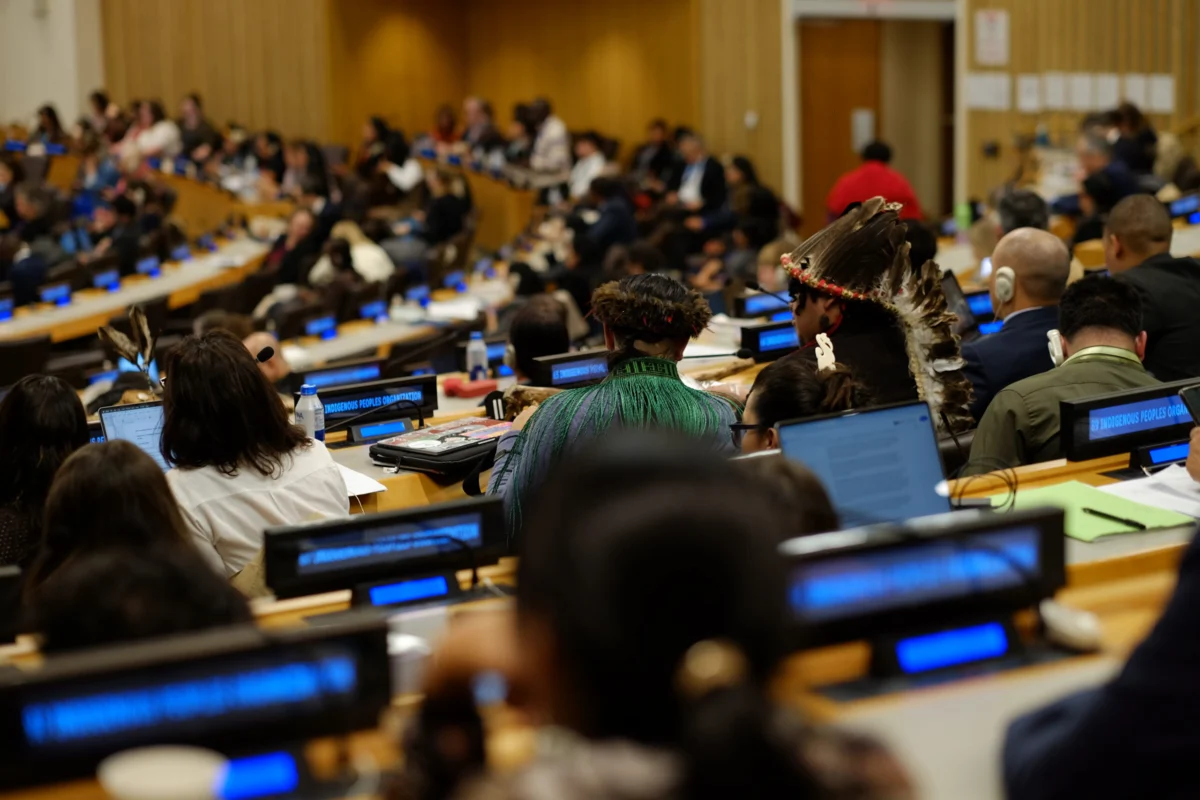
Artificial intelligence (AI) presents a complex duality for Indigenous communities worldwide. On one hand, it offers powerful new tools for environmental stewardship, enabling the detection of illegal logging, the tracking of wildfires, and the comprehensive monitoring of traditional territories. On the other hand, the very infrastructure that powers AI—data centers—introduces new and significant threats, demanding vast quantities of water, energy, and critical minerals, resources often sourced from Indigenous lands, echoing historical patterns of exploitation. This intricate dilemma was at the forefront of discussions among Indigenous leaders at the United Nations Permanent Forum on Indigenous Issues (UNPFII), as they grappled with the challenge of leveraging AI’s protective capabilities without inadvertently fueling the extractive forces that have long undermined their sovereignty and ancestral domains.
A Double-Edged Sword: AI’s Potential and Pitfalls
A seminal study, authored by Hindou Oumarou Ibrahim, a Mbororo woman and former chair of the UNPFII, meticulously outlines the potential benefits and inherent challenges of AI for Indigenous environmental protection efforts. The report highlights how the insatiable demands of AI—its high energy consumption, significant water usage for cooling, and the mining of critical minerals—can exacerbate existing pressures on Indigenous territories. These pressures include intensified land-grabbing, the overexploitation of water resources, and widespread land degradation.
"For generations, Indigenous Peoples have protected the world’s most intact ecosystems without satellites, without algorithms or technologies," Ibrahim stated in an interview. "AI can become a powerful ally to that stewardship, if it is used on our terms in a culturally appropriate way."
Ibrahim elaborated on AI’s potential applications, explaining how it can empower Indigenous communities to monitor biodiversity, detect deforestation, illegal mining operations, nascent wildfires, and water contamination through the sophisticated analysis of satellite imagery and sensor data. "When combined with Indigenous Peoples’ knowledge," she continued, "AI can help predict climate impacts, track wildlife movements, and strengthen land-use planning while helping to plan faster resilience strategies." This fusion of advanced technology with millennia-old traditional ecological knowledge offers a potent vision for enhanced environmental guardianship.
Case Studies: Indigenous Communities Harnessing AI for Protection
Across the globe, Indigenous communities are already demonstrating innovative approaches to integrating AI into their conservation strategies. In the Katukina/Kaxinawá Indigenous Reserve in Brazil’s Acre state, Indigenous agroforestry agents have been at the vanguard of utilizing AI to combat deforestation. This region, identified as having among the highest deforestation risks, benefits from an AI tool developed by Microsoft and the Brazilian nonprofit Imazon, which forecasts deforestation patterns.

Siã Shanenawa, one of the 21 agroforestry agents in the reserve, underscored the critical importance of this technological integration. "It is very important to monitor the land because we Indigenous people are safer when we can detect if someone is invading, if someone is taking wood from our land, if someone is hunting directly on our land, if someone is putting up a fire close to our land," he explained. This proactive monitoring allows for timely interventions and a more robust defense of their ancestral territories.
In Norway, Lars Ailo Bongo, a professor at UiT The Arctic University, leads the Sápmi AI Lab, an initiative dedicated to exploring how AI can support the Sámmi people. While acknowledging that AI is not yet fully inclusive, Bongo sees significant opportunities. "AI can democratize access to the analytical capabilities needed to conduct data-driven modelling aligned to Sámmi views and norms," he noted. This suggests a pathway for AI to serve as a tool for self-determination and cultural preservation, rather than an imposition.
Further north, in Nunavut, Inuit communities are blending traditional knowledge with predictive AI models and time-series analyses to adapt to the rapidly changing Arctic environment. As climate change alters fish migration patterns and availability, these communities are using AI to identify new, sustainable fishing locations. Similarly, in Chad, Indigenous pastoralists are combining participatory mapping and satellite data with predictive AI tools to anticipate severe droughts and secure vital transhumance corridors, thereby bolstering their climate resilience in an increasingly unpredictable climate.
Rainforest Foundation US exemplifies a broader trend of integrating traditional knowledge with emerging technologies. Their work in South America supports Indigenous communities in protecting their territories through a multifaceted approach that includes planting trees along boundary limits, utilizing smartphones, and deploying drones. Cameron Ellis, Field Science Director at Rainforest Foundation US, views AI as the latest advancement in this continuum of protective measures. "AI is the latest tool in that continuum," Ellis stated. "Community monitors can use AI-derived remote sensing products to process large volumes of satellite data and interpret deforestation patterns linked to mining or agriculture expansion, to respond to those threats more quickly." This highlights how AI can augment existing community-led conservation efforts, enabling faster and more informed responses to threats.
The Hidden Costs: Data Centers and Environmental Strain
The progress facilitated by AI is intrinsically linked to the physical infrastructure that powers it: data centers. These facilities, often situated in or near Indigenous territories, carry a substantial environmental burden. Residents and farmers in Thailand’s Chonburi and Rayong provinces, areas already grappling with water shortages and pollution, have voiced significant concerns about the environmental ramifications of an expanding data center footprint. These centers are voracious consumers of water for cooling systems and require immense amounts of energy to operate.
This scenario is not isolated. Similar anxieties are surfacing in communities worldwide, from rural Pennsylvania in the United States to villages in Querétaro, Mexico. In these locales, residents are increasingly worried about wastewater contamination, escalating water and energy shortages, and rising costs directly attributable to the proliferation of data centers.
Hindou Oumarou Ibrahim emphasizes this critical point: "AI is often perceived as immaterial, but it carries a very real environmental footprint," she cautioned. "It depends on vast amounts of energy, water, and critical minerals, many of which are extracted from or located near Indigenous Peoples’ territories, leading to land degradation, biodiversity loss and, in some cases, the displacement of communities." This underscores the tangible, often detrimental, impact of technologies perceived as abstract.
Beyond Environmental Concerns: Data Sovereignty and Cultural Integrity

The challenges presented by AI extend beyond its environmental footprint. Ibrahim’s study also sheds light on critical issues related to data sovereignty, legal protection, and institutional capacity for safeguarding digital rights within Indigenous communities. She warns that AI can inadvertently lead to the exclusion of Indigenous peoples or, conversely, facilitate the inappropriate extraction of sensitive data. For instance, the deployment of drones, satellites, or mapping tools without the free, prior, and informed consent of Indigenous communities can expose the locations of sacred sites, ecologically vital areas, or other culturally significant places, potentially compromising their protection and integrity.
Kate Finn, a citizen of the Osage Nation and executive director of the Tallgrass Institute, which advocates for aligning investor strategies with Indigenous rights, identifies an "opportunity space" within AI to aid Indigenous peoples in preserving their languages and strengthening their governance systems. However, she echoes the widespread concerns regarding environmental risks. "The consistent ask from Indigenous peoples around the world is that they want their free, prior, and informed consent respected before data centers go into their land," Finn asserted. "As we approach AI from an Indigenous lens, it will necessarily have to take account of all of those different nodes, both the opportunity space, but also a protective space of lands, territories, and resources, and also of language and culture, and the creative property that Indigenous peoples have placed online."
The issue of funding and capacity building is also a significant barrier for many Indigenous communities. Bongo highlighted that the Sámmi people are constrained by a lack of financial resources to hire AI developers capable of creating Sámmi-aligned AI models and making them accessible. "This is especially sad, since we have Sámmi AI developers that are interested in doing the work," he explained, noting that the limitation is not a lack of expertise but a deficit in capacity. "To make progress there is a need for a bigger center and push, that the Sámmi organizations do not have the budgets for, so the states need to provide the funding [Norway, Finland, and Sweden]." This points to a critical need for state and governmental support to empower Indigenous communities in developing and implementing AI solutions that align with their needs and values.
For projects that rely on external funding, ensuring that Indigenous peoples are not relegated to minority partner status is paramount. As Cameron Ellis aptly stated, "Technology on its own doesn’t protect forests — people do." He elaborated that AI tools are only effective when "grounded in community governance and leadership, and when the data they generate is used to trigger action on the ground. Likewise, communities must be able to retain sovereignty over how their data is collected to ensure it advances their own priorities without undermining their rights." This emphasizes the indispensable role of Indigenous self-determination and data sovereignty in the effective and ethical application of AI.
A Call for Consent and Respect
Ultimately, the path forward requires a fundamental shift in how AI development and deployment are approached. Hindou Oumarou Ibrahim concluded by stressing that to genuinely protect Indigenous peoples and their territories, governments must actively prevent all forms of land-grabbing, water exploitation, and mining activities associated with data centers and energy sources. Crucially, they must also uphold and respect Indigenous rights, worldviews, and aspirations.
"AI becomes harmful when it is imposed without free, prior, and informed consent," Ibrahim warned. "In that context, it risks repeating old patterns of extraction of the resource, data and appropriation of knowledge and the credit to these knowledge." This call for consent and respect serves as a powerful reminder that technological advancement must be guided by ethical principles and a deep commitment to human rights and environmental justice. The promise of AI for Indigenous communities can only be fully realized when it is developed and deployed in partnership, with genuine respect for their autonomy, their territories, and their enduring legacy of environmental stewardship.