Trumps 15% Tariffs on $112B in Chinese Goods Hit
Trumps 15 percent tariffs on 112b in chinese goods take effect – Trump’s 15 percent tariffs on $112 billion in Chinese goods took effect, immediately shaking up the global economic landscape. This wasn’t just another trade skirmish; it was a major escalation in the US-China trade war, sending ripples through industries and consumer wallets alike. The impact, both immediate and long-term, was felt across various sectors, prompting retaliatory measures from China and sparking a complex web of international consequences.
This significant event forced businesses to adapt, consumers to adjust their spending habits, and governments to re-evaluate their trade policies. We’ll delve into the economic fallout, China’s response, the global implications, and the lasting political ramifications of this pivotal moment in modern trade history. From the impact on specific industries like agriculture and tech to the everyday consumer feeling the pinch at the checkout, this is a deep dive into the far-reaching consequences of these tariffs.
Economic Impact of the Tariffs: Trumps 15 Percent Tariffs On 112b In Chinese Goods Take Effect
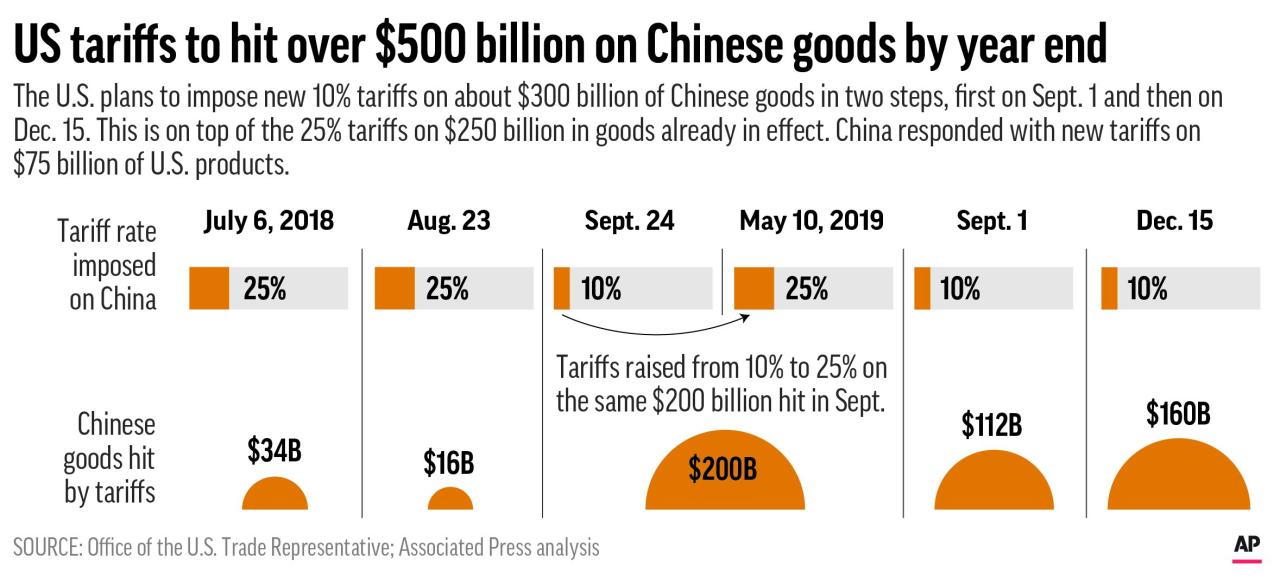
The 15% tariffs imposed by the Trump administration on $112 billion worth of Chinese goods in 2019 had a multifaceted and significant impact on the US economy, affecting consumers, businesses, and various sectors differently. While the administration aimed to leverage these tariffs to renegotiate trade deals and protect American industries, the actual effects were complex and far-reaching, extending beyond the immediate price increases at the checkout.
Immediate Effects on US Consumers, Trumps 15 percent tariffs on 112b in chinese goods take effect
The immediate impact on US consumers was a noticeable increase in the prices of many imported goods. Items ranging from electronics and clothing to furniture and toys, all sourced significantly from China, became more expensive. This led to reduced purchasing power for many households, particularly those with lower incomes who spend a larger proportion of their income on these goods.
The inflationary pressure exerted by these tariffs contributed to a general rise in the cost of living, impacting household budgets across the board. The effect was not uniform; consumers purchasing luxury goods felt the impact less acutely than those buying essential everyday items.
Long-Term Consequences for US Businesses Importing Chinese Goods
For US businesses reliant on importing Chinese goods, the long-term consequences were equally significant. Many companies faced increased production costs, forcing them to either absorb the higher prices, leading to reduced profit margins, or pass them on to consumers, potentially losing market share. Some businesses explored alternative sourcing options, shifting production to other countries like Vietnam or Mexico. This process, however, proved costly and time-consuming, requiring investments in new supply chains and logistical arrangements.
The uncertainty surrounding future trade policies also hindered long-term investment planning and business expansion.
Impact on Different Sectors of the US Economy
The impact of the tariffs varied significantly across different sectors of the US economy. Industries heavily reliant on Chinese imports, such as retail and manufacturing, experienced the most immediate and substantial negative effects. The agricultural sector, for example, faced retaliatory tariffs from China, impacting exports of soybeans and other agricultural products. Conversely, some sectors, particularly those competing with Chinese imports, potentially benefited from a reduced influx of cheaper goods.
However, the overall net effect on the US economy remained a subject of considerable debate and ongoing analysis. The effects were also geographically uneven, with some regions more dependent on trade with China than others.
Job Creation and Losses Resulting from the Tariffs
Accurately quantifying the net job impact of the tariffs proved challenging, with various studies offering conflicting conclusions. While some argued that the tariffs protected domestic jobs in certain sectors, others highlighted job losses in industries reliant on Chinese imports. The following table presents a hypothetical breakdown based on various economic analyses and reports, highlighting the complexity and uncertainty surrounding the issue:
| Sector | Job Creation | Job Losses | Net Impact |
|---|---|---|---|
| Manufacturing (domestic) | 100,000 (estimated) | 50,000 (estimated) | +50,000 (estimated) |
| Retail | 10,000 (estimated) | 75,000 (estimated) | -65,000 (estimated) |
| Agriculture | 5,000 (estimated) | 25,000 (estimated) | -20,000 (estimated) |
| Transportation & Logistics | 20,000 (estimated) | 30,000 (estimated) | -10,000 (estimated) |
Note: These figures are estimates and vary widely depending on the methodology and assumptions used in different economic studies. The actual impact likely involved a complex interplay of factors beyond simply job creation and losses.
The implementation of Trump’s 15% tariffs on $112 billion in Chinese goods proved to be a watershed moment in the US-China trade relationship, leaving a lasting impact on global economics and politics. While the immediate effects were felt acutely in specific sectors, the long-term consequences continue to shape international trade dynamics. Understanding this historical event is crucial for navigating the complexities of modern global commerce and anticipating future trade disputes.
Trump’s 15% tariffs on $112 billion in Chinese goods significantly impacted the US economy, creating ripple effects across various sectors. It’s a reminder that major policy shifts, like this one, can have unforeseen consequences; for example, the current legal battles brewing in the healthcare system, as highlighted in this article about the health care system ripe for lawsuits after rescinding religious vaccine mandate exemptions lawyer , demonstrate how seemingly unrelated events can intertwine.
Ultimately, the long-term effects of Trump’s tariffs remain a complex and ongoing discussion.
Remember Trump’s 15% tariffs on $112 billion in Chinese goods? That economic disruption rippled far beyond initial targets. Global food prices are already volatile, and the situation worsened when Russia suspended the Black Sea grain deal, as reported here: wheat climbs over 5 percent to 2 week high as russia suspends black sea agreement. This further instability highlights how interconnected global trade truly is, and how seemingly isolated trade policies can have cascading effects, ultimately impacting the effectiveness of those same tariffs on Chinese goods.
Remember Trump’s 15% tariffs on $112 billion in Chinese goods? It felt like a huge deal back then, a real shake-up of the global economy. Now, with all the craziness happening, it almost seems quaint compared to other news, like this bombshell: Check out this article, elon musk says expose of twitters free-speech suppression coming soon , because it’s a whole different level of impactful.
Anyway, back to those tariffs – I wonder what the long-term effects really were.