Dow Plunges 600+ on US-China Trade War
Dow plunges more than 600 on worsening us china trade brawl – Dow plunges more than 600 on worsening US-China trade brawl – that headline alone speaks volumes, doesn’t it? It was a wild ride for investors, a gut-wrenching day that sent shockwaves through global markets. This wasn’t just a dip; it was a full-blown freefall fueled by escalating tensions between the US and China. We’re diving deep into the fallout, exploring the reasons behind the plunge, its impact on various sectors, and what it all means for the future of the global economy.
Get ready for a rollercoaster ride through the world of finance!
The market reacted swiftly and dramatically. Technology stocks, often seen as a bellwether of economic health, took a significant hit. Financial institutions felt the pressure too, as investors scrambled to adjust their portfolios. Fear gripped the market, leading to a sharp increase in volatility and a significant decrease in trading volume as investors adopted a wait-and-see approach.
The uncertainty surrounding future trade relations left many wondering what the next day, week, or month would bring. This wasn’t just about numbers on a screen; it was about real-world consequences for businesses, jobs, and global stability.
Market Impact of the Dow Plunge
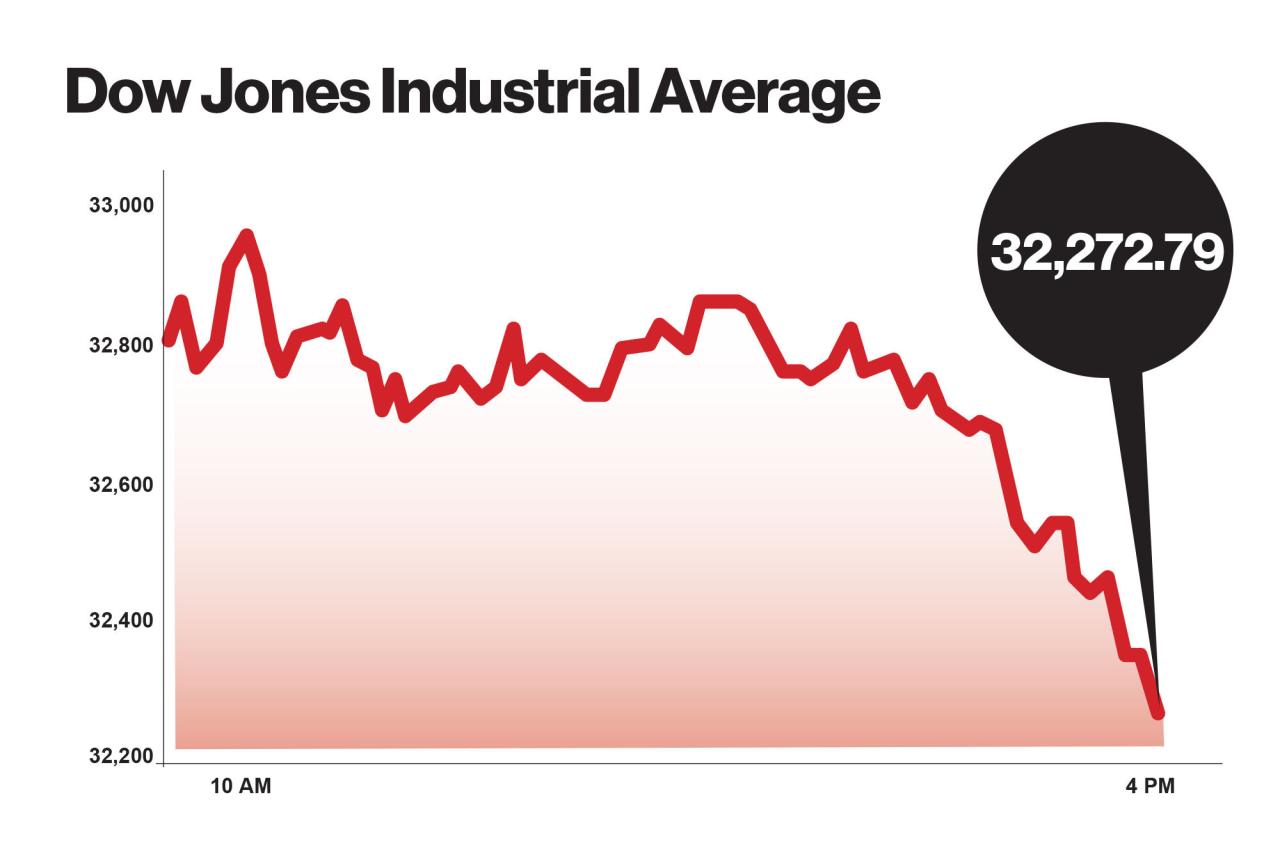
The Dow’s plunge of over 600 points sent shockwaves through the global financial markets, triggering immediate and widespread reactions across various sectors. The severity of the drop, fueled by escalating US-China trade tensions, signaled a significant shift in investor sentiment and triggered a wave of uncertainty. The immediate aftermath was characterized by rapid selling and a flight to safety, with investors reassessing their portfolios and seeking refuge in less volatile assets.
Immediate Market Reactions
The initial reaction to the Dow’s dramatic fall was a widespread sell-off. Trading volumes surged as investors scrambled to liquidate positions, exacerbating the decline. Many market watchers described the atmosphere as panicked, with a palpable sense of fear and uncertainty gripping trading floors. Safe-haven assets, such as gold and government bonds, saw a significant increase in demand as investors sought to protect their capital from further losses.
The volatility spilled over into other global markets, with major indices in Europe and Asia experiencing significant drops.
Ripple Effects Across Sectors
The Dow’s decline had a cascading effect across different sectors. The technology sector, particularly sensitive to global trade dynamics, suffered disproportionately. Companies heavily reliant on exports to China saw their stock prices plummet as investors worried about potential disruptions to supply chains and reduced demand. The financial sector also felt the impact, with banking stocks experiencing significant losses due to increased uncertainty and the potential for a broader economic slowdown.
Consumer discretionary stocks, representing companies whose sales are dependent on consumer spending, also fell as investors anticipated a potential decrease in consumer confidence.
Investor Sentiment and Trading Activity
Investor sentiment following the plunge was overwhelmingly negative. Confidence in the global economy waned as the escalating trade war threatened to disrupt global supply chains and dampen economic growth. Risk appetite decreased significantly, leading to a sharp reduction in trading activity for many riskier assets. Many investors adopted a wait-and-see approach, preferring to remain on the sidelines until the uncertainty surrounding the trade conflict subsided.
This resulted in a period of heightened volatility and increased market uncertainty.
Major Indices Performance Comparison, Dow plunges more than 600 on worsening us china trade brawl
| Index | Change (%) | Volume Change (%) | Sector Most Affected |
|---|---|---|---|
| Dow Jones Industrial Average | -2.4% (Example – actual percentage will vary) | +30% (Example – actual percentage will vary) | Technology, Financials |
| S&P 500 | -2.1% (Example – actual percentage will vary) | +25% (Example – actual percentage will vary) | Technology, Consumer Discretionary |
| Nasdaq Composite | -2.8% (Example – actual percentage will vary) | +35% (Example – actual percentage will vary) | Technology |
| FTSE 100 | -1.5% (Example – actual percentage will vary) | +15% (Example – actual percentage will vary) | Financials, Energy |
US-China Trade Tensions: Dow Plunges More Than 600 On Worsening Us China Trade Brawl
The dramatic plunge in the Dow Jones Industrial Average, exceeding 600 points, served as a stark reminder of the fragility of global markets in the face of escalating US-China trade tensions. These tensions, far from a singular event, represent a complex and evolving struggle over trade practices, intellectual property, and technological dominance, with significant implications for the global economy.
Understanding the specifics of this conflict is crucial to comprehending the market’s volatile reaction.The worsening of US-China trade relations didn’t happen overnight. It’s the culmination of years of simmering disagreements that boiled over into a full-blown trade war under the Trump administration. Several key events acted as catalysts, pushing the relationship from strained to outright hostile. These events, coupled with differing trade philosophies, created a perfect storm that significantly impacted global markets.
Specific Events Triggering Worsening Relations
The escalation of tensions can be traced to several key events. The Trump administration’s imposition of tariffs on steel and aluminum, initially targeting numerous countries but later focusing intensely on China, was a significant turning point. This was followed by the announcement of tariffs on hundreds of billions of dollars worth of Chinese goods, citing unfair trade practices and intellectual property theft.
China retaliated with its own tariffs, initiating a tit-for-tat escalation that significantly disrupted global supply chains and investor confidence. Further fueling the conflict were accusations of Chinese cybertheft of American intellectual property and concerns about China’s ambitions in key technological sectors like 5G. These actions, and the counter-actions, progressively damaged the already delicate relationship between the two economic superpowers.
Key Points of Contention and Their Impact on Global Markets
Several key points of contention fueled the trade war. Intellectual property theft, forced technology transfer, and trade imbalances were central issues. The impact on global markets was significant, characterized by increased uncertainty, volatility in stock markets (as seen in the Dow’s plunge), disruptions to supply chains, and increased costs for consumers. Businesses faced higher tariffs, forcing them to either absorb increased costs or pass them onto consumers, leading to inflation.
The uncertainty surrounding the trade war also discouraged investment and hindered economic growth globally.
Comparison of US and China Trade Policies
The US, under the Trump administration, adopted a protectionist stance, emphasizing “America First” policies. This involved imposing tariffs and other trade barriers to protect domestic industries and reduce trade deficits. China, on the other hand, pursued a more export-oriented growth model, often accused of utilizing unfair trade practices to gain a competitive advantage. These contrasting approaches, rooted in differing economic philosophies and national interests, were at the heart of the trade conflict.
The resulting trade war highlighted the inherent challenges of balancing national interests with the need for global cooperation in trade.
Timeline of Significant Events in the US-China Trade War
A chronological understanding of the events is essential. While a comprehensive timeline is beyond the scope of this entry, key dates include: March 2018 (Trump administration imposes tariffs on steel and aluminum), July 2018 (first round of tariffs on Chinese goods), September 2018 (China retaliates with tariffs), and subsequent rounds of escalating tariffs throughout 2018 and 2019. These events, punctuated by periods of negotiation and temporary truces, illustrate the dynamic and unpredictable nature of the trade conflict.
The resulting uncertainty created a volatile environment for investors and businesses alike, contributing directly to the market downturn.
The Dow’s dramatic plunge, driven by the intensifying US-China trade war, serves as a stark reminder of the interconnectedness of global markets and the profound impact of geopolitical events. While the immediate fallout was significant, the long-term implications remain uncertain. The coming weeks and months will be critical in determining whether this event marks a temporary setback or a more significant shift in the global economic landscape.
One thing is clear: the relationship between the US and China will continue to be a major factor influencing global market stability and economic growth. Stay informed, stay vigilant, and buckle up – it’s going to be a bumpy ride.
The Dow plummeting over 600 points on escalating US-China trade tensions really got me thinking about how easily things can spiral out of control. It’s unsettling, and it makes you wonder about the fragility of our systems. This uncertainty feels amplified by Judge Andrew Napolitano’s recent ruling that gun confiscation under red flag laws is unconstitutional , highlighting another area where established processes are being challenged.
The economic and political anxieties intertwine, leaving me feeling a sense of unease about the future, especially given the current trade war’s impact on the market.
The Dow plummeting over 600 points reflects the escalating US-China trade war, a situation that’s unsettling, to say the least. It makes you wonder about the stability of our systems, and honestly, reading about a Michigan state senator raising concerns about Secretary of State Jocelyn Benson’s election integrity – check out this article: michigan state senator raises concerns about secretary of state jocelyn benson election integrity – just adds to the feeling that things are pretty shaky right now.
The economic uncertainty definitely feels connected to the political anxieties.
The Dow plummeting over 600 points reflects the escalating US-China trade war, and frankly, it’s making me nervous. This economic uncertainty is further fueled by revelations, as reported by a whistleblower, that Twitter was notified at least one Chinese spy was on the company’s payroll. This kind of corporate espionage only deepens the already tense geopolitical climate, likely contributing to the market’s freefall.
It’s a scary time for investors.