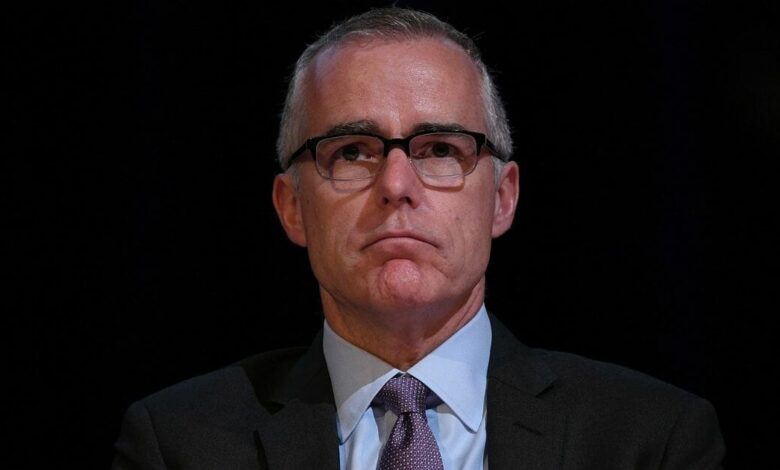
CNN Faces Heat for Hiring Fired FBI Official Andrew McCabe as Contributor
CNN Faces Heat for Hiring Fired FBI Official Andrew McCabe as Contributor. This decision has sparked controversy, raising questions about potential conflicts of interest and the network’s commitment to unbiased reporting. McCabe, a former FBI deputy director, was fired by President Trump in 2018 amid allegations of misconduct. His role in the investigation into Russian interference in the 2016 election, coupled with his outspoken criticism of the Trump administration, has fueled ongoing debate about his hiring by CNN.
Critics argue that McCabe’s past involvement in investigations related to Trump creates a clear conflict of interest. They fear that his presence as a contributor will undermine CNN’s credibility and create an environment where objectivity is compromised. Supporters of the decision, however, point to McCabe’s experience and expertise as valuable assets for CNN. They argue that his insights into the inner workings of the FBI and his understanding of national security issues will enhance the network’s coverage.
Andrew McCabe’s Background and Controversy
Andrew McCabe, a former high-ranking official in the Federal Bureau of Investigation (FBI), has been a central figure in the controversy surrounding the investigation into Russian interference in the 2016 US presidential election. His career at the FBI, his dismissal from the agency, and his subsequent public appearances have sparked intense debate and scrutiny.
CNN’s decision to hire Andrew McCabe as a contributor has sparked controversy, with many questioning the network’s commitment to unbiased reporting. It’s a stark contrast to the emotional plea of former Congressman Trey Gowdy, who, in the wake of yet another mass shooting, declared that the right to bear arms is irrelevant if you’re dead. His impassioned remarks highlight the complex issues surrounding gun control and the need for a more nuanced discussion.
The debate over CNN’s choice further underscores the challenges facing media outlets in maintaining credibility and navigating the increasingly polarized political landscape.
Andrew McCabe’s Career at the FBI
McCabe joined the FBI in 1996 and rose through the ranks, holding various leadership positions. He was appointed as the Deputy Director of the FBI in 2016, serving under Director James Comey. During his time at the FBI, McCabe played a key role in several high-profile investigations, including the investigation into the 2012 Benghazi attack and the investigation into Hillary Clinton’s use of a private email server while serving as Secretary of State.
However, his involvement in the investigation into Russian interference in the 2016 election drew the most attention and controversy.
McCabe’s Role in the Russia Investigation
McCabe was a key figure in the FBI’s investigation into Russian interference in the 2016 election, known as “Crossfire Hurricane.” He oversaw the investigation’s early stages and was involved in the decision to obtain a warrant to surveil former Trump campaign advisor Carter Page. McCabe also played a role in the investigation’s expansion to include possible collusion between the Trump campaign and Russia.
This investigation, along with the FBI’s handling of the investigation into Hillary Clinton’s emails, would ultimately lead to McCabe’s dismissal from the FBI.
Circumstances Surrounding McCabe’s Firing
McCabe was fired from the FBI in March 2018 by then-Attorney General Jeff Sessions. The Justice Department’s inspector general had concluded that McCabe had authorized the release of information to the media about the investigation into Clinton’s emails, which was deemed to be a violation of FBI policy. McCabe also faced scrutiny for his role in the Russia investigation, with some critics alleging that he had leaked information to the media and that he had been biased against Trump.
However, McCabe denied these allegations, maintaining that he had acted appropriately throughout his career.
Public Perception and Controversy
McCabe’s firing and the allegations against him sparked intense debate and scrutiny. His supporters argued that he was a dedicated public servant who had been unfairly targeted by the Trump administration. They accused the Trump administration of trying to undermine the FBI’s investigation into Russian interference and of using McCabe as a scapegoat. McCabe’s critics, on the other hand, argued that he had been involved in a series of missteps and that his firing was justified.
They also raised questions about his objectivity and his handling of the Clinton email investigation.
Outcome of Investigations
The Justice Department’s inspector general concluded that McCabe had authorized the release of information to the media about the investigation into Clinton’s emails, which was deemed to be a violation of FBI policy. The report also found that McCabe had been truthful in his statements to investigators. However, the inspector general’s report did not find any evidence that McCabe had leaked information to the media or that he had been biased against Trump.
CNN is facing criticism for hiring former FBI official Andrew McCabe as a contributor, a move some see as a blatant attempt to inject partisan bias into their news coverage. This comes on the heels of Elon Musk’s allegations that FTX CEO Sam Bankman-Fried donated over $1 billion to Democrats, raising questions about the influence of political donations on media organizations.
While the motives behind CNN’s decision are up for debate, the timing couldn’t be worse, further fueling concerns about the erosion of trust in traditional media outlets.
CNN’s Decision to Hire McCabe as a Contributor
CNN announced its decision to hire Andrew McCabe as a contributor in June 2021. The network stated that McCabe’s experience as a high-ranking FBI official would bring valuable insights to their coverage of law enforcement and national security issues. CNN’s decision to hire McCabe was based on the belief that his expertise and experience would be beneficial to their viewers.
Potential Benefits and Drawbacks of CNN Hiring McCabe
CNN’s decision to hire McCabe was met with mixed reactions. Some viewed it as a positive move, citing McCabe’s extensive experience in law enforcement and his potential to provide valuable insights to viewers. Others criticized the decision, arguing that McCabe’s controversial past and potential for bias could undermine CNN’s credibility. The potential benefits of CNN hiring McCabe include:
- Expert Insight: McCabe’s experience as a high-ranking FBI official could provide valuable insights into law enforcement and national security issues.
- Diverse Perspectives: McCabe’s perspective as a former FBI official could offer a different perspective on current events, adding to the diversity of viewpoints on CNN.
- Increased Viewership: McCabe’s high profile and controversial past could attract viewers interested in his perspective.
However, there are also potential drawbacks:
- Bias: McCabe’s past experiences and potential for bias could undermine CNN’s credibility. Critics argue that his involvement with the Mueller investigation and his firing from the FBI raise questions about his impartiality.
- Loss of Trust: Some viewers might lose trust in CNN if they perceive McCabe’s contributions as biased or self-serving.
- Negative Publicity: CNN’s decision to hire McCabe could generate negative publicity and damage its reputation.
Reactions to CNN’s Decision, Cnn faces heat for hiring fired fbi official andrew mccabe as contributor
The decision to hire McCabe sparked a debate about the role of former government officials in the media. Media critics, politicians, and the public expressed a range of opinions on CNN’s decision.
- Media Critics: Some media critics argued that CNN’s decision to hire McCabe was a blatant attempt to boost ratings by exploiting his controversial past. They expressed concern that McCabe’s presence on CNN could undermine the network’s credibility and objectivity.
- Politicians: Politicians on both sides of the aisle expressed their opinions on CNN’s decision. Some praised CNN for providing a platform for McCabe to share his expertise, while others criticized the network for hiring a controversial figure.
- Public: Public reaction to CNN’s decision was mixed. Some viewers expressed support for McCabe and welcomed his insights, while others criticized CNN for hiring a figure they considered biased and untrustworthy.
Potential Conflicts of Interest and Ethical Concerns

The decision to hire Andrew McCabe as a contributor on CNN has sparked significant debate about potential conflicts of interest and ethical concerns. Given his past role in the FBI and his involvement in investigations that are still ongoing, his presence on a news network raises questions about impartiality and the potential for bias in his commentary.
Potential Conflicts of Interest
McCabe’s involvement in high-profile investigations during his time at the FBI, including the investigation into Russian interference in the 2016 election and the investigation into former President Trump, creates a potential conflict of interest. He may have access to sensitive information or insights that could influence his commentary on CNN, potentially leading to biased reporting or the disclosure of confidential information.
CNN’s decision to hire Andrew McCabe as a contributor has sparked a heated debate, with critics accusing the network of bias. This controversy comes at a time when it’s becoming increasingly difficult to gauge public opinion, especially among GOP voters, as evidenced by a recent poll suggesting that they’re virtually impossible to poll after Biden’s “Maga Republicans” speech ( gop voters virtually impossible to poll after bidens maga republicans speech top pollster ).
Whether this difficulty in polling will affect the upcoming elections remains to be seen, but it certainly adds another layer of complexity to an already polarized political landscape. The controversy surrounding McCabe’s hiring highlights the challenges faced by news organizations in navigating the increasingly partisan environment.
- Prior Involvement in Investigations: McCabe’s direct involvement in investigations related to the Trump administration, including the Russia investigation, could create a perception of bias in his commentary. His previous role as Deputy Director of the FBI and his proximity to these investigations may lead to a perception that he is more likely to favor one side over another.
- Access to Confidential Information: As a former high-ranking FBI official, McCabe may still have access to confidential information or insights that could influence his commentary. This access could potentially lead to the disclosure of classified information or create a perception that his commentary is based on privileged information.
- Potential for Influence on Current Investigations: McCabe’s commentary on CNN could potentially influence ongoing investigations or create conflicts with his former colleagues in the FBI. This could lead to a perception that he is using his position on CNN to advance his own interests or to undermine the integrity of ongoing investigations.
Ethical Implications of CNN’s Decision
CNN’s decision to hire McCabe as a contributor has raised ethical concerns about the network’s commitment to impartiality and its potential to compromise its credibility. Critics argue that hiring a controversial figure like McCabe, who is deeply entangled in ongoing political controversies, could lead to biased reporting and erode public trust in the network.
- Perception of Bias: McCabe’s presence on CNN could lead to a perception that the network is biased in favor of his views, particularly regarding the Trump administration and the ongoing investigations. This could undermine the network’s reputation for neutrality and objectivity.
- Impact on Credibility: Hiring a figure who has been accused of wrongdoing and who is directly involved in ongoing investigations could damage CNN’s credibility and make it more difficult for the network to maintain its reputation as a reliable source of news and information.
- Public Trust: CNN’s decision to hire McCabe could erode public trust in the network, particularly among viewers who believe that McCabe’s presence on the network will lead to biased reporting or the disclosure of confidential information.
Ethical Considerations of Hiring Controversial Figures
CNN’s decision to hire McCabe raises questions about the ethical considerations involved in hiring controversial figures as commentators. While it is common practice for news networks to hire former government officials as analysts and commentators, there are important ethical considerations that need to be taken into account.
- Transparency and Disclosure: Networks should be transparent about the backgrounds and potential conflicts of interest of their commentators. This includes disclosing any prior involvement in investigations or any potential biases that could influence their commentary.
- Balancing Perspectives: Networks should strive to balance perspectives by hiring commentators from diverse backgrounds and with a range of viewpoints. This helps to ensure that viewers are exposed to a variety of perspectives and can make informed judgments about the issues being discussed.
- Ethical Standards: Networks should establish clear ethical standards for their commentators and ensure that they adhere to these standards. This includes avoiding the disclosure of confidential information, refraining from making biased statements, and maintaining professional conduct.
The Broader Context of Media Bias and Trust: Cnn Faces Heat For Hiring Fired Fbi Official Andrew Mccabe As Contributor

The decision by CNN to hire Andrew McCabe as a contributor has sparked a debate about media bias and the erosion of trust in traditional news outlets. This situation underscores a broader trend in the current media landscape, where audiences are increasingly skeptical of news sources and their motives.
The Current Landscape of Media Bias and Distrust in News Outlets
The current media landscape is characterized by a growing distrust in traditional news outlets. This distrust stems from several factors, including:
- Perceived Bias: Many people believe that news organizations lean politically, favoring certain viewpoints over others. This perception can be reinforced by social media algorithms that filter content based on user preferences, creating echo chambers where people are only exposed to information that confirms their existing beliefs.
- Sensationalism and Clickbait: The pursuit of clicks and views can lead to sensationalized headlines and stories that prioritize entertainment over accuracy. This can further erode public trust, as people become skeptical of news that seems designed to provoke an emotional response rather than inform.
- Misinformation and Disinformation: The rise of social media has made it easier for false information to spread rapidly. This has led to a growing concern about the impact of misinformation and disinformation on public discourse and decision-making.
The Impact of Social Media and the Proliferation of Misinformation on Public Trust in News Sources
Social media platforms have become major sources of news for many people. While these platforms can provide access to a wide range of information, they also present challenges to the credibility of news sources.
- Spread of Misinformation: Social media algorithms can promote content based on its virality rather than its accuracy. This can lead to the rapid spread of false information, which can be difficult to debunk once it goes viral.
- Echo Chambers: Social media can create echo chambers where people are only exposed to information that confirms their existing beliefs. This can lead to polarization and make it difficult for people to engage with different perspectives.
- Lack of Verification: Social media platforms often lack robust verification mechanisms for news content. This can make it difficult to distinguish between credible sources and unreliable ones.
The Role of News Organizations in Promoting Accountability and Transparency
In this challenging media environment, news organizations have a critical role to play in promoting accountability and transparency. This includes:
- Fact-Checking and Verification: News organizations should prioritize fact-checking and verification of information before publishing it. This can help to ensure that the information they disseminate is accurate and reliable.
- Transparency about Sources: News organizations should be transparent about their sources and methods. This can help to build trust with audiences and allow them to evaluate the credibility of the information being presented.
- Addressing Bias: News organizations should acknowledge and address their own biases. This can help to build trust with audiences and demonstrate their commitment to objectivity.
The Future of CNN and McCabe’s Role

The decision to hire Andrew McCabe as a contributor has sparked a heated debate, raising questions about CNN’s commitment to journalistic integrity and the potential impact on its reputation and viewership. This move is a significant one, potentially altering the landscape of political commentary and influencing public perception of both McCabe and CNN.
Potential Impact of McCabe’s Hiring on CNN’s Reputation and Viewership
The hiring of McCabe is likely to have a polarizing effect on CNN’s audience. Supporters of McCabe, who view him as a victim of political persecution, may be drawn to CNN’s coverage, seeing it as a platform for his perspective. Conversely, those who perceive McCabe as biased or untrustworthy may be alienated, leading to a decline in viewership.
Challenges and Opportunities for McCabe in His New Role
McCabe’s role as a contributor presents both challenges and opportunities. He will need to navigate the complexities of his past controversies and maintain credibility in a highly polarized political environment. However, this platform could allow him to share his expertise and insights on national security and law enforcement, potentially shaping public discourse on these issues.
Potential Outcomes of McCabe’s Contribution to CNN
The impact of McCabe’s contribution to CNN will depend on a variety of factors, including the nature of his commentary, the response of the audience, and the broader political climate.
| Scenario | Positive Outcomes | Negative Outcomes |
|---|---|---|
| McCabe provides insightful and unbiased commentary | Increased credibility and trust in CNN, enhanced viewership, positive public perception of McCabe | Limited impact on CNN’s reputation and viewership, potential for backlash from both sides of the political spectrum |
| McCabe’s commentary is perceived as biased or partisan | Increased viewership from those who share his views, potential for higher ratings | Erosion of CNN’s reputation for journalistic integrity, loss of viewership from those who disagree with McCabe’s views, potential for legal challenges or ethical concerns |
| McCabe’s past controversies overshadow his commentary | Limited impact on CNN’s reputation and viewership, potential for increased awareness of McCabe’s past experiences | Negative public perception of CNN, decline in viewership, potential for boycotts or protests |
The controversy surrounding McCabe’s hiring highlights the complex relationship between news organizations and former government officials. While some argue that the expertise and insights of these individuals can enrich news coverage, others fear that their past affiliations can create a bias that undermines the credibility of news outlets. The debate over McCabe’s role at CNN raises important questions about the role of media in a polarized political climate and the challenges of maintaining journalistic integrity in the face of intense scrutiny.