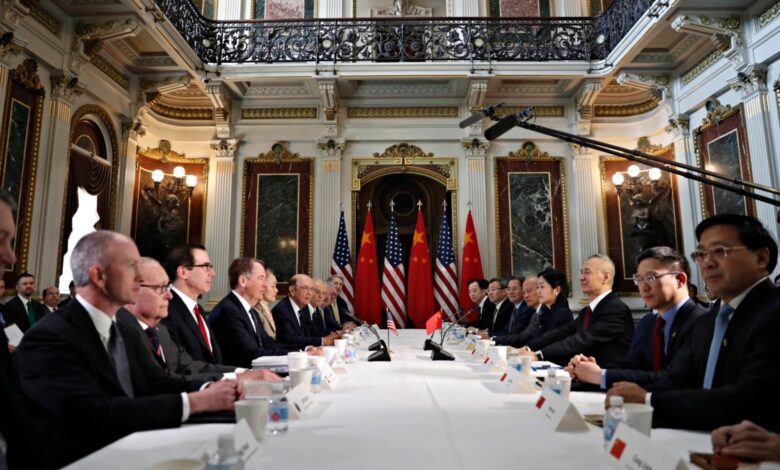
China US Trade Talk Teams Keeping Effective Communication
China u s trade talk teams keeping effective communication china – China US trade talk teams keeping effective communication is crucial, especially now. The current relationship between the US and China is a complex tapestry woven with threads of cooperation and fierce competition. Recent geopolitical events have only intensified the pressure, making open and productive communication more vital than ever. This delicate dance between two economic giants impacts not only their citizens but the global economy as a whole.
Understanding the dynamics of these trade talks, the challenges faced, and the potential outcomes is key to comprehending the future of international trade.
We’ll delve into the various communication channels employed – from formal diplomatic exchanges to more informal back-channel discussions – and analyze their effectiveness. We’ll also examine the major sticking points in the negotiations, exploring the concerns of both sides and the potential economic ramifications. The influence of domestic politics in both countries will be a key focus, as will the role of international organizations in shaping the outcome.
Finally, we’ll look at potential future scenarios, painting different pictures of what US-China trade relations might look like in the years to come.
Key Issues in Ongoing Trade Talks: China U S Trade Talk Teams Keeping Effective Communication China
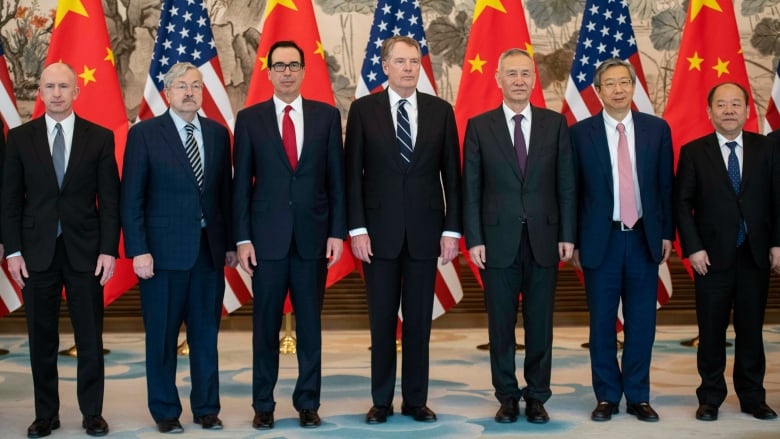
The US-China trade relationship, while undeniably complex and crucial to the global economy, remains fraught with tension. Despite periods of apparent cooperation, fundamental disagreements continue to hinder the establishment of a truly stable and mutually beneficial trading partnership. Ongoing talks aim to address these persistent issues, but significant hurdles remain. The following sections delve into the key sticking points and their potential consequences.
Intellectual Property Rights
Protecting intellectual property (IP) is a major point of contention. The US consistently accuses China of insufficient enforcement of IP laws, leading to widespread theft and counterfeiting of American goods and technologies. This undermines American innovation and competitiveness. China, on the other hand, argues that it has made significant strides in strengthening IP protection and that accusations of widespread theft are exaggerated.
The economic implications are substantial: weak IP protection discourages American companies from investing in China and limits the potential for technological advancement in both countries. A failure to reach a satisfactory agreement could further escalate tensions and harm global innovation.
Technology Transfer
Forced technology transfer, where US companies are pressured to share their technology with Chinese partners as a condition of doing business in China, remains a significant barrier. The US views this as unfair competition and a violation of market principles. China argues that such transfers are a natural part of joint ventures and contribute to technological advancement within the country.
The economic impact of this issue is far-reaching. It affects US companies’ profitability, their ability to maintain a competitive edge, and potentially slows down American technological progress. Conversely, continued forced technology transfer could accelerate China’s technological development but at the expense of fair competition.
Market Access
The US consistently raises concerns about limited market access for American companies in China, citing various non-tariff barriers such as regulations, licensing requirements, and discriminatory practices. These barriers create uneven playing fields and limit the ability of American businesses to compete fairly in the Chinese market. China argues that it is gradually opening its markets and that many of the US concerns are overblown.
The economic consequences of restricted market access are clear: reduced exports for the US, limited opportunities for American businesses, and potentially slower economic growth for both countries if these barriers are not removed.
Subsidies and State-Owned Enterprises
The role of state-owned enterprises (SOEs) and government subsidies in the Chinese economy is another significant area of friction. The US argues that these SOEs benefit from unfair advantages, including preferential treatment and government subsidies, distorting competition and undermining private sector businesses. China defends its SOEs as crucial to its economic development and argues that subsidies are necessary for certain strategic industries.
The economic implications are complex. Unfair subsidies can lead to overcapacity in certain sectors, depressing global prices and harming competitors. It also creates an uneven playing field, hindering the competitiveness of private companies, both domestic and international.
- Intellectual Property Rights: High severity, high urgency. Failure to address this issue will continue to undermine US innovation and competitiveness.
- Technology Transfer: High severity, high urgency. Forced technology transfer hinders US technological leadership and fuels trade tensions.
- Market Access: Medium severity, high urgency. Limited market access restricts US exports and harms American businesses.
- Subsidies and State-Owned Enterprises: High severity, medium urgency. Unfair subsidies and SOE advantages distort global markets and hinder fair competition.
Role of International Organizations
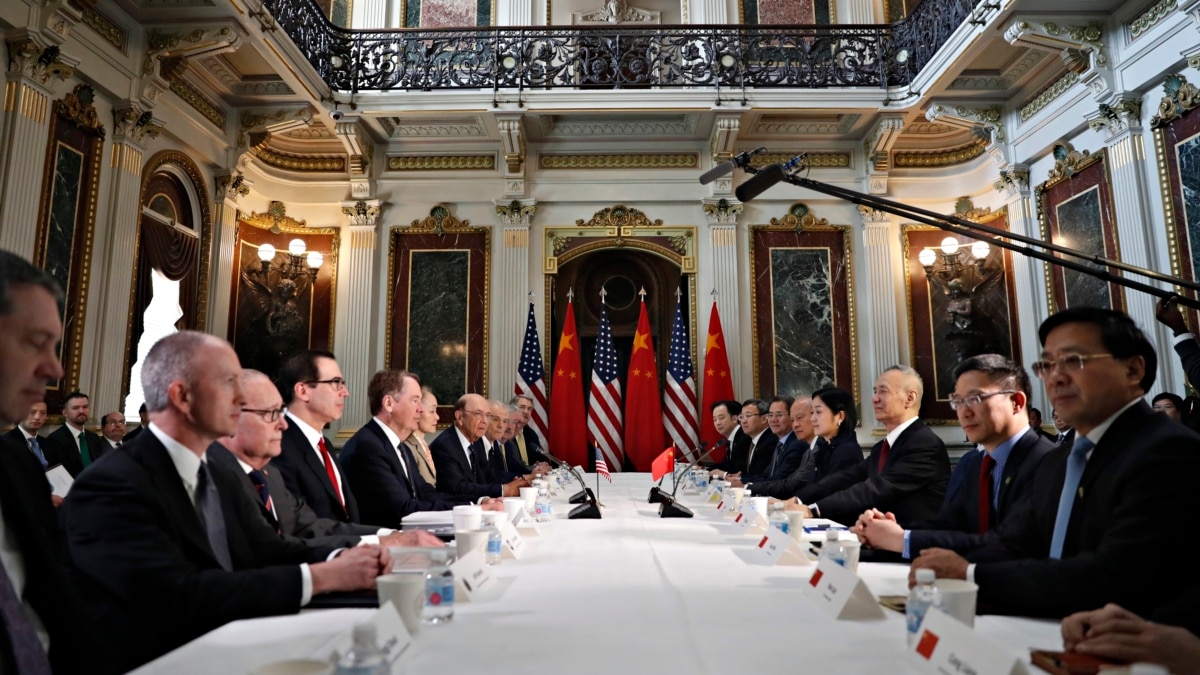
The ongoing US-China trade talks are not conducted in a vacuum. A significant influence on the negotiations comes from the framework and rules established by international organizations, primarily the World Trade Organization (WTO). These organizations act as mediators, setting standards, and exerting pressure, ultimately shaping the outcome of bilateral trade agreements. Understanding their role is crucial to grasping the complexities of these high-stakes negotiations.International organizations like the WTO significantly impact US-China trade talks through several mechanisms.
Firstly, they provide a framework for resolving trade disputes. The WTO’s Dispute Settlement Body (DSB) offers a structured process for addressing allegations of unfair trade practices, creating a potential pathway for resolving conflicts and avoiding escalations. Secondly, international pressure stemming from these organizations can influence the negotiating positions of both countries. A negative ruling by the WTO, for example, could put pressure on a nation to make concessions to avoid further trade penalties or damage to its international reputation.
Finally, the very existence of international trade rules and regulations shapes the negotiation process by setting boundaries and establishing expectations regarding fair trade practices.
WTO’s Dispute Settlement Mechanism and its Influence
The WTO’s Dispute Settlement Body (DSB) plays a crucial role in shaping the US-China trade relationship. The DSB provides a forum for resolving trade disputes through a structured process involving consultations, panel reviews, and appeals. Past disputes between the US and China, involving issues like intellectual property rights or anti-dumping measures, have been brought before the DSB. While the process can be lengthy and complex, the potential for negative rulings and trade sanctions can significantly influence the negotiating positions of both sides, encouraging compromise and adherence to international trade rules.
For instance, a ruling against China for unfair subsidies could compel them to make concessions in future negotiations to avoid further repercussions.
Impact of International Pressure on Negotiation Outcomes, China u s trade talk teams keeping effective communication china
International pressure, both from the WTO and other multilateral organizations, significantly affects the outcome of US-China trade talks. The potential for negative sanctions, trade restrictions, or reputational damage can encourage both countries to seek mutually acceptable solutions. For example, if China is found to be violating WTO rules on market access, the US could impose retaliatory tariffs. This pressure can incentivize China to negotiate more favorably to avoid these penalties.
Conversely, international pressure can also be applied to the US if its actions are deemed to be protectionist or inconsistent with WTO rules. The threat of international sanctions or negative publicity can push both sides towards more cooperative and rules-based outcomes.
International Trade Rules and Regulations and their Influence on the Negotiation Process
International trade rules and regulations, primarily those established by the WTO, serve as a foundational framework for US-China trade negotiations. These rules cover a wide range of issues, including tariffs, subsidies, anti-dumping measures, and intellectual property rights. The existence of these rules sets clear expectations and boundaries, limiting the scope of permissible actions and encouraging a more predictable and rules-based negotiating environment.
Negotiations must take into account WTO agreements, meaning that certain trade practices are either prohibited or require specific justifications. This significantly impacts the bargaining power of both sides, restricting their ability to unilaterally impose protectionist measures. The negotiation process is therefore constrained by these pre-existing rules and the potential for legal challenges under the WTO framework.
Examples of International Organizations’ Influence on Past Trade Negotiations
The WTO’s influence on past US-China trade negotiations is evident in numerous cases. The numerous disputes brought before the DSB, ranging from anti-dumping duties to intellectual property protection, have often led to modifications in both countries’ trade policies. For instance, rulings against China for its treatment of foreign companies or its enforcement of intellectual property rights have led to concessions and policy adjustments.
Similarly, disputes brought by China against the US regarding certain trade measures have prompted changes in US policy. These examples illustrate how international organizations can directly influence the outcome of bilateral trade negotiations by providing a framework for dispute resolution and exerting significant pressure on both sides to comply with international trade rules.
The ongoing US-China trade talks are a high-stakes game with global consequences. Maintaining effective communication, despite significant political and economic differences, is paramount. While challenges undoubtedly exist, the potential for mutually beneficial outcomes remains. The future of this relationship will depend on the willingness of both sides to find common ground, navigate political complexities, and prioritize long-term economic stability over short-term gains.
The path forward is uncertain, but understanding the intricacies of these talks is crucial for anyone interested in global economics and international relations.
So, the US and China are supposedly keeping those trade talks humming along, which is good news, right? It’s a delicate balancing act, though. Meanwhile, the political scene back home is a bit of a whirlwind – I just saw that Twitter unlocked Mitch McConnell’s campaign account after a GOP uproar , which highlights how easily things can get derailed.
Hopefully, this won’t negatively impact the already complex trade negotiations between the two superpowers.
It’s fascinating how seemingly disparate events connect. While China and the US trade talk teams maintain effective communication, the news that a federal court has undercut progressive efforts to nullify electoral college rules, as reported in this article , highlights how different systems grapple with internal pressures. This reinforces the idea that navigating complex political landscapes, whether it’s trade negotiations or electoral reform, requires careful consideration and compromise.
Ultimately, effective communication remains key, just as it does in the ongoing US-China trade discussions.
It’s encouraging to hear that US and China trade talk teams are maintaining open communication. This is especially crucial given the current economic climate, as highlighted in this recent article: china announces it seeks calm end to trade war as markets tank and currency hits 11 year flatline. Hopefully, these ongoing discussions will lead to a resolution that stabilizes markets and benefits both countries.
Continued effective communication is key to navigating these complex issues.