Bloomberg Under Siege: Sanders and Warren Target Billionaire Candidate
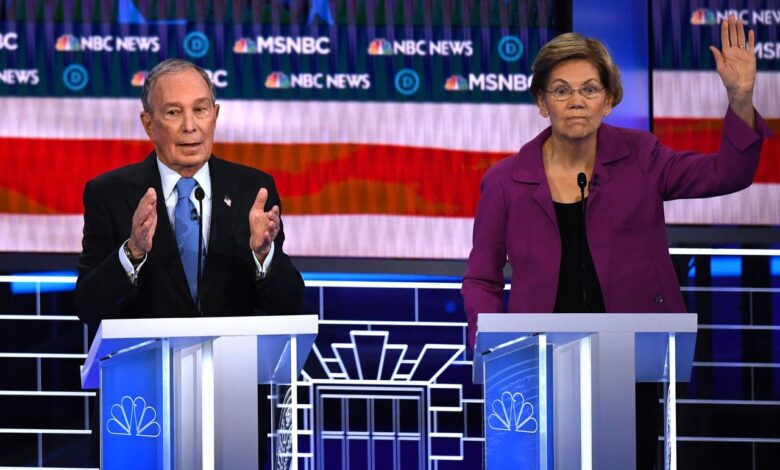
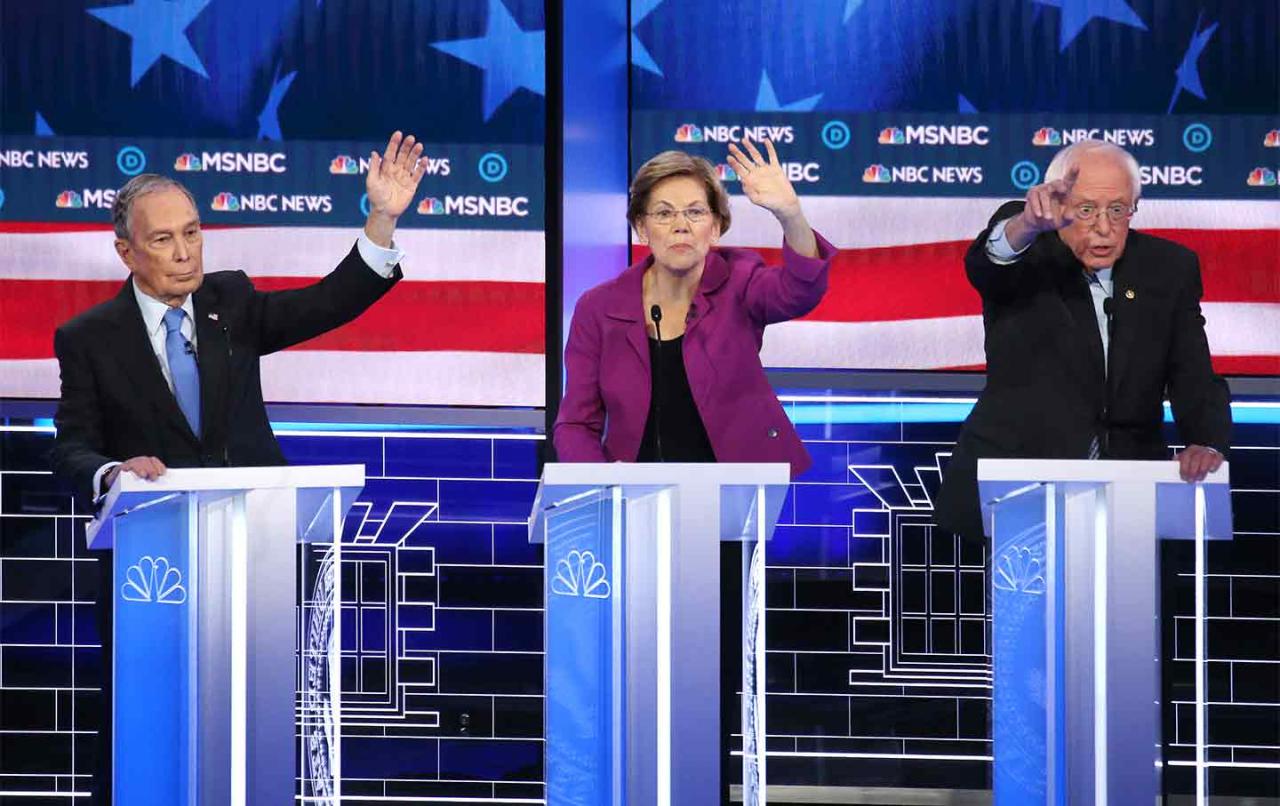
Bloomberg under siege at dem debate as sanders and warren take on rising billionaire – Bloomberg Under Siege: Sanders and Warren Target Billionaire Candidate – the Democratic primary debate took a sharp turn as Bernie Sanders and Elizabeth Warren launched a full-scale assault on Michael Bloomberg’s wealth and business practices. The billionaire businessman, who entered the race late and has been spending heavily on advertising, found himself on the defensive, facing relentless attacks from his rivals who accused him of using his fortune to buy the presidency.
The clash between Bloomberg and his critics highlighted a central theme of the Democratic primary: the role of money in politics and the influence of wealthy donors. Sanders and Warren, who have long championed progressive causes and have been critical of corporate power, saw Bloomberg’s candidacy as an opportunity to expose the inherent inequality within the political system.
They argued that Bloomberg’s wealth and business record made him unfit to represent the interests of ordinary Americans.
The Rise of Bloomberg and His Candidacy
Michael Bloomberg’s entry into the Democratic presidential race in late 2019 surprised many. The billionaire businessman and former mayor of New York City had never held elected office at the national level, and his political views were seen as moderate compared to the progressive wing of the Democratic Party.
However, Bloomberg’s decision to run was fueled by a combination of factors, including a belief that he could be a strong contender against President Donald Trump and a desire to bring his business experience to the White House.
Bloomberg’s Political Background and Previous Positions
Bloomberg’s political background is complex. He served as the mayor of New York City for three terms, from 2002 to 2013, as an independent. During his time in office, he implemented a number of policies that were seen as progressive, such as expanding access to healthcare and enacting gun control measures.
However, he also took positions that were more conservative, such as supporting stop-and-frisk policing and cutting taxes for businesses. Bloomberg’s positions on issues relevant to the Democratic primary have evolved over time. In recent years, he has become more vocal in his support for progressive causes, such as climate change action and universal healthcare.
However, he has also been criticized for his support of stop-and-frisk policing and his past comments on race and gender.
Bloomberg’s Campaign Strategy
Bloomberg’s campaign strategy has been focused on differentiating himself from other candidates by highlighting his business experience and his ability to get things done. He has also sought to appeal to moderate voters by presenting himself as a pragmatist who can work with both sides of the aisle.
Bloomberg’s campaign has been criticized for its reliance on expensive television advertising and its focus on attacking other candidates. However, his campaign has also been praised for its innovative use of technology and its focus on reaching out to voters in key battleground states.
Sanders and Warren’s Criticism of Bloomberg
The Democratic primary debates saw a fierce clash between Michael Bloomberg, the billionaire former mayor of New York City, and Senators Bernie Sanders and Elizabeth Warren. Both Sanders and Warren, known for their progressive policies and criticism of wealth inequality, targeted Bloomberg’s wealth and business history, raising concerns about his suitability for the presidency.
It was a rough night for Mike Bloomberg at the Democratic debate, with Bernie Sanders and Elizabeth Warren leading the charge against the billionaire businessman. It’s a stark contrast to the current news cycle dominated by the global spread of the coronavirus, with the White House expressing skepticism over China’s reported case numbers.
Read more about the growing doubts surrounding China’s coronavirus figures. Meanwhile, Bloomberg’s campaign continues to face scrutiny over his wealth and his record as mayor of New York City. It remains to be seen if he can overcome the challenges and secure the Democratic nomination.
Their criticisms centered around Bloomberg’s history of discriminatory policies, his wealth and its influence on his political agenda, and his potential conflicts of interest as a former businessman seeking the highest office.
Bloomberg’s Business History and Discriminatory Policies
Sanders and Warren highlighted Bloomberg’s past business practices and policies implemented during his time as mayor of New York City, arguing that they demonstrated a disregard for the well-being of ordinary citizens.
- Stop-and-frisk:Sanders and Warren criticized Bloomberg’s implementation of the controversial “stop-and-frisk” policy, which led to the disproportionate targeting of Black and Latino individuals by the New York Police Department. They argued that this policy was rooted in racial bias and had a devastating impact on communities of color.
- Financial Crisis:They also pointed to Bloomberg’s role in the financial crisis of 2008, highlighting his support for deregulation of the financial industry and his company’s involvement in the subprime mortgage market. They argued that Bloomberg’s policies contributed to the economic hardship faced by many Americans.
- Union Disputes:Bloomberg’s record as mayor also included conflicts with unions, including a 2005 strike by New York City transit workers. Sanders and Warren argued that his stance against unions and his history of labor disputes demonstrated a disregard for the rights of working people.
Bloomberg’s Wealth and Influence, Bloomberg under siege at dem debate as sanders and warren take on rising billionaire
Sanders and Warren expressed concerns about the influence of Bloomberg’s vast wealth on his political agenda and his potential conflicts of interest.
“We cannot have a billionaire who buys elections and then uses the power of the presidency to enrich himself and his friends,”
- Campaign Spending:They pointed to Bloomberg’s massive self-funded campaign, which allowed him to bypass the traditional fundraising process and exert significant influence over the Democratic primary. They argued that his wealth gave him an unfair advantage over other candidates and raised concerns about his willingness to prioritize the interests of the wealthy over the needs of ordinary Americans.
- Policy Positions:Sanders and Warren argued that Bloomberg’s policy positions, particularly on issues like healthcare and climate change, were influenced by his business interests. They suggested that his wealth and his experience in the private sector might lead him to prioritize corporate profits over the well-being of the public.
The Democratic debate saw Bloomberg under fire, with Sanders and Warren relentlessly targeting his billionaire status. It’s a stark contrast to the Clinton-Lynch tarmac meeting, a controversial event that’s been the subject of much scrutiny, and recently explored in a new book New Book Explores Clinton-Lynch Tarmac Meeting.
While the debate focused on current issues, the Clinton-Lynch meeting serves as a reminder of the complexities and scrutiny surrounding political figures and their potential conflicts of interest, a theme that resonates with the criticisms directed at Bloomberg.
Contrasting Approaches
While both Sanders and Warren criticized Bloomberg’s wealth and business history, they employed slightly different approaches in their attacks.
- Bernie Sanders:Sanders, known for his fiery rhetoric and outspoken critique of wealth inequality, took a more aggressive approach. He frequently accused Bloomberg of being a “billionaire who buys elections” and used harsh language to highlight his concerns about Bloomberg’s policies and his record as mayor.
- Elizabeth Warren:Warren, known for her policy expertise and detailed arguments, took a more nuanced approach. She focused on specific policy positions and business practices, providing detailed evidence to support her criticisms. Her attacks were often more measured but no less impactful, as she effectively used data and facts to expose the flaws in Bloomberg’s arguments and his record.
Bloomberg’s Response to Criticism
Mike Bloomberg, a late entrant into the Democratic presidential primary, faced significant criticism from his rivals, particularly Bernie Sanders and Elizabeth Warren, for his wealth, business practices, and past policies. Bloomberg’s responses to these attacks have been a key focus of his campaign, as he seeks to convince voters that he is the best candidate to defeat President Donald Trump.Bloomberg’s responses have varied in their effectiveness.
While he has been able to deflect some criticism, he has also been criticized for not adequately addressing the concerns of voters who are wary of his wealth and business practices.
The Impact of Bloomberg’s Wealth and Business Practices
Bloomberg’s vast wealth and his history as a successful businessman have been a major source of criticism from his rivals. Sanders and Warren have argued that Bloomberg’s wealth has allowed him to buy his way into the political process, and that his business practices have been harmful to workers and the environment.Bloomberg has defended his wealth, arguing that he has used it to create jobs and improve the lives of millions of people.
He has also pointed to his record as mayor of New York City, where he implemented policies that he argues benefited the city’s residents. However, his critics have argued that his wealth gives him an unfair advantage in the election, and that his business practices have not always been ethical.Bloomberg’s wealth and business practices have also been a source of concern for some voters.
It’s been a wild week in politics! The Democratic debate saw Bloomberg under fire from Sanders and Warren, questioning his wealth and record. Meanwhile, Trump, never one to shy away from a fight, threatens lawsuits over the Mueller probe and blasts prosecutors in the Stone case , further fueling the flames of controversy.
With these high-profile clashes, it seems the upcoming election will be anything but predictable.
Some voters are worried that Bloomberg’s policies will favor the wealthy, while others are concerned about the impact of his business practices on the environment.
Bloomberg’s Responses to Criticism
Bloomberg has responded to the criticism from Sanders and Warren in a number of ways. He has defended his record as mayor of New York City, arguing that he implemented policies that benefited the city’s residents. He has also argued that his wealth has allowed him to create jobs and improve the lives of millions of people.
In addition to defending his record, Bloomberg has also attacked his rivals, arguing that they are too extreme and out of touch with the needs of average Americans. He has also criticized their policies, arguing that they would be harmful to the economy.
The Effectiveness of Bloomberg’s Responses
Bloomberg’s responses to the criticism from Sanders and Warren have been mixed. Some voters have been persuaded by his arguments, while others remain unconvinced. Bloomberg’s wealth and business practices continue to be a major source of concern for some voters, and it remains to be seen whether he will be able to overcome these concerns.
Potential Consequences of Bloomberg’s Wealth and Business Practices
Bloomberg’s wealth and business practices could have a significant impact on his candidacy. If voters are convinced that he is out of touch with their concerns, or that his policies will favor the wealthy, he could face a difficult path to the nomination.
On the other hand, if he is able to successfully address these concerns, he could emerge as a strong contender in the Democratic primary.
The Implications for the Democratic Primary
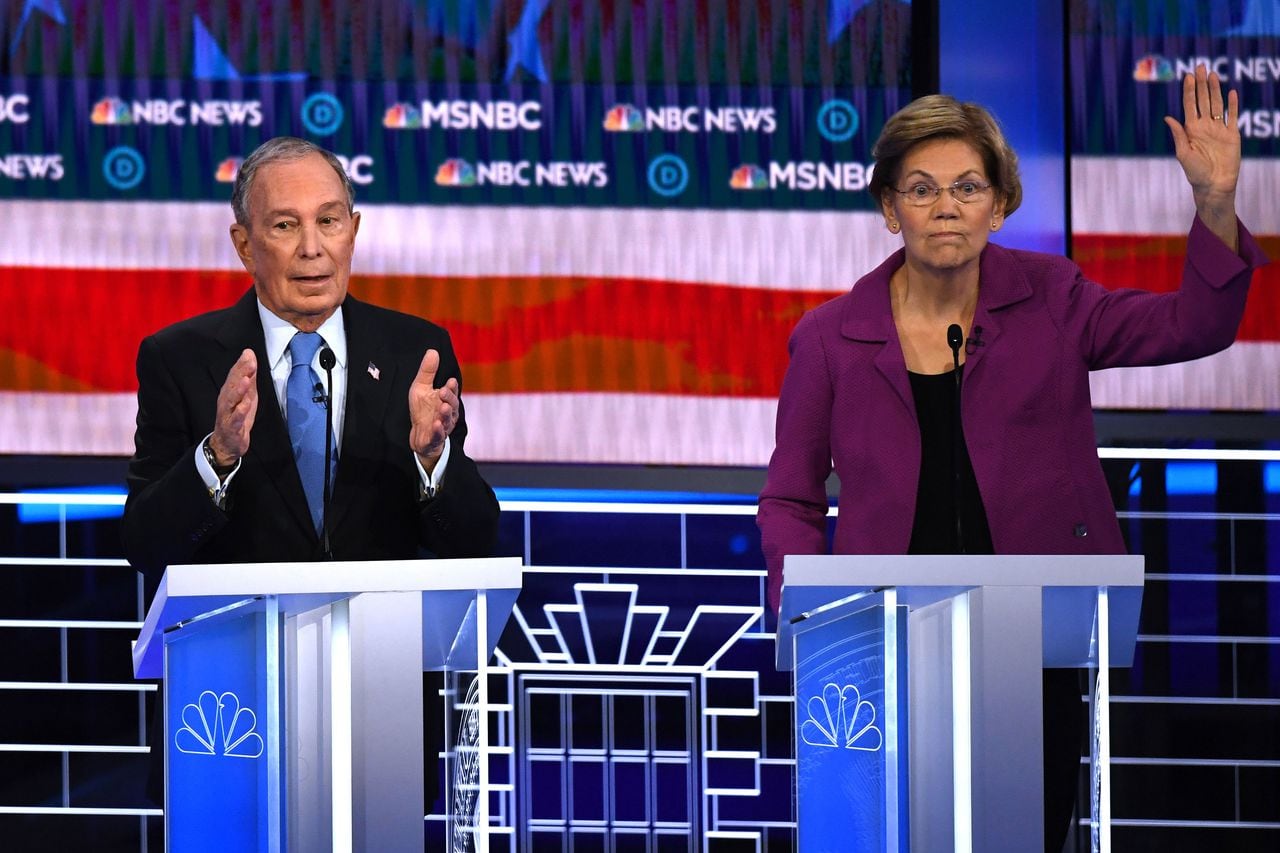
The debate surrounding Michael Bloomberg’s candidacy has injected a potent dose of complexity into the Democratic primary race. His vast wealth and controversial past have ignited a firestorm of criticism, raising crucial questions about the role of money in politics and the very definition of progressive values.
The impact of this debate is likely to reverberate throughout the race, shaping the dynamics of the contest and potentially influencing the eventual nominee.
The Impact on the Race’s Dynamics
The criticism of Bloomberg has injected a new layer of complexity into the Democratic primary. The debate surrounding his candidacy has shifted the focus from traditional policy issues to a broader conversation about wealth inequality, political influence, and the role of billionaires in politics.
This has, in turn, led to a more dynamic and unpredictable race, with potential consequences for the eventual nominee.
- Increased Scrutiny of Candidates:The scrutiny of Bloomberg has set a precedent for heightened scrutiny of all candidates, particularly those with substantial wealth. This could lead to a more thorough examination of the financial backgrounds and business dealings of other candidates, potentially uncovering hidden conflicts of interest or past controversies.
- Shifting Focus from Policy to Character:The debate surrounding Bloomberg’s candidacy has shifted the focus from policy positions to character and values. This could have a significant impact on the race, as voters may increasingly prioritize personal qualities over specific policy platforms.
- Emergence of New Issues:The debate has brought to the forefront issues such as wealth inequality, political influence, and the role of billionaires in politics. These issues were not necessarily at the center of the Democratic primary debate before Bloomberg’s entry, but they have now become central to the conversation.
Closing Notes: Bloomberg Under Siege At Dem Debate As Sanders And Warren Take On Rising Billionaire
The debate over Bloomberg’s candidacy is likely to continue as the primary season progresses. His critics are determined to highlight his past actions and financial ties, while Bloomberg will continue to defend his record and emphasize his ability to defeat President Trump.
The outcome of this battle will have a significant impact on the Democratic race and could influence the party’s overall message and direction.