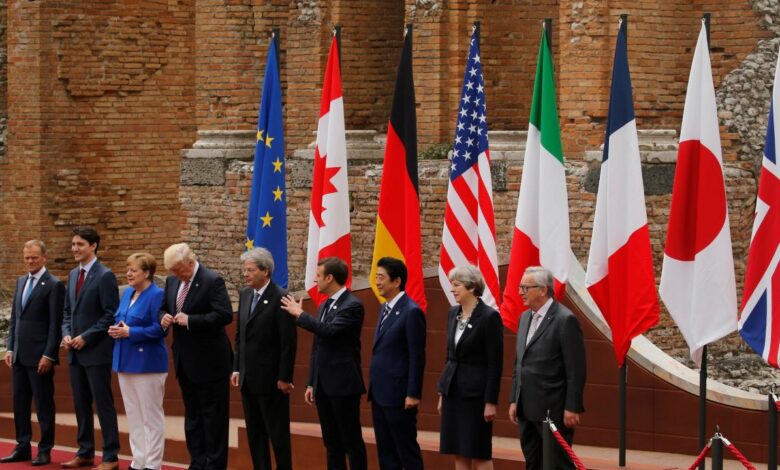
G7 Leaders Fair Trade Statement in Nod to Trump
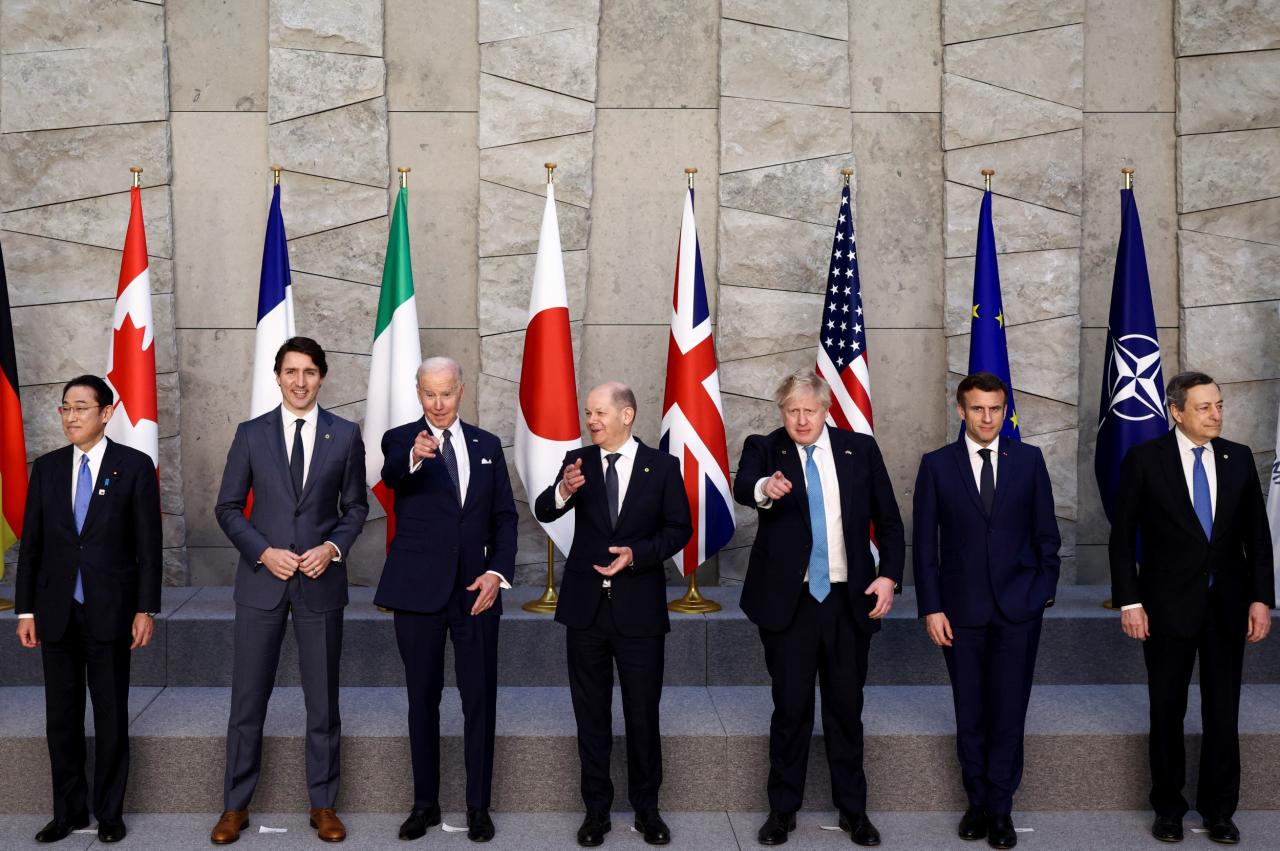
In nod to trump g7 leaders make joint statement on fair trade – In a nod to Trump’s emphasis on fair trade, G7 leaders have issued a joint statement outlining their commitment to equitable and sustainable global trade practices. This statement, born from a complex mix of economic pressures and political maneuvering, seeks to address concerns about unfair trade practices, particularly those related to intellectual property, subsidies, and labor standards.
The statement is a significant development in the ongoing debate surrounding fair trade, particularly as it reflects a shift in the global trade landscape. It acknowledges the need for a more balanced approach to trade that considers the interests of all participating countries and ensures a level playing field for businesses. This shift is evident in the statement’s emphasis on principles such as ethical sourcing, labor standards, and environmental sustainability, all of which are crucial for achieving a more equitable and sustainable global economy.
G7 Leaders’ Joint Statement on Fair Trade

The G7 leaders’ joint statement on fair trade, released in June 2023, marked a significant development in the global trade landscape. This statement, issued by the leaders of the world’s seven largest advanced economies, reflects a growing international consensus on the need for a more equitable and sustainable global trading system. The statement emerged amidst increasing concerns about the impact of unfair trade practices, particularly in the context of rising global economic tensions and the COVID-19 pandemic.
Context of the Statement
The statement was issued in response to a number of factors, including the ongoing trade war between the United States and China, the rise of protectionist policies in several countries, and the increasing use of unfair trade practices such as forced labor and subsidies. The G7 leaders recognized that these developments were undermining the rules-based international trading system and harming the global economy.
They also expressed concern about the growing inequality and lack of opportunities for workers and businesses in developing countries.
Key Provisions of the Statement
The G7 leaders’ joint statement on fair trade Artikeld a number of key principles and commitments aimed at promoting a more equitable and sustainable global trading system. These include:
- Commitment to a rules-based trading system: The G7 leaders reaffirmed their commitment to a rules-based international trading system, based on the principles of transparency, non-discrimination, and reciprocity. They also stressed the importance of upholding international trade agreements and resolving trade disputes through multilateral mechanisms.
- Promoting fair competition: The statement emphasized the need to address unfair trade practices, including forced labor, subsidies, and dumping. The G7 leaders committed to working together to ensure that all countries play by the same rules and that there is a level playing field for businesses.
- Supporting sustainable development: The statement recognized the importance of trade in promoting sustainable development, including by addressing climate change and promoting inclusive growth. The G7 leaders committed to working together to ensure that trade policies are aligned with these goals.
- Strengthening multilateral institutions: The statement highlighted the importance of multilateral institutions, such as the World Trade Organization (WTO), in shaping the global trading system. The G7 leaders committed to working together to strengthen these institutions and ensure that they are better equipped to address the challenges of the 21st century.
Potential Impact of the Statement
The G7 leaders’ joint statement on fair trade has the potential to significantly impact global trade practices and relations. It could lead to:
- Increased pressure on countries to adopt fairer trade practices: The statement sends a clear message that the G7 countries are committed to promoting fair trade and will hold countries accountable for their trade practices. This could lead to increased pressure on countries to address unfair trade practices, such as forced labor and subsidies.
- Strengthened international cooperation on trade issues: The statement demonstrates the G7’s willingness to work together on trade issues. This could lead to more effective international cooperation in addressing trade challenges, such as the rise of protectionism and the need for a more sustainable trading system.
- Improved trade relations between developed and developing countries: The statement’s focus on promoting sustainable development and addressing inequality could lead to improved trade relations between developed and developing countries. It could also help to create a more level playing field for businesses in developing countries.
Fair Trade Principles and Practices: In Nod To Trump G7 Leaders Make Joint Statement On Fair Trade
Fair trade is a social movement and a set of commercial practices that aim to create a more equitable and sustainable trading system for producers in developing countries. It emphasizes ethical sourcing, fair labor standards, environmental sustainability, and equitable pricing.
The G7 leaders’ joint statement on fair trade, a nod to Trump’s push for a more equitable global market, comes at a time when the world is grappling with rising inflation. This is especially true in the United States, where diesel prices keep climbing making inflation harder to root out , putting pressure on businesses and consumers alike. The G7’s commitment to fair trade could help alleviate some of these pressures by promoting a more stable and predictable global economy, which is crucial for tackling inflation and fostering growth.
Core Principles of Fair Trade
Fair trade principles provide a framework for ethical and sustainable trade practices. These principles are widely recognized and serve as guiding principles for fair trade organizations and businesses.
The G7 leaders’ joint statement on fair trade, a move seemingly influenced by Trump’s “America First” stance, has sparked a flurry of debate. While some see it as a necessary step to protect domestic industries, others worry about the potential for trade wars. This focus on fairness and national interest also raises questions about transparency, as seen in the recent case where the FBI requested a staggering 66-year delay in releasing information from Seth Rich’s computer fbi asks court for 66 years to release information from seth richs computer.
The G7’s statement, though focused on trade, highlights the complex interplay of economic policy, national security, and public access to information in a world increasingly driven by globalized trade.
- Ethical Sourcing: Fair trade ensures that products are sourced from producers who operate ethically and sustainably, respecting human rights and environmental standards. This includes ensuring that producers are not subject to exploitation, forced labor, or child labor.
- Labor Standards: Fair trade promotes fair labor practices, including fair wages, safe working conditions, and the right to organize and bargain collectively. Producers should be paid a living wage that allows them to meet their basic needs and improve their living standards.
- Environmental Sustainability: Fair trade emphasizes environmental sustainability, encouraging producers to adopt environmentally friendly practices and minimize their impact on the environment. This includes promoting sustainable farming methods, reducing waste, and conserving natural resources.
- Equitable Pricing: Fair trade aims to ensure that producers receive a fair price for their products, taking into account the costs of production and the need for a sustainable income. This means that producers should receive a price that is higher than the prevailing market price and allows them to invest in their businesses and communities.
Fair Trade Practices
Various practices are associated with fair trade to promote its principles and objectives. These practices ensure that producers receive fair treatment and that consumers can purchase products that are ethically and sustainably produced.
The G7 leaders’ joint statement on fair trade, seemingly a nod to Trump’s trade policies, highlights the growing global focus on economic fairness. However, amidst these international discussions, the domestic political climate remains heated. The call for an apology from President Biden for labeling the MAGA movement “semi-fascism” by New Hampshire Governor Chris Sununu, as reported in this article , underscores the divisive rhetoric that continues to permeate American politics.
Perhaps a shared commitment to fair trade, both domestically and internationally, could offer a path towards more constructive dialogue and a less polarized future.
- Certification Schemes: Fair trade certification schemes, such as Fairtrade International and FLO-CERT, provide independent verification that products meet fair trade standards. These schemes involve rigorous audits and inspections to ensure compliance with fair trade principles.
- Direct Trade Agreements: Direct trade agreements allow producers to sell their products directly to importers or retailers, eliminating intermediaries and ensuring that a greater share of the profits goes to the producers. This fosters closer relationships between producers and consumers.
- Consumer Education Initiatives: Fair trade organizations and businesses engage in consumer education initiatives to raise awareness about fair trade principles and practices. These initiatives aim to empower consumers to make informed purchasing decisions and support fair trade producers.
Effectiveness of Fair Trade Initiatives
Fair trade initiatives have made significant contributions to promoting equitable and sustainable trade practices. However, there are also challenges that need to be addressed to further enhance their effectiveness.
- Successes: Fair trade has been successful in improving the livelihoods of producers in developing countries by providing them with fair prices, access to markets, and opportunities for economic development. Fair trade has also raised awareness about the importance of ethical and sustainable trade practices among consumers.
- Challenges: Fair trade initiatives face challenges such as limited market reach, competition from conventional products, and the need for continuous improvement in certification and monitoring processes. There are also concerns about the effectiveness of fair trade in addressing systemic issues such as poverty and inequality.
International Trade Negotiations and Agreements
The global trade landscape has been shaped by a series of landmark international trade agreements and negotiations. These agreements, while aiming to facilitate trade and economic growth, have also had a significant impact on fair trade principles. Understanding the evolution of these agreements is crucial for assessing their impact on global trade practices and the role of international institutions in promoting fairness.
The Evolution of International Trade Agreements
The evolution of international trade agreements has been marked by a shift from bilateral to multilateral arrangements, reflecting the growing interconnectedness of the global economy. The General Agreement on Tariffs and Trade (GATT), established in 1948, was a significant early step in this direction. It aimed to reduce tariffs and other trade barriers among participating countries. The GATT underwent several rounds of negotiations, gradually expanding its scope to cover non-tariff barriers, agricultural trade, and intellectual property rights.
- GATT (1948): The General Agreement on Tariffs and Trade (GATT) was a multilateral agreement that aimed to reduce tariffs and other trade barriers among participating countries. It laid the foundation for the modern global trading system.
- Uruguay Round (1986-1994): This round of GATT negotiations resulted in the creation of the World Trade Organization (WTO), which replaced GATT as the primary international trade organization. It expanded the scope of trade rules to cover new areas such as services, intellectual property, and investment.
- Doha Development Agenda (2001-present): This round of WTO negotiations focused on developing countries’ concerns, aiming to improve market access for their products and address issues such as agriculture and intellectual property. The negotiations have been protracted and have not yet reached a conclusion.
The Role of Multilateral Institutions, In nod to trump g7 leaders make joint statement on fair trade
Multilateral institutions, such as the World Trade Organization (WTO), play a crucial role in promoting fair trade practices and resolving trade disputes. The WTO provides a forum for member countries to negotiate trade agreements and settle trade disputes. It also administers existing trade agreements and acts as a watchdog for the global trading system.
- Dispute Settlement Mechanism: The WTO’s Dispute Settlement Mechanism provides a binding and impartial process for resolving trade disputes between member countries. This mechanism helps to ensure that countries comply with their trade obligations and promotes a rules-based trading system.
- Transparency and Accountability: The WTO promotes transparency and accountability in international trade by requiring its member countries to publish their trade policies and regulations. This transparency helps to ensure that countries are not engaging in unfair trade practices.
The Impact of the G7 Leaders’ Joint Statement
The G7 leaders’ joint statement on fair trade, if implemented effectively, could have a significant impact on future trade negotiations and agreements. It could lead to a renewed focus on fairness and transparency in international trade, promoting a more equitable and sustainable global trading system.
- Strengthening International Cooperation: The statement could strengthen international cooperation on trade issues, encouraging countries to work together to address shared challenges such as climate change and inequality.
- Promoting Fair Trade Practices: The statement could lead to the development of new trade rules and standards that promote fair trade practices, such as ensuring workers’ rights, protecting the environment, and combating unfair competition.
- Improving Dispute Resolution: The statement could encourage the development of more effective mechanisms for resolving trade disputes, ensuring that all countries have access to a fair and impartial process.
Impact on Businesses and Consumers

The G7 leaders’ joint statement on fair trade has significant implications for businesses involved in international trade and consumers who rely on global supply chains. This statement aims to promote a more equitable and sustainable global trade system, which could impact businesses’ operations and competitiveness, as well as consumer purchasing decisions and access to goods and services.
Impact on Businesses
The statement’s emphasis on fair trade principles could have a significant impact on businesses operating in the global marketplace. These principles promote transparency, accountability, and ethical practices throughout the supply chain. Businesses may need to adapt their operations to comply with these principles, which could involve changes in sourcing practices, labor standards, and environmental sustainability efforts.
- Increased Compliance Costs: Businesses may face increased costs associated with complying with fair trade principles. This could involve implementing stricter labor standards, investing in sustainable practices, and ensuring transparency in their supply chains. For example, businesses may need to conduct audits to verify compliance with labor standards and environmental regulations, which can be expensive and time-consuming.
- Enhanced Competitiveness: Businesses that prioritize fair trade practices could gain a competitive advantage in the long run. Consumers are increasingly demanding ethical and sustainable products, and businesses that can demonstrate compliance with fair trade principles may attract a loyal customer base. Furthermore, strong relationships with suppliers and workers based on fair trade principles can lead to greater stability and reliability in the supply chain, reducing risks and improving efficiency.
- New Opportunities: The shift towards fair trade could create new opportunities for businesses, particularly in developing countries. Fair trade practices can empower farmers and workers by providing them with fair prices, improved working conditions, and access to markets. This can lead to economic growth and poverty reduction, creating a more equitable and sustainable global economy.
Impact on Consumers
Consumers are increasingly aware of the social and environmental impact of their purchasing decisions. The G7 leaders’ statement on fair trade could further empower consumers to make informed choices by providing them with more information about the origins and production methods of the products they buy. This increased transparency could lead to:
- Increased Demand for Fair Trade Products: Consumers may be more likely to purchase products that are certified as fair trade, knowing that they are supporting ethical and sustainable practices. This increased demand could incentivize businesses to adopt fair trade principles and offer more fair trade products.
- Greater Access to Information: Consumers may have greater access to information about the products they buy, including details about the working conditions of workers, environmental impact, and social responsibility of the companies involved. This transparency could allow consumers to make more informed decisions about their purchases and support businesses that align with their values.
- Potential Price Increases: While consumers may be willing to pay a premium for fair trade products, some may be price-sensitive and choose more affordable options. This could lead to a situation where fair trade products are only available to a certain segment of the population, potentially exacerbating existing inequalities.
The G7 leaders’ joint statement on fair trade represents a crucial step toward addressing the challenges of global trade in the 21st century. While the statement’s impact remains to be seen, it signals a growing consensus among major economies on the importance of fair trade principles. The statement’s focus on ethical sourcing, labor standards, and environmental sustainability is a positive step towards building a more equitable and sustainable global economy.
It will be interesting to see how this statement translates into concrete policy changes and how it impacts international trade negotiations and agreements in the years to come.